
14 September 2016


Puerto Rican Religious Leaders Demand Release of Oscar Lopez Rivera
  SAN JUAN – The local religious movement known as the Coalition for the Release of Oscar Lopez Rivera on Thursday called on authorities to free the Puerto Rican independence activist and sought support for the Oct. 9 event in Washington lobbying for his release. SAN JUAN – The local religious movement known as the Coalition for the Release of Oscar Lopez Rivera on Thursday called on authorities to free the Puerto Rican independence activist and sought support for the Oct. 9 event in Washington lobbying for his release.“That a group of leaders of different religious sectors is uniting for the release ... of my dad give me a lot of hope,” Clarisa Lopez Ramos, the daughter of Lopez Rivera, told EFE. Lopez Rivera has been behind bars for 35 years after being convicted of seditious conspiracy and is currently being held in a prison in Terre Haute, Indiana. His daughter was referring to the support provided for his release by San Juan Archbishop Roberto Gonzalez Nieves, Methodist Bishop Juan Vera, Lutheran Bishop Felipe Lozada Montañez and the secretary of the Pueto Rico Bible Society, Rev. Heriberto Martinez, who participated on Thursday in a press conference to demand Lopez Rivera’s release. “The support of these people confirms that Oscar Lopez is not only a political prisoner, but also an example of the violation of human rights,” said Lopez Ramos about her father, a Vietnam veteran and former member of the Armed Forces of National Liberation, or FALN. “We have to take advantage of the opportunity in the last few months that remain to (Barack) Obama (in the White House) for him to make a decision. This is not a local request, but an international one. My father has always said: ‘The struggle will always be our reward,’” she said. After a decade of active struggle for Puerto Rico’s independence from the United States, on May 29, 1981, Lopez Rivera – 38 at the time – was arrested by U.S. authorities. He was covicted and sentenced later that year to 55 years in prison for seditious conspiracy to overthrow the U.S. government on the island and in 1991 he was handed another 15 years behind bars for an escape attempt. He was imprisoned with other like-minded individuals who actively fought from Chicago during the 1980s for the island’s independence. In 1999, then-President Bill Clinton commuted the sentences of 11 of them. Clinton also offered a pardon to Lopez Rivera, but he – who had never been accused of any violent crimes – refused to accept it if it did not apply to all his companions. The Coalition for the Release of Oscar Lopez Rivera on Tuesday expressed its support for the “Obama Free Oscar Now” event to be held on Oct. 9 in Washington. “Oscar has spent too much time in prison. Both because of his age and the conditions in which he is being held, it’s time for him to go free,” Bishop Lozada Montañez, the president of the Puerto Rico Council of Churches, told EFE. Expected to take part in the Oct. 9 event are African American intellectual and civil rights activist Cornel West, Illinois Congressman Luis Gutierrez – who is Puerto Rican descent – and Puerto Rican artists Rene Perez, Danny Rivera, Roy Brown and the Jovenes del 98 group. |
12 September 2016
Guam as staging ground for U.S. bomber 'operations' in S. China Sea
 |
| wikipedia |
___________________________________
STARS AND STRIPES
The (U.S.) Air Force said history was made Wednesday when all three “power projection bombers” — the B-52 Stratofortress, the B-1 Lancer and the B-2 Spirit — took off from Guam for their first operation together in the Asia-Pacific.
Though the aircraft have deployed independently to the region in the past, “this was the first time all three bombers flew a formation pass over Andersen Air Force Base, dispersed and then simultaneously conducted operations in the South China Sea and Northeast Asia,” a 36th Wing statement said.
“This mission demonstrated the U.S. commitment to supporting global security and our ability to launch a credible strategic defense force,” said Brig. Gen. Douglas Cox, the wing’s commander.
Three B-2 Spirit stealth aircraft — America’s most advanced bomber, capable of delivering both conventional and nuclear munitions — arrived last week from Whiteman Air Force Base, Mo., for a short Pacific deployment that’s part of U.S. Strategic Command’s bomber operations.
READ THE FULL REPORT IN 'STARS AND STRIPES'
09 September 2016
La crisis fiscal como impedimento al ejercicio de libre determinación e independencia en Puerto Rico
 |
PONENCIA DE LCDA. WILMA E. REVERÓN COLLAZO
ANTE EL SEMINARIO REGIONAL DEL PACÍFICO
DEL COMITÉ ESPECIAL DE DESCOLONIZACIÓN
DE LA ORGANIZACIÓN DE LAS NACIONES UNIDAS
Managua, Nicaragua
31 de mayo- 2 de junio 2016
Título: La crisis fiscal como impedimento al ejercicio de libre determinación e independencia en los territorios que aún no han alcanzado su independencia.
En el 2015 tuve la oportunidad de presentar una ponencia sobre ¨La deuda pública como impedimento al ejercicio de libre determinación e independencia en los territorios que aún no han alcanzado su independencia. En esta ocasión pasamos de la teoría a la realidad de dicha propuesta.
El Congreso de Estados Unidos de Norteamérica (en adelante EEUU), tiene presentado ante el Comité de Recursos Naturales el proyecto de la Cámara de Representantes llamado PROMESA HR 5278.
Las siglas que contienen toda la ironía del mismo, se refieren al nombre ¨Puerto Rico Oversight, Management and Economic Stability Act¨. Este proyecto de ley es la respuesta de EEUU ante la crisis fiscal creada en Puerto Rico por una deuda impagable, que como les informé en la ponencia pasada, la deuda en el 2013 ya alcanzaba el 93% del producto nacional bruto.
Lo primero que deben conocer de este proyecto, es que aunque el objetivo inmediato es aplicarlo en Puerto Rico, el mismo contiene en sus definiciones que el término territorio incluye a Puerto Rico, Guam, Samoa Americana, las Islas Marianas del Norte y la Islas Vírgenes Estadounidenses. Esto se encuentra en las definiciones porque el proyecto de ley contempla su posible aplicación a todos los territorios estadounidenses.
Lo primero que deben conocer de este proyecto, es que aunque el objetivo inmediato es aplicarlo en Puerto Rico, el mismo contiene en sus definiciones que el término territorio incluye a Puerto Rico, Guam, Samoa Americana, las Islas Marianas del Norte y la Islas Vírgenes Estadounidenses. Esto se encuentra en las definiciones porque el proyecto de ley contempla su posible aplicación a todos los territorios estadounidenses.
La diferencia es que en Puerto Rico la Junta será de imposición inmediata mientras que para los demás territorios se impondrá una Junta si la legislatura de un territorio lo solicita mediante resolución y el gobernador del territorio la firma. Los territorios del Pacífico son un objetivo futuro de esta llamada ¨PROMESA¨.
READ THE FULL ANALYSIS HERE.
07 September 2016
Tuvalu, Nauru join growing group for West Papua
Two more countries have joined the Pacific Coalition on West Papua, voicing their concerns over human rights abuses in the Indonesian province and asking that the United Nations intervene.
The group was set up by the Solomon Islands Prime Minister Manasseh Sogavare, in response to the Melanesian Spearhead Group's inclusion of Indonesia as an observer and not granting West Papua membership of the group.\
A number of Pacific heads of government have raised their concerns over West Papua at the United Nations, with the Tongan PM, 'Akilisi Pohiva last year asking the UN to intervene.
At a meeting in Honolulu last week, the Prime Minister of Tuvalu, Enele Sopoaga, and Nauru's ambassador to the Pacific nations, Marlene Moses joined the group.
Others who have already joined are Solomon Islands, Vanuatu, New Caledonia's FLNKS, and the United Liberation Movement of West Papua and the Pacific Islands Alliance of Non-Governmental Organisations, or PANGO.
In August, the MSG leaders deferred a decision on West Papua's membership bid after Fiji and PNG continued to oppose its application.
05 September 2016
Federation of Catholic Bishops Conferences of Oceania focus on the people of West Papua
Media Statement from FCBCO Bishop delegates
Though we come from diverse cultures and regions, as Pastors and Shepherds our hearts are united in the desire to seek what is best for the human family and the common good of any society. Indeed our faith, following the example of Pope Francis, prompts us to see the world firstly not as a global market but as a universal home.
Last year, we urged governments and businesses to support the Paris COP21 initiative addressing issues of climate change and sustainable development. We are therefore heartened to see that the PNG government has recently passed a Bill agreeing to implement the strategies of that initiative.
Responsible use of the environment and resources is a duty and task for everyone. The Clean Generation Campaign, which we have come to know about here in PNG is an inspiring example of local initiative among the young. Also we have learned of those working to support coastal communities who wish to raise their voice against Seabed Mining.
Far from being “anti-development” such communities wish to pursue sustainable development including family friendly tourism, fisheries and agriculture. What kind of trade agreements permit foreign companies to engage in practices and processes which in their own country are illegal? The sea is a treasure for all and should never become a “playground of exploitation”.
Catholic Bishops support the West Papuan people’s desire to participate in the Melanesian Spearhead Group
A particular focus of our current gathering is the people of West Papua. They seek what every family and culture seeks: respect of personal and communal dignity, free expression of one’s aspirations and good neighbourly relations.
Political boundaries can never contain or control ethnic relationships and so we urge governments to support the West Papuan people’s desire to participate fully in the Melanesian Spearhead Group (MSG). Therefore, we wish to support the 2003 joint interfaith declaration ‘Papua Land of Peace’.
Blocked participation in MSG is a wound in the side of all Melanesians. For West Papuans, the MSG is a natural place of collaboration and a potential source of deeper regional understanding.
In that regard we wish also to acknowledge the assistance of Indonesian authorities in making possible a recent visit of PNG and Solomon Islands Bishops to Jayapura in order to meet with their brother Bishops in West Papua. Such visits are always for the cause of peace.
Finally, we once again echo the international outcry at what is happening to asylum seekers on Manus Island and Nauru. Callousness can never be the proper response to human tragedy. We applaud PNG’s Supreme Court’s decision that the Manus Island detention centre is unconstitutional and illegal and we trust that the Australian and other authorities will act swiftly in implementing a humane plan of rehabilitation for the detainees.
CBCPNGSI – Archbishop John Ribat MSC (President), Archbishop of Port Moresby,
Statement prepared by the FCBCO delegates:
ACBC – Bishop Robert McGuckin (Deputy President) Bishop of Toowoomba, Australia and Bishop Vincent Long OFM Conv, Bishop of Parramatta, Australia.
NZCBC – Bishop Charles Drennan, Bishop of Palmerston North, New Zealand
CEPAC – Archbishop Michel Calvet SM, Archbishop of Noumea, New Caledonia and Bishop John Bosco Baremes, SM, Bishop of Port Vila, Vanuatu.
01 September 2016
“West Papua is a de-colonisation issue"
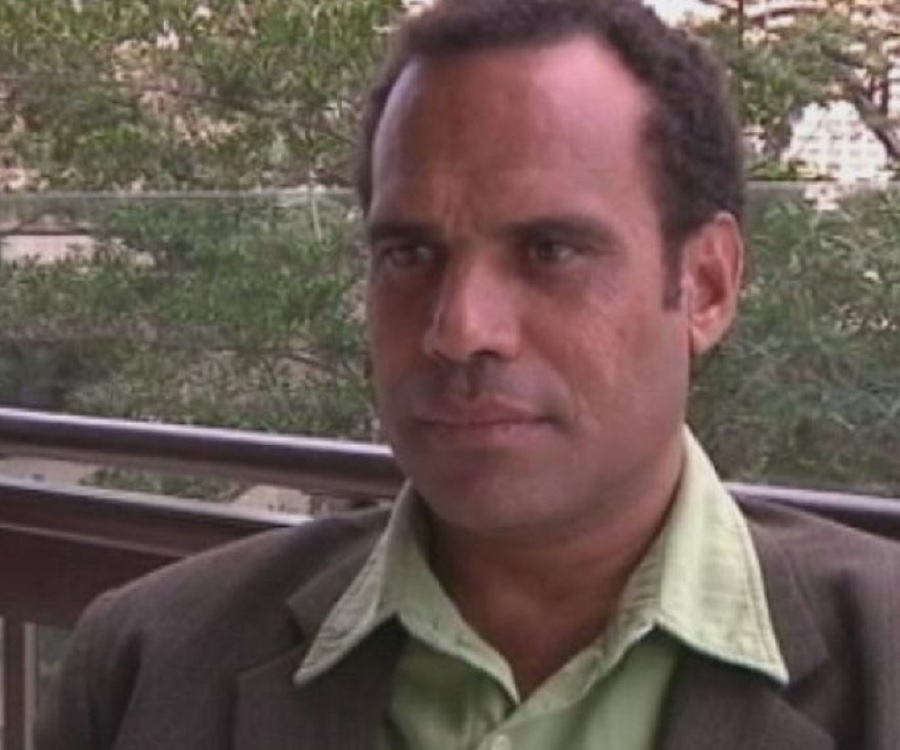
RALPH REGENVANU (RR): There is also a need for the whole process of the vote of self-determination to be revisited, in light of the fact that the UN-supervised vote when it happened back in the 1960s (The Act of Free Choice) was very questionable, basically a sham. So that needs to happen again because the people of West Papua haven’t been given an opportunity to decide on their future. And it’s really a decolonisation issue.
30 August 2016
French nuclear test in Polynesia featured in official United Nations commemoration of "International Day against Nuclear Tests"
UN News Centre
On World Day, top UN officials call for prompt entry into force of nuclear test ban treaty
Picture of actual 1971 Licome nuclear test in French Polynesia highlighted in U.N. Comprehensive Nuclear Test Ban Treaty Organisation (CTBTO) is center stage.
 |
| 1971 Licome nuclear test in French Polynesia (The official Photostream CTBTO) |
29 August 2016 – Marking the International Day against Nuclear Tests, senior United Nations officials today called for the entry into force of a multilateral treaty that bans all nuclear explosions, for both civilian and military purposes, in all environments.
“Today marks a quarter of a century since the closure of the Semipalatinsk test site in Kazakhstan, ground zero for more than 450 nuclear tests,” UN Secretary-General Ban Ki-moon said in his message for the Day. “The victims there are joined by others scattered across Central Asia, North Africa, North America and the South Pacific.”
“A prohibition on all nuclear testing will end this poisonous legacy,” Mr. Ban added, noting that it will boost momentum for other disarmament measures by showing that multilateral cooperation is possible, and it will build confidence for other regional security measures, including a Middle East zone free of nuclear weapons and all other weapons of mass destruction.
A prohibition on all nuclear testing will end this poisonous legacy.
In 2009, the UN General Assembly declared 29 August the International Day against Nuclear Tests through the unanimous adoption of a resolution to that effect. It also called for increasing awareness and education “about the effects of nuclear weapon test explosions or any other nuclear explosions and the need for their cessation as one of the means of achieving the goal of a nuclear-weapon-free world.” The resolution’s adoption also commemorated the closure of the Semipalatinsk nuclear test site in Kazakhstan in 1991.
In his message, Mr. Ban also noted that this year marked the 20th anniversary of the adoption of the Comprehensive Nuclear-Test-Ban Treaty (CTBT) by the Assembly.
“Given the catastrophic risks posed by nuclear weapons to our collective human and environmental security – even our very existence – we must reject this stalemate,” said the UN chief.
To date, 183 countries have signed the treaty and 164 have ratified CTBT. For the treaty to enter into force, ratification is required from the so-called Annex 2 States. Of these, China, the Democratic People’s Republic of Korea, Egypt, India, Iran, Israel, Pakistan and the United States, have yet to ratify it.
“Those States whose ratification is required to bring the treaty into force should not wait for others. Even one ratification can act as a circuit breaker,” Mr. Ban said in his message, calling on all countries and peoples to work for CTBT’s prompt entry into force on the path towards a nuclear-weapon-free world.
He also stressed the power of political will that can break longstanding deadlocks, as demonstrated in the adoption of ambitious new 2030 Agenda for Sustainable Development and the Paris Agreement on climate change.
General Assembly President Mogens Lykketoft, in his message for the Day, said that CTBT must also be seen as “an important tool in our endeavour to achieve a world free of nuclear weapons,” adding his voice to the call on those States which have not yet done so to sign and ratify CTBT to enable its entry into force.
Mr. Lykketoft also noted that moratoriums on nuclear testing have had a positive impact on the international security environment, and he recalled the need for continued systematic and sustained efforts to reduce nuclear weapons globally and fulfil the ultimate objective of general and complete disarmament under strict and effective international control.
Mr. Lykketoft noted that to enhance awareness and education about the effects of nuclear test explosions and the need for their cessation, he will convene an informal General Assembly plenary meeting on Wednesday at the UN Headquarters.
________________________
UN Secretary-General's Message for 2016
For nearly a decade as United Nations Secretary-General, I have witnessed many of the worst problems in the world as well as our collective ability to respond in ways that at times seemed impossible. Our ambitious new 2030 Agenda for Sustainable Development and the Paris Agreement on climate change have demonstrated the power of political will to break longstanding deadlocks.
On this International Day against Nuclear Tests, I call on the world to summon a sense of solidarity commensurate with the urgent need to end the dangerous impasse on this issue.
Today marks a quarter of a century since the closure of the Semipalatinsk test site in Kazakhstan, ground zero for more than 450 nuclear tests. The victims there are joined by others scattered across Central Asia, North Africa, North America and the South Pacific.
A prohibition on all nuclear testing will end this poisonous legacy. It will boost momentum for other disarmament measures by showing that multilateral cooperation is possible, and it will build confidence for other regional security measures, including a Middle East zone free of nuclear weapons and all other weapons of mass destruction.
When I visited Semipalatinsk in 2010, I saw the toxic damage – but I also witnessed the resolve of the victims and survivors. I share their determination to strive for a world free of nuclear weapons.
Since its adoption 20 years ago by the General Assembly, the Comprehensive Nuclear-Test-Ban Treaty has yet to enter into force. Given the catastrophic risks posed by nuclear weapons to our collective human and environmental security – even our very existence – we must reject this stalemate.
I urge Member States to act now. Those States whose ratification is required to bring the Treaty into force should not wait for others. Even one ratification can act as a circuit breaker. All States that have not done so should sign and ratify because every ratification strengthens the norm of universality and shines a harsher spotlight on the countries that fail to act.
On this Day, I call on all countries and peoples to work for the CTBT’s entry into force as soon as possible so that we may advance toward a nuclear-weapon-free world.
Today marks a quarter of a century since the closure of the Semipalatinsk test site in Kazakhstan, ground zero for more than 450 nuclear tests. The victims there are joined by others scattered across Central Asia, North Africa, North America and the South Pacific.
A prohibition on all nuclear testing will end this poisonous legacy. It will boost momentum for other disarmament measures by showing that multilateral cooperation is possible, and it will build confidence for other regional security measures, including a Middle East zone free of nuclear weapons and all other weapons of mass destruction.
When I visited Semipalatinsk in 2010, I saw the toxic damage – but I also witnessed the resolve of the victims and survivors. I share their determination to strive for a world free of nuclear weapons.
Since its adoption 20 years ago by the General Assembly, the Comprehensive Nuclear-Test-Ban Treaty has yet to enter into force. Given the catastrophic risks posed by nuclear weapons to our collective human and environmental security – even our very existence – we must reject this stalemate.
I urge Member States to act now. Those States whose ratification is required to bring the Treaty into force should not wait for others. Even one ratification can act as a circuit breaker. All States that have not done so should sign and ratify because every ratification strengthens the norm of universality and shines a harsher spotlight on the countries that fail to act.
On this Day, I call on all countries and peoples to work for the CTBT’s entry into force as soon as possible so that we may advance toward a nuclear-weapon-free world.
___________________________
For further information:
IMF Concludes Review of Curacao, Sint Maarten economies
The two autonomous countries share the Caribbean Guilder currency, have "high level of development, good infrastructure, and relatively low public debt." according to the IMF.
***********
IMF Press Release
IMF Press Release
On July 27, 2016, the Executive Board of the International Monetary Fund (IMF) concluded the 2016 Article IV Consultation discussions with Curaçao and Sint Maarten, two autonomous countries within the Kingdom of the Netherlands, and considered and endorsed the staff appraisal without a meeting.1,2
The currency union of Curaçao and Sint Maarten has important strengths, including a high level of development, good infrastructure, and relatively low public debt, however, preserving these going forward will require surmounting some critical challenges.
GDP per capita is already at high-income country levels, but growth is lackluster and unemployment levels are high. The fiscal situation remains relatively stable, following the debt relief in 2010, but progress on necessary fiscal and structural reforms has been slow. For several years now, both countries have experienced stagnant growth, trailing behind regional peers.
Curaçao experienced modest growth in 2015 of 0.1 percent, reflecting a turnaround from the contraction of 1.1 percent in 2014. Growth in Curaçao mainly reflected an increase in investment (both public and private), driven largely by the construction of the new hospital and the upgrade of road infrastructure.
Meanwhile, the economy of Sint Maarten expanded by 0.5 percent in 2015, a slowdown compared to the 1.5 percent recorded in 2014. The expansion in Sint Maarten’s GDP mainly reflected an increase in stay-over tourist arrivals, though at a slower pace than in 2014. With the exception of the recent expansion project at the Princess Juliana International Airport, there were no major private investment in 2015, underscoring the need to boost investor confidence. 1
READ THE FULL REPORT HERE.
____________________________________________________
Under Article IV of the IMF’s Articles of Agreement, the IMF holds bilateral discussions with members, usually every year. A staff team visits the country, collects economic and financial information, and discusses with officials the country’s economic developments and policies. On return to headquarters, the staff prepares a report, which forms the basis for discussion by the Executive Board.
2 Article IV consultations are concluded without a Board meeting when the following conditions apply: (i) there are no acute or significant risks, or general policy issues requiring Board discussion; (ii) policies or circumstances are unlikely to have significant regional or global impact; (iii) in the event a parallel program review is being completed, it is also being completed on a lapse-of-time basis; and (iv) the use of Fund resources is not under discussion or anticipated.
29 August 2016
New Caledonia used for joint French-U.S. military exercises

 |
| Photo By Sgt. Carlos Cruz Jr. | |
Story by Sgt. Carlos Cruz Jr.
FRONTIER GRIBEAUVAL, New Caledonia - Marines yearn for a breath of fresh air and the privilege to be one of the very few Marines that has the right to call themselves a ‘commando’.
A platoon of U.S. Marines traveled to New Caledonia where they worked hand-in-hand with members of the French Armed Forces during Exercise AmeriCal 16 from August 8 to September 2.
The platoon went through a French Light Infantry Course and will be the first Marine Corps platoon to complete the full three-week French Nautical Commando Course since the exchange began.
“Knowing that I’m part of the first platoon to complete this course is pretty rewarding,” said Cpl. Joseph J. Bennetti, a machine gunner with 1st Battalion, 1st Marine Regiment, Marine Rotational Force – Darwin. “I get to experience something that most Marines haven’t. The course is hard but I’m enjoying it and it really gives me the opportunity to test my abilities to the max.”
The course consists of various water training and survival exercises, hand-to-hand combat, close quarters battles, knot tying, building rope bridges and more. Everything the Marines and soldiers learn and experience during the first two weeks will be used during the final three-day exercise on week three.
Sgt. Ryan R. Krohn, a rifleman with 1st Battalion, 1st Marine Regiment, MRF-D, said he has learned a lot and enjoys the challenges of the course, however, he said it is exhausting constantly being wet from the water survival exercises.
“You’re always wet, no matter what,” Krohn said, a native of Acworth, Georgia. “You go to sleep wet, wake up wet, or don’t get to go to sleep because you’re out somewhere training and still getting wet. But it makes you stronger, tougher. When they tell you to jump in the water and then tell you have to move 10 clicks (about 6 miles), in wet boots and socks, it kind of gets to your soul, but we keep on moving.”
The Marine platoon split into two groups and integrated some French Army soldiers, allowing the two forces to work hand-in-hand and overcome the language barriers during team-building events.
“It’s been a worthwhile experience to see the differences and similarities between our military forces and how we operate together,” said Bennetti, a native of New York, New York. “Nothing really changes besides the language.”
Bennetti also said that he impressed himself being able to complete this course.
“The course has been both challenging and fun, it’s been an experience that I haven’t had before in the Marine Corps,” Bennetti said. “This is probably some stuff (Marine Corps Forces Special Operations Command) or (reconnaissance) Marines would get to do, not usually a line company machine gunner.”
The U.S. Marines first participated in AmeriCal in 2011 and it is scheduled to become an annual exercise.
“I would suggest coming to this course if you get the chance to volunteer for it, otherwise, if you wouldn’t volunteer, you probably shouldn’t come because it’s definitely not easy,” said Krohn. “A lot of Marines had a rude awakening, but they’re performing very well now and we’re doing a really good job as a standard infantry platoon doing a commando course. It just shows what the Marine Corps Infantry is made of and what we can do.”
28 August 2016
Puerto Rico civil action grows against the U.S. takeover of territory's financial management
 SAN JUAN – Protesters in Puerto Rico called Wednesday for the repeal of a law that establishes an oversight board to oversee the debt-saddled U.S. commonwealth’s finances.
“No to the board and no to the debt,” Shelimar Velazquez, a spokeswoman for the protesters, said at a press conference outside the U.S. District Court for the District of Puerto Rico in San Juan.
Around 50 people – most of them under 30 – have gathered at a protest camp at that site since June 29.
She said the group’s priority was to secure the repeal of the Puerto Rico Oversight, Management, and Economic Stability Act, which President Obama signed into law in late June.
PROMESA is undemocratic and will ensure payments are made on “illegitimate” public debt while redirecting funds away from basic services such as health care, education and public transport, Velazquez said.
The law installed a financial control board to restructure Puerto Rico’s massive $68 billion debt load and provided a retroactive stay on lawsuits by bondholders.
Last month, Standard & Poor’s and Fitch Ratings downgraded Puerto Rico’s general obligation, or GO, bonds to D (default), the lowest possible level, after the U.S. commonwealth’s government missed payment on nearly $780 million worth of that constitutionally guaranteed debt.
Puerto Rico has been mired in a recession for a decade and experienced a large increase in migration to the mainland United States in recent years.
26 August 2016
Mónica y Puerto Rico


Puerto Rico es mi fuerza”. Con esa expresión, la puertorriqueña Mónica Puig Marchán explica la gesta histórica que acaba de realizar al conseguir para su patria la primera medalla de oro en unos juegos olímpicos, con su actuación estelar en el deporte del tenis durante los Juegos Olímpicos que se celebran en Río de Janeiro, Brasil.
Para ganarse esa medalla de oro, que la convierte en primerísima figura del tenis mundial, Mónica tuvo que de luchar largo y tendido. Se enfrentó a rivales poderosas, entre ellas algunas de las principales raquetas femeninas del mundo, en seis partidos durísimos. Pero, tal y como ella señaló, este era su momento.
Y así lo demostró su actuación contundente durante todo el torneo, y su victoria limpia y clara en el juego por la medalla de oro. Sin duda, estamos ante la mejor tenista del mundo al presente y, además, boricua, lo cual ha quedado consignado para la posteridad en los anales del olimpismo mundial.
En los días transcurridos desde que Mónica convirtió su oro en nuestra alegría, se ha dicho y escrito mucho sobre el significado de su victoria, una victoria fraguada en 67 años de participación deportiva internacional, por parte de cientos de atletas puertorriqueños, hombres y mujeres que, con recursos o sin ellos, han dado alma, vida y corazón para representar dignamente a nuestra patria en el escenario deportivo internacional.
Mónica es la heredera triunfante de la honrosa tradición que se inició en el 1948, con la primera participación de Puerto Rico en unos juegos olímpicos, y que sigue empeñada en que nuestro país sostenga en alto su soberanía deportiva, como medio de ocupar nuestro espacio en el deporte más allá de nuestras fronteras.
Porque es consciente de ello, Mónica no ha dejado de repetir cuánto quería ganar esa medalla, no solo por el significado que tiene para ella como atleta del más alto nivel en su deporte, sino, sobre todo, para hacer cumplir su sueño y el nuestro de que sonaran con fuerza los acordes de nuestro himno nacional, La Borinqueña, y que se elevara en todo su esplendor nuestra bandera en lo más alto del podio olímpico.
La medalla de oro que logró Mónica es un hito también porque la logra una mujer, precisamente en el año en que, por primera vez, las atletas mujeres son la mayoría de la delegación que nos representa en Río de Janeiro, y que está encabezada por la Presidenta del Comité Olímpico de Puerto Rico, Sara Rosario, la primera y única mujer en haber presidido el máximo organismo deportivo nacional.
Mónica Puig Marchán logró un triunfo deportivo enorme que nadie antes que ella había logrado. Lo hizo sin alardes ni fanfarrias, motivada solo por el noble deseo de convertir su sueño en motivo de orgullo para la inmensa mayoría de nuestro pueblo. Sobran, pues, las razones para celebrar este momento perfecto, en el cual ella marcó para siempre la historia de su vida y la de Puerto Rico.
ALSO READ: Mónica ganó con todo en contra
ALSO READ: Mónica ganó con todo en contra
25 August 2016
Juventud Hostosiana saluda a la Delegación Olímpica Puertorriqueña
MOVIMIENTO INDEPENDENTISTA NACIONAL HOSTOSIANO  |
| La Juventud Hostosiana saluda a todos y todas las atletas del Comité Olímpico de Puerto Rico que llevaron nuestro nombre en alto en los pasados Juegos Olímpicos celebrados en Río de Janeiro, Brasil |
Escrito por Juventud Hostosiana / MINH
|
|
“Más allá de la medalla de oro, lo ocurrido en Río de Janeiro fue un momento de felicidad de pueblo y de orgullo que ante la crisis en que vivimos muestra de lo que somos capaces. Por nuestra parte, nos enorgullece que en estos juegos las mujeres jóvenes, desde la tenismesista Adriana Díaz hasta nuestra primera medallista olímpica de oro Mónica Puig, pusieron en alto el nombre de Puerto Rico a través del deporte”, arguyó la joven Lenna Marielis, miembro de la organización.
Alguna de las muestras históricas de nuestra delegación fue la llegada a la final de 400 metros con vallas por Culson, las gestas de lucha de Franklin Gómez y Jaime Espinal, la gesta de la tenismesista Adriana Díaz, la primera presentación olímpica de nuestro equipo de voleibol femenino, la primera final de un clavadista puertorriqueño y la primera medalla de oro olímpico obtenida por nuestra Mónica Puig en tenis sencillo; entre otras gestas históricas de la delegación participante del evento. “Este legado dejado por nuestros atletas es una muestra más del valor del deporte, de la juventud y de la esperanza ante la crisis que enfrentamos en el país. Como juventud que lucha por la independencia de Puerto Rico y por un futuro mejor, vemos a este grupo de jóvenes que regresan victoriosos y victoriosas como un ejemplo de lo que es posible para nuestro país”, expresó Leslie Ann Ruiz, también integrante de la organización. |
24 August 2016
Former Virgin Islands Delegate to Congress to address Guam Women's Chamber of Commerce
 |
| congress.gov |
The Guam Women’s Chamber of Commerce is pleased to announce its General Membership Meeting scheduled for Thursday, August 25, 2016, at The View, located at the Pacific Star Resort & Spa. GWCC’s keynote speaker will be the Honorable Donna M. Christensen.
Christensen is the first female physician in the history of the U.S. Congress, the first woman to represent an offshore territory, and the first woman delegate from the U.S. Virgin Islands. She served as the non-voting delegate from the U.S. Virgin Islands to the U.S. House of Representatives from 1997 until 2015.
Prior to entering politics, Christensen began her medical career in the U.S. Virgin Islands in 1975 as an emergency room physician at St. Croix Hospital. Between 1987 and 1988 she was medical director of the St. Croix Hospital and from 1988 to 1994 she was Commissioner of Health for the Virgin Islands. From 1977 to 1996 Christensen maintained a private practice in family medicine and was also a television journalist from 1992 to 1996.
As a member of the Democratic Party of the Virgin Islands, she served as Democratic National Committeewoman, member of the Democratic Territorial Committee and Delegate to all the Democratic Conventions in 1984, 1988 and 1992.
Christensen was also elected to the Virgin Islands Board of Education in 1984 and served for two years. She served as a member of the Virgin Islands Status Commission from 1988 to 1992. In 1996 Christensen was elected as the non-voting delegate from the Virgin Islands in the U.S. Congress.
Despite her non-voting status, she served on various house committees including the Committee on Natural Resources and the Committee on Homeland Security. She also chaired the Natural Resources Subcommittee on Insular Affairs and was a member of the Congressional Black Caucus, Congressional Caucus for Women’s Issues, Congressional Travel and Tourism Caucus, Congressional Rural Caucus, Friends of the Caribbean Caucus, Coastal Caucus, and the Congressional National Guard and Reserve Caucus.
Subscribe to:
Posts (Atom)