Showing posts with label Cayman Islands. Show all posts

08 July 2019

BRITISH DEPENDENCIES RESIST U.K. POLICY OF UNILATERAL POWER


St. Kitts & Nevis Observer


Britain’s Overseas Territories say they will “stand together” to defend their right to self-government amid increasing concerns over “constitutional overreach” from the UK.

Any attempts to enforce legislation from Westminster on issues ranging from same-sex marriage to ‘belongership’ and financial services regulation will be strongly resisted, according to leaders of several territories, following talks in Grand Cayman this week.

Despite the disparate concerns of the various territories, leaders from the Falklands to Bermuda were united in their opposition to the UK dictating policy from thousands of miles away.

A UK law seeking to impose public registers of beneficial ownership on Britain’s territories – seen as a threat to the financial services industry – is a key concern for several islands.

“Modern-day colonialism is what is being attempted by those persons is Westminster, and I am certain that all Overseas Territories will resist it vociferously,” Bermuda Premier David Burt said at a press conference following the summit at the Kimpton Seafire Hotel on Wednesday.

Several other leaders expressed similar concerns, and insisted the pressure from the UK on various issues is helping them to forge closer bonds as they seek to resist what they see as constitutional overreach from the mother country.

“I see a beacon of hope with our team here, because we all realise that divided we fall, united we stand,” said Andrew Fahie, premier of the British Virgin Islands.

A recent report from a Foreign Affairs Select Committee, which included a number of suggestions including recommendations that the UK government force its territories to adopt same-sex marriage legislation and open discussions on allowing resident UK citizens to vote and stand for election, is also stoking controversy.

Though the current British government says it has no plans to follow through on the report’s recommendations, the uncertainty and instability in UK politics amid a Conservative party leadership battle, division over Brexit and the possibility of a general election, is fuelling concern.

Burt said it was possible that the report’s recommendations could gain traction in a new government, and highlighted the possibility that some of its authors could be part of a future government.

“It is sad to see persons who don’t have a familiarity [with the various islands] reverting to a position we thought was long gone, where Westminster feels able to dictate to the Overseas Territories,” he added.

Albert Isola, Gibraltar’s minister for commerce, said the specifics of the issues at stake were largely irrelevant. He said it was “anti-democratic” of the UK to attempt to make laws for its territories on issues that were the responsibility of the elected governments.

“There is no way today we can accept modern colonialism through the back door by allowing these things to happen. On that, as has been demonstrated today, we are all 100 percent on the same page,” he said.

The report caused ripples as far away as the Falklands. Teslyn Barkman, a legislator from the islands, off the coast of Argentina, said it was omitted entirely from the report, but could be faced with the impact of its findings.

She said the recommendation that UK citizens be given the right to vote and run for office in the territories was the most controversial.

“You are talking about giving UK citizens the right to vote in a population of 3,000. You could very quickly have a population of UK citizens who don’t know the territory’s needs or priorities, or care about the long-term viability of the economy.”

Sharlene Cartwright-Robinson, of the Turks and Caicos, said she expected pressure from the UK, particularly over voting rights and same-sex marriage, would continue.

“It is a matter of constitutional overreach, and respecting territories rights to choose how they want to govern, how they want to grow their countries, who they want to run in their elections and certainly their culture and religious beliefs,” she said.

Montserrat Premier Donaldson Romeo said the UK clearly understood the democratic values at stake, because they were fighting for autonomy from the European Union on the basis of the same principles.

“We have just the same right as they have and we need to insist on our right to self determination, and our people need to support us in this regard.”

He urged the leaders around the table to remain united on issues, even when they only affected a handful of islands, and vowed to offer Montserrat’s support to others on issues, like financial services, which do not directly affect the island.

“We have a saying in Montserrat, ‘today for you, tomorrow for me’. I am counting on us to stand together,” he said.

28 September 2016

UK overseas territories could be affected by EU tax crackdown


Jersey, British Virgin Islands and Cayman Islands among possible targets for economic sanctions after being included on low corporation tax scorecard


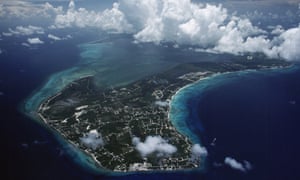
A view of the Cayman Islands. The EU is planning to publish a definitive list of tax havens. Photograph: David Doubilet/National Geographic/Getty Images

BY


Eight British overseas territories and crown dependencies, including Jersey, the British Virgin Islands and Cayman Islands, could face EU economic sanctions after Brussels identified them as having low or no corporation tax.

Experts have published a scorecard showing red flag warnings set against a list of the 81 countries that may attract companies or individuals seeking to avoid or evade European taxes. 

The scorecard will be discussed among member states before a shortlist of countries is selected for further screening and whittled down to a definitive EU list of tax and secrecy havens, to be published at the end of next year. 

In the meantime, discussions are under way as to sanctions that the EU could impose on countries included in the final list. Options being discussed include the introduction of additional taxes, known as “withholding taxes”, or the removal of tax deductions.

READ THE FULL REPORT IN THE GUARDIAN .

18 April 2016

Cayman Islands 'tenuous grip on self-governance"


The Cayman Reporter


Posted By: Tina Trumbach

The past week has shown us that the Cayman Islands has a more tenuous grip on self governance than we’d previously believed.

Given the modernised 2009 Constitution, most Caymanians have been lulled into a sense of security that despite being a British Overseas Territory (BOT), we had the right to rule our own destiny.

However, with calls for direct rule coming from the UK’s (United Kingdom) Opposition Leader it quickly became clear to us all that this was not outside of the realm of possibility.

We have only to look at our fellow BOT the Turks and Caicos Islands to see that it is a potential reality that Britain can hold over our heads if we don’t fall into line.

Although Prime Minister David Cameron pushed aside Labour leader Jeremy Corbyn’s comments regarding the spectre of direct rule, the damage to our psyches had already been done.

Most of us grew up blithely accepting that our elected representatives ran the country while the Governor of the day merely represented the UK on our shores.

After all, the UK is supposed to be responsible only for our national security and foreign affairs.

However, recent events and issues have pointed to a far different reality.

Look at the issue of a public registry of beneficial ownership. Our local leaders have fought this tooth and nail over the past three years, finally coming to a compromise announced this week. However, despite this agreement Premier Hon Alden McLaughlin has warned that the battle is far from over. David Cameron continues to push for a public register.

And although Mr Cameron has denied the possibility of imposing direct rule if we do not comply, we are certain that great pressure will be brought to bear. How long will we be able to withstand it?

Beyond the issue of beneficial ownership, we also have the social and cultural one of same-sex marriage. While this publication has not taken a public stance on the issue, we are keenly aware that there is strong opposition to the very idea among the local population.

Indeed, two elected representatives resigned from the ruling government over the issue late last year. And opinion against recognising same-sex marriages locally has only solidified since then, with the Cayman Ministers Association taking a pledge to uphold traditional marriage.

While any pressure from the UK on this issue has been more subtle than that exerted over beneficial ownership, the pressure is still there.

A spokesperson for James Duddridge, the UK Minister for the Overseas Territories and Africa, said “We continue to encourage all the Overseas Territories to respect human rights in their widest meaning and to embrace policies of inclusiveness.”

This was in relation to a previous statement by Mr Duddridge in the UK Parliament on the Cayman Islands position on “equal marriage” that became a point of contention with Dr Leonardo Raznovich – who is currently appealing the Immigration Appeals Tribunal’s decision not to approve his application to be added as a dependent to his partner’s work permit by virtue of their marriage in another jurisdiction.

The Premier is trying to compromise on this issue as well. He has pledged to amend the Immigration Law regulations to allow same-sex and common law spouses as work permit dependents. It is his hope that this will stem the tide, and prevent the Cayman Islands from being forced to recognise same-sex unions by the UK.

This publication has not taken a position with regard to same-sex marriage, what we are taking a position on is internal self-governance.

Cayman’s elected representatives must have the final say on issues that relate to our internal affairs. Otherwise, what is the value of our democracy? And without this assurance, is the 2009 Constitution worth the paper it is written on?

We do not see how the issue of same-sex marriage is related to good governance, our national security or our foreign affairs – the only areas which the UK is supposed to have control over.

Aren’t we supposed to have governance over issues that relate solely to our community and society? Culturally, we would hazard a well-educated guess that most Caymanians are against same-sex marriage. If it came to a point that we were being forced to adopt this, wouldn’t it have to go to referendum?

After all, as drafted, the definition of marriage in the Cayman Islands is established in our Constitution of 2009. The provisions of that document had to go to a referendum to be approved by the people, so shouldn’t changing this aspect have to go to a vote as well?

And should the Caymanian people vote “No” what would the UK response be? Would our Constitution be revoked and we be placed under direct rule for disagreeing with a social and cultural construct?

Please note, as we have said repeatedly, this is not a position on same-sex marriage. This is a genuine question on the Cayman Islands’ rights and abilities to govern, control and manage our own internal affairs.

If we can be threatened, coerced and bullied on beneficial ownership, will we experience the same on this and any other issue that we disagree with the UK on?


14 April 2016

Cayman Premier calls for transfer of police to elected government

UK should hand police over to Cayman government


Cayman News Service.com

Cayman News Service
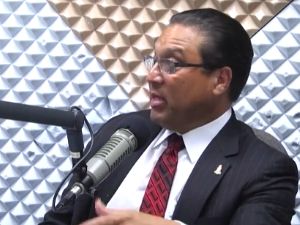
Premier Alden McLaughlin speaking on Radio Cayman Monday, 11 April 2016
(CNS): The premier believes the United Kingdom would be better off and the Cayman Islands would be further ahead if the Foreign and Commonwealth Office relinquished control of national security and the management of the police service to the Cayman government via a police authority. Speaking on Radio Cayman, Alden McLaughlin said the current arrangement was not working and has become extremely political, even though the politicians have no say at all in the management of the RCIPS. He also criticised the National Security Council, which, he said, was not functioning as it was envisaged during the 2009 constitutional talks.
“The UK are crazy having responsibility here for national security … It would be far better if the people could hold me or another elected member responsible,” the premier said, noting that over the last decade or so Cayman had hounded four police commissioners out of office because the post has “become so political”.
The premier was speaking about the current arrangements within the constitution regarding the police and crime during his appearance Monday on Radio Cayman’s morning show, For the Record, with Orrett Connor.
In light of the recent resignation of Police Commissioner David Baines, the perceived rise in crime and the pressure from the opposition for an entire review of the police service, McLaughlin raised his concerns about the motion that was filed by the opposition members calling for a no confidence debate in the RCIPS. He said he supported a review of the governance and management structure of the service but thought the motion was irresponsible as it was seeking a declaration that parliament has no confidence in all of the police officers, which was wrong.
Talking about the best way to address the police management, McLaughlin said he still believed, as he had during the talks with the UK over the 2009 constitution, that Cayman needed a local police authority to take control locally. He said that during those talks the idea was discussed with the UK, but with Opposition Leader Mckeeva Bush and his UDP team at the time opposed to it, the UK would not agree and retained the responsibility of national security with the governor.
The only local responsibility for the Royal Cayman Islands Police Service is its budget, which is in the hands of the home affairs ministry, now led by McLaughlin. The creation of a National Security Council was supposed to give the elected arm more say in policy, but noting that everything to do with police policy remains with the governor, McLaughlin said the NSC did not “function the way it should”.
However, he said the public still looks to the politicians for answers, even though they are not responsible and can do very little to influence what happens with the police.
“The construct does not work and the UK would be well advised to agree to allow a police authority,” he said. “Cayman, the UK and the governor will all be better off if we had a police authority responsible for the police service and the commissioner, instead of the post being line managed by the governor.”
Concerned that it will become increasingly difficult to fill the post of commissioner because of the strength of public feeling that there should be more local control over the police, he said that management of the police had become a “poisoned chalice” but one that he would take on nonentheless, as it “was critical to Cayman”. He pointed out that Cayman had enjoyed a long, peaceful history and when one heard of three armed robberies in one weekend, “those things are chilling”.
Welcoming the discussion and debate, which is now expected to take place in the Legislative Assembly on Thursday, 28 April, McLaughlin said he was happy to debate the issues but was concerned that the motion as it stands now, which calls for a declaration of no confidence in the entire police service, will not improve what is already a difficult situation.

04 October 2015

Am. Samoa Governor Critical Of (U.S.) Coast Guard’s Overzealous Enforcement


Samoa News

Lolo says fishing vessels being deterred from dropping catch 
at canneries

By Fili Sagapolutele

(PAGO PAGO, American Samoa)  During a meeting last week, Gov. Lolo Matalasi Moliga reiterated his concerns to US Coast Guard officials about the impact the federal agency’s enforcement practices in the territory have had, which discourage fishing vessels coming into the Port of Pago Pago to unload their catch for the canneries — which are the economic backbone of American Samoa.

Last month, the governor wrote to Coast Guard Rear Admiral Vincent B. Atkins, commander of the USCG District 14 Honolulu, calling for the USCG to be sensitive to American Samoa’s dependency on the tuna industry when performing their duties, and urged the Coast Guard to work together with the territorial government to better serve the people.

The governor’s request followed an incident where two fishing boats were detained indefinitely because of suspected environmental violations, and he has been told that canneries are routinely frustrated in their fish procurement operations when boat owners or reefer carriers refuse to deliver to American Samoa "out of concern for what they perceive to be overzealous USCG boarding parties and inspectors."

Last week the governor met — on island — with Coast Guard Capt. Shannon Gilreath, the USCG Commander of Sector Honolulu, and captains of the Port of Honolulu and Port of Pago Pago. At the meeting the governor repeated his concern about the impact of the enforcement practices of the USCG, which is discouraging many fishing vessels from entering Pago Pago Harbor to unload their catch.

"This affects the canneries and threatens suspension of production, which translates to purchasing power reduction thus affecting all of the private businesses as well as government revenue," according to the Governor’s Office in response to Samoa News inquiries.

Gilreath acknowledged the Governor's concern and said "we will work collaboratively to address enforcement practices which discourage fishing vessels to off-load their catches at the canneries."

While on island, Gilreath also met with the American Samoa Fishery Task Force and the Board of Marine Inspectors, which comes under the purview of the Port Administration. Tri Marine International officials also attended these two meetings, and Tri Marine’s chief operating officer John Hamby was among the company officials at the meeting. (Tri Marine and StarKist Samoa are members of the task force and the Board of Marine Inspectors).

Tri Marine spokesperson Heidi Happonen said last week that the task force and Board of Marine Inspectors "are working closely and collaboratively with the Coast Guard for the benefit of the Territory’s tuna industry, which includes the fishing boats that deliver tuna to American Samoa."

Its local operations include a US flagged purse seiner fleet and the Samoa Tuna Processors cannery.

Samoa News has been told by at least one captain of a purse seiner vessel, which used to be based out of American Samoa that over the last several months they no longer come here, due to the over-the-top USCG inspections, choosing instead to ‘transship’ in Samoa, as well as pick up their supplies, etc.

Meanwhile, the US National Oceanic and Atmospheric Administration (NOAA) has yet to issue a decision on Tri Marine’s petition that would allow US flagged purse seine vessels, which unload their catch at the local canneries, to fish in the US EZZ and on the high seas.

*****************

Am. Samoa Governor Critical Of Coast Guard’s 
Overzealous Enforcement

Lolo says fishing vessels being deterred from dropping catch at canneries

By Fili Sagapolutele

(PAGO PAGO, American Samoa)  During a meeting last week, Gov. Lolo Matalasi Moliga reiterated his concerns to US Coast Guard officials about the impact the federal agency’s enforcement practices in the territory have had, which discourage fishing vessels coming into the Port of Pago Pago to unload their catch for the canneries — which are the economic backbone of American Samoa.

Last month, the governor wrote to Coast Guard Rear Admiral Vincent B. Atkins, commander of the USCG District 14 Honolulu, calling for the USCG to be sensitive to American Samoa’s dependency on the tuna industry when performing their duties, and urged the Coast Guard to work together with the territorial government to better serve the people.

The governor’s request followed an incident where two fishing boats were detained indefinitely because of suspected environmental violations, and he has been told that canneries are routinely frustrated in their fish procurement operations when boat owners or reefer carriers refuse to deliver to American Samoa "out of concern for what they perceive to be overzealous USCG boarding parties and inspectors."

Last week the governor met — on island — with Coast Guard Capt. Shannon Gilreath, the USCG Commander of Sector Honolulu, and captains of the Port of Honolulu and Port of Pago Pago. At the meeting the governor repeated his concern about the impact of the enforcement practices of the USCG, which is discouraging many fishing vessels from entering Pago Pago Harbor to unload their catch.

"This affects the canneries and threatens suspension of production, which translates to purchasing power reduction thus affecting all of the private businesses as well as government revenue," according to the Governor’s Office in response to Samoa News inquiries.

Gilreath acknowledged the Governor's concern and said "we will work collaboratively to address enforcement practices which discourage fishing vessels to off-load their catches at the canneries."

While on island, Gilreath also met with the American Samoa Fishery Task Force and the Board of Marine Inspectors, which comes under the purview of the Port Administration. Tri Marine International officials also attended these two meetings, and Tri Marine’s chief operating officer John Hamby was among the company officials at the meeting. (Tri Marine and StarKist Samoa are members of the task force and the Board of Marine Inspectors).

Tri Marine spokesperson Heidi Happonen said last week that the task force and Board of Marine Inspectors "are working closely and collaboratively with the Coast Guard for the benefit of the Territory’s tuna industry, which includes the fishing boats that deliver tuna to American Samoa."

Its local operations include a US flagged purse seiner fleet and the Samoa Tuna Processors cannery.

Samoa News has been told by at least one captain of a purse seiner vessel, which used to be based out of American Samoa that over the last several months they no longer come here, due to the over-the-top USCG inspections, choosing instead to ‘transship’ in Samoa, as well as pick up their supplies, etc.

Meanwhile, the US National Oceanic and Atmospheric Administration (NOAA) has yet to issue a decision on Tri Marine’s petition that would allow US flagged purse seine vessels, which unload their catch at the local canneries, to fish in the US EZZ and on the high seas.


01 September 2015

Cayman should demand to have World Organisation membership

The Cayman Reporter


Today the Cayman Islands face many challenges especially when it pertains to its financial services industry. Although a small nation, the Cayman Islands has become accustomed to manoeuvring around the global financial arena and dealing with various threats such as being placed on financial blacklists

It would be beyond the scope of this editorial to even try and project the growing demand amongst the OECD and the EU to force Overseas Territories (OT) such as the Cayman Islands to forcefully comply with the transparency requirements that suit the economic and financial needs of their economies, regardless of the detrimental impact on the financial industry of the Cayman Islands.

Interestingly, many in our community are not aware that during 1991 to 1995 the British Overseas Territories (BOT) were consulted by the United Kingdom when its World Trade Organisation (WTO) membership was being negotiated as to whether the OTs wished to be covered. The OTs chose not to be and therefore are not represented in WTO talks. Basically the Cayman Islands, as one of the BOTs gave the UK the right to decide our financial services industry laws and future.

Overseas Territories use to benefit from preferential market access arrangements to the EU through the Generalised System of Preferences (GSP) or the Overseas Association Decision (OAD). Under current Commission proposals, Overseas Territories, with effect from 1 January 2014, no longer are eligible for the preferences under the GSP.”

Whatever the reason may have been for OTs agreeing to give all their negotiating powers to the mother country during the 90s, one thing has become quite clear. OTs such as the Cayman Islands have changed significantly over the past 20 years and should be seeking to be at the negotiating table to ensure that the Cayman Islands interests are considered and acted on.

In recent years we have seen too many incidents whereby it is apparent that the UK’s interests take precedence over the interest of the people in the Cayman Islands. How can we as a country be assured that the UK has been appropriately representing our interests in the international arena? Far too often we see our financial services industry coming under attack but rarely do we see the UK coming to our defence when the likes of the US come down on us.

Our constitution also makes it clear that the UK’s interest very well may come before ours. In ‘The Cayman Islands Constitution Order 2009’ section 31(3) it states, “In the exercise of his or her functions under subsection (2), the Governor shall endeavour to promote good governance and to act in the best interests of the Cayman Islands so far as such interests are consistent with the interests of the United Kingdom.” The final part of this clause makes it clear that the Governor, who should be acting in the best interest of the Cayman Islands, can refrain from doing so if Cayman’s interests are not aligned with that of the UK.

Maybe it is about time our government begin discussions on gaining back control over certain decision making abilities related to international trade and commerce, such as the ability to be represented at the WTO. If we cannot be assured that the UK will be looking out for the Cayman Islands best interest. It would be in our best interest to begin to take control of important aspects of our economy and country, especially when it pertains to international trade.

08 April 2015

United Nations publishes 2015 reports on British dependencies


Image result for decolonization

The United Nations has begun to release its informational Working Papers for 2015 on the 17 non self-governing territories. Below are links to the six dependencies administered by the United Kingdom in the Caribbean. The reports are prepared annually by the Decolonisation Unit of the Department of Political Affairs, and are used by the member States of the U.N. Decolonisation Committee as they review the political, constitutional, and socio-economic developments in each territory and make recommendations to the General Assembly on measures to advance the decolonisation process.   

Image result for decolonization
www.buddhistpeacefellowship.org
According to the latest Report of the U.N. Office of Internal Oversight Services (OIOS) on the U.N. system support to the decolonisation process (2007), the production of the annual Working Papers on the 17 non self-governing territories are the "primary way" the Decolonisation Unit supports the Special Committee (on Decolonisation). The OIOS Report indicated that the research, analysis and drafting of the Working Papers constitute the Unit’s main output" utilising "some 73 per cent of the total Unit work months." 

These Papers also constitute the main substantive documents for the annual regional seminars originally designed in 1990 to alternate between the Caribbean and Pacific, and to focus on the small island territories which constitute most of the remaining dependencies.
________________________


United Nations Working Papers 2015
British-administered dependencies


_________________________________

18 February 2015

British Labour Party threatens viability of financial sector of UK Dependencies


Miliband tells tax havens: open your books in six months

 - or face being blacklisted


Ed Miliband tonight warns the tax havens costing British families and businesses billions of pounds that they will have just six months to put their house in order and open their books - or face being placed on an international blacklist. 

He will highlight figures showing that despite David Cameron boasting more than 18 months ago that he had forced tax havens to open up, not one of the tax havens linked to Britain as Overseas Territories or Crown Dependencies have yet delivered on Cameron’s promise that they would publish a register showing who owns the companies registered there – and some have explicitly refused to do so.

The lack of leadership shown by the UK government has frustrated and slowed the pace of reform on tax avoidance across the world.

In a letter to heads of government, he will serve notice on them that that under the next Labour government they will have six months to publish publicly accessible central registers of beneficial ownership.

If they fail to meet this deadline, the next Labour government will withdraw the protection they get from international scrutiny and ask the Organisation for Economic Co-operation and Development to place them on its tax haven blacklist.

In an interview with the Guardian newspaper, Ed Miliband said:

“More than 18 months have passed since David Cameron promised to shine a light on the tax havens in UK overseas territories and Crown Dependencies – and their affairs are still shrouded in darkness. That may be good enough for him, but it will not satisfy me, or the incoming Labour government

“There is nothing pro-business about defending tax avoidance. The United Kingdom has a responsibility to open up the Overseas Territories and Crown Dependencies which are held responsible for so much tax secrecy and avoidance.

“And it is costing everyone who relies on our schools, our hospitals, our roads and our railways. It is costing everyone who pays their fair share of taxes, including millions of British businesses.

“Billions of pounds is being siphoned off into tax havens where our authorities cannot discover even the true ownership of firms registered there, let alone the scale of wealth hidden away. 

“Today, I am putting these tax havens on notice that they will have just six months to open up their books or face international sanction.”

(Ends)

Policy detail:

1. A publicly accessible central register of beneficial ownership is a register you can go to which tells you who is the actual owner of a company – in the sense of who benefits financially when that company makes money. Such a registry is already being set up in mainland UK.

2. Registers in Overseas Territories and Crown Dependencies would help stop or stem tax avoidance by showing the tax authorities who is diverting money into companies in these havens and where the money of UK taxpayers is going. At the moment, they can’t even check whether someone has set up a company in the tax havens, let alone whether any money is being diverted into that company.

3. The OECD is the guardian body for international tax rules. It has a list of uncooperative tax haven which low tax jurisdictions can be placed on depending on the transparency of their tax affair. Rather than protecting UK Overseas Territories and Crown Dependencies as we do now, we would act as whistle blowers, making a formal request to the OECD that they should be added to the blacklist.

4. The UK tax gap - the difference between what HMRC thinks it should collect and what it gets - has risen under David Cameron to £34bn

5. Overseas Territories and Crown Dependencies are under the jurisdiction and sovereignty of the UK, but are largely autonomous. The G20 has produced a list of potential measures that could be taken against black-listed countries which could include reviewing tax treaties with them, increasing disclosure, and even withholding taxes on finance flowing there.

Labour has already promised the following action on tax avoidance, set out in the paperDelivering Long-term Prosperity – Reform of the Business Taxation published by Ed Balls MP and Shabana Mahmood MP:

· Take the lead on tax transparency. A multilateral agreement on enhanced corporate reporting of tax liabilities in different jurisdictions would enhance transparency and reduce the risk of companies intent on avoiding tax relocating to territories with less exacting disclosure requirements. Nevertheless, even if international agreement is not forthcoming, we will work with business to create a disclosure regime that will increase transparency about what taxes are being paid and where, and bolster public confidence that companies are contributing their fair share. Furthermore, we will force UK Overseas Territories and Crown Dependencies to deliver on their promise to make the names of e beneficial owners of companies based in their jurisdictions publicly available, and extend this to trusts.

· End Exploitation of the Quoted Eurobond Exemption. A Labour Government will make it harder for companies to shift profits off-shore by addressing tax loopholes such as the Quoted Eurobond Exemption. HMRC themselves have identified the problem, but have failed to act. Those businesses legitimately using the exemption to obtain finance from international bond markets would be able to continue to do so. But those who use it as a loophole to move profits to connected companies in tax havens will be prevented from doing so.

· Tackle dormant companies. It has been estimated that 30% of all UK companies are not asked to submit tax returns. One explanation given is that these companies are either dormant or not liable to tax in the UK as they are exclusively trading overseas. Once companies have declared themselves to be dormant, there is an exemption from filing a Corporation Tax return for five years. For some companies, this five year window could be an opportunity to trade with tax impunity. Labour will require the annual confirmation of dormancy and explore the possibility of banks automatically informing HMRC when there is activity in supposedly-dormant accounts.

· Encourage stronger independent scrutiny of the tax system and the government’s efforts to tackle tax avoidance. Labour will affirm and strengthen the powers of the National Audit Office to scrutinise tax reliefs and, in particular, where they are abused to avoid tax. The Chancellor and the Chief Executive of HMRC should also be expected to give evidence to the Treasury Select Committee each year on the Government’s efforts to tackle tax avoidance and evasion and the progress made on reducing the tax gap.

· Ensure developing countries are fully involved in international efforts to tackle tax avoidance such as the OECD’s Base Erosion and Profit Shifting project. Too often, the developing countries that are directly harmed by tax avoidance – such as stripping profits out of countries where natural resources are extracted – do not have a seat at the table when decisions are made on global reforms.

· Combat disguised employment in the construction industry. We will finalise the proposals which we were developing in government to deem construction workers as employed for tax purposes if they meet criteria which most people would regard as obvious signs of employment.

· Ensure HMRC has the expertise it needs to work effectively. It is crucial that HMRC’s specialist investigation, enforcement, compliance and anti-avoidance units have the expertise they need if we are to reduce the tax gap. We will make sure that resources in HMRC are deployed more efficiently: for example, by liberating resources currently tied up in administering the Government’s “shares for rights” scheme.

· Bring in tough penalties for those who are caught by the General Anti-Abuse Rule (GAAR). At the moment those who are caught using abusive avoidance schemes under the GAAR only have to pay back the tax which they should have paid anyway. This is because the government failed to back up the GAAR with proper penalties. The GAAR introduced by this government is too weak to properly deter tax avoidance because there is no disincentive for those trying to game the system. Labour would introduce fines of up to 100 per cent of the value of the tax which was avoided through abusive schemes. This will ensure a genuine deterrent to aggressive tax avoidance with fines which can make those who use abusive avoidance schemes pay back twice the sum they avoided.

__________________________________________________


Turks and Caicos Premier blasts British Opposition leader on ‘tax haven’ statements


Mon, Feb 16, 2015

PREMIER Rufus Ewing has called out United Kingdom Opposition Leader, Edward Miliband for published statements he recently made regarding the TCI being a tax haven.

Miliband is reported in the UK press as stating that the UK overseas territories (OT) are not complying with UK directives on beneficial ownership of companies and public central registries of such.

In a statement to the press on Tuesday (February 10), Ewing stated that as Premier of the Turks and Caicos Islands, he is yet to receive or have sight of any correspondence from the UK Labour leader in respect of this subject at hand or any other subject.

The release continued: "However, I note the letter of Chief Minister Picardo of Gibraltar to Mr Miliband and wish to align, in most parts, the Turks and Caicos Islands’ position with that of Gibraltar’s Chief Minister, and that of the overseas territories that stand in solidarity on this issue.”

Ewing stated that the TCI Government takes exception to the statement made by Miliband, in referring to the jurisdiction as a "tax haven”.

He added that the TCI is a well regulated and compliant financial services jurisdiction that has complied with the FATF Standards, Global Forum Standards and have signed numerous Tax Information Exchange Agreements (TIEAs), including the US-FATCA, UK-FATCA and multilateral agreement on automatic exchange of information in Berlin on 29 October 2014, among numerous others agreements.

He further noted that the Islands, represented by the Deputy Premier in June 2014 along with other UK OT leaders, supported prime minister David Cameron during his presidency of the G8 as the United Kingdom made commitments to improve transparency of information to combat tax evasion, money laundering and financing of terrorism.

"Prime Minister Cameron acted on his commitment and is progressing the establishment of a publicly available central registry of beneficial ownership of companies in the UK and is encouraging all of the UK OTs, which, Cameron emphatically stated are not tax havens, to follow suite,” Ewing said.

He added that the TCI has since devised an action plan and conducted a public consultation on the issues of maintenance of legal and beneficial ownership information and the establishment of a central or public register of beneficial ownership information.

This consultation was recently concluded and Cabinet has reviewed the results, the Premier said.

He stated that it is the position of the TCI that it will continue to comply with all of the global standards as issued by FATF, Global Forum, AML Directives, G20 Principles and will continue to improve systems, in ways that support sound business growth locally and globally.

However, he added, until such time as there is global agreement on appropriate exemptions and safeguards, and a public central registry becomes the internationally practiced standard, the TCI will continue to follow its current regime.

He said: "Perhaps it would have been more helpful to these Turks and Caicos Islands and other overseas territories for the Labour leader to have sought an audience with the leaders of the overseas territories during our many visits to the UK.

"The most recent being for the purpose of the Joint Ministerial Conference meeting during which meeting, the issue of beneficial ownership was of key debate.”

Ewing said that such an engagement would have allowed Miliband to familiarise himself with OT’s jurisdictions, and perhaps he might have discovered that the OTs are not tax havens as he accuses, but, in fact, well and better regulated financial services jurisdictions than many larger jurisdictions.

Miliband would have then been in a better position to more appropriately inform his party’s manifesto in support of assisting the TCI and other OTs economies, as one would expect of responsible leadership, rather than utilising out-dated and damaging descriptions that undermine the strident efforts made by OTs to date to meet and in some cases surpass internally accepted standards.

The Premier added that the TCI is committed to support and implement any global transparency initiatives and directives that will combat tax evasion, money laundering and financing of terrorism.

He added that discussions are welcomed with the UK as a part of the solidarity partnership among OTs on the eventual maintenance of a central registry, but this will be done cautiously and with sober thought to the appropriate level that the information should be made public.

"We must ensure that we are supporting law enforcement agencies and thwarting criminals, all while ensuring the sustainable growth and development of the Turks and Caicos Islands and the protection of the fundamental constitutional rights and privacy of the law abiding citizens and clients we serve.”


14 August 2014

UK corruption in Cayman Islands while it preaches adherence to 'rule of law'


bridger_jack_bulgin
GEORGE TOWN, Cayman Islands - In a decision that has been described by local media as part of an “ongoing cover up”, the Royal Cayman Islands Police Service (RCIPS) has concluded that allegations that a former Cayman Islands governor, the attorney general and a British Foreign and Commonwealth Office (FCO) adviser lied to investigators about their level of involvement in an ill-fated corruption investigation are unfounded.

However, the conclusion apparently reached by the RCIPS in response to a criminal complaint againstformer governor, Stuart Jack; attorney general Samuel Bulgin; and FCO advisor Larry Covington by former Scotland Yard detective Martin Bridger flies in the face of an earlier contrary view reached by London’s Metropolitan Police and a statement by former Cayman Islands police commissioner Stuart Kernohan.
In a complaint dated March 4, 2013, headed “Allegation of Crime”, a redacted copy of which has been seen by Caribbean News Now, Bridger said he wished to make criminal allegations, which he asked the Metropolitan Police to investigate.
The crime involved events that took place in the Cayman Islands between September 2007 and May 2009, he said.
According to the complaint, “The allegation of crime is against [redacted] and possibly FCO officials in the UK.”
READ FULL ARTICLE HERE

17 May 2013

UK "clamping down" on dependency financial sectors


Britain’s Chancellor of the Exchequer George Osborne is reportedly finalising measures to clamp down on two Caribbean tax havens.

Under tough anti-evasion measures being drawn up by the Treasury, banks in the British Virgin Islands and the Cayman Islands will be forced to reveal details about customers suspected of hiding money offshore.

The Caribbean islands are among the world’s main offshore financial centres. More than one million offshore companies are registered in the British Virgin Islands alone, even though the total population is just 30,000.

“The places you can hide are getting smaller and smaller,” Osborne said at the weekend at the European finance ministers’ summit in Dublin.

“We are in advanced stages of discussion [with the two territories]. They are in no doubt about what we expect,” he added.

Osborne’s remarks drew an immediate reaction from Cayman Islands Stock Exchange Chairman, Anthony Travers.

According to Travers, if the UK recovery is dependent on revenues from Osborne’s tax crackdown on Caribbean financial centres, then he is in for a rude awakening.

Travers said, “I am deeply troubled that the meritless attacks on the Overseas Territories by [Austrian Finance Minister Maria] Fekter appear to be gaining traction. Furthermore, there seems to be no contrary assertion from the UK government and the chancellor as to the true position .This is in neither of our interests, as in turn it seems to me to leave the City open to further Franco-German attack by association. But this is an attack based on mischaracterization.

“A cursory review of the publically available statistics under the European Saving Directive which established fully transparent proactive tax reporting shows bank deposits in Cayman of EU residents of a statistically irrelevant US$25 million,” he pointed out. 

“The correct answer to Ms Fekter should have been that the Overseas Territories already demonstrate full tax transparency .Given that HMRC already has full treaty access to Cayman accounts for UK tax purposes, the provisions of FATCA are simply duplicative, wholly unnecessary and will raise no additional revenue,” Travers added.

He went on to say that it has not escaped his notice that Osborne has also attacked the British Virgin Islands, which has similar tax transparency with the UK and the USA.

“He should know that the BVI has an extensive network of some twenty one tax information exchange agreements providing for complete tax transparency notably to HMRC and the IRS; that they are concluding the FATCA negotiation with the UK, and the US and that they are considering moving to proactive reporting with the EU under the Directive,” he said.

He pointed out that the Cayman Islands, as well as the BVI and Bermuda, regard tax evasion as firmly off the table but yet they are continually labeled tax havens, a term that has become synonymous with illegality and wrongdoing.

“Our measures in Cayman far exceed the tax transparency available in Austria (and many other places, including the US) and yet we find no rebuttal from Chancellor Osborne, rather the contrary. One can only gaze in awe at the misinformation being promoted by a UK chancellor and wonder why he appears willing to assist the French and Germans in their avowed quest to irretrievably damage The City of London’s global dominance,” Travers concluded.

Meanwhile, in a letter on Sunday to the editor of Britain’s Daily Mirror newspaper, BVI Premier Dr Orlando Smith responded to an article published on Saturday, headlined “Margaret Thatcher the tax snatcher?”

The article claimed that Thatcher’s £6 million (US$9 million) London townhouse is owned by a BVI company, which could have been a scheme that would help her estate avoid millions in inheritance tax.

John Christensen, of the Tax Justice Network, said: “How can a former prime minister spend more than two decades living in a house in London that has been owned for many years by a company based in the British Virgin Islands? We all have a duty to pay our taxes, and that includes former politicians.”

However, Smith said that the article makes the classic error of assuming that the use of an offshore structure is in some way improper for UK tax purposes or that some unauthorised benefit is obtained.

“That is simply an unsound assumption. The fact that HMRC has clear avenues to obtain all tax information from the BVI should in fact lead your correspondent to the contrary conclusion; that offshore structuring in the Overseas Territories is correct and within the law,” Smith said.

“The legitimate use of transparent offshore financial centres needs to be better understood by your journalists,” he concluded.

29 January 2013

Cayman Islands, a British dependency, hit by U.S. withholding tax


By Michael Klein 

A number of Cayman Islands merchants who accept American Express credit cards have fallen foul of new United States tax regulations, which require them to submit their US tax status to credit card providers and other payment processors.

Section 6050W of the US Internal Revenue Code requires merchant acquiring entities in the US like American Express to document the status of any US or foreign business they settle transactions with.
Photo by worldatlas.com
The merchant businesses that failed to provide the information before 31 December, 2012, are subject to a 28 per cent US federal backup withholding tax on their payments. Under the law, payment processors have to withhold the tax and transfer it to the US Internal Revenue Service.

Ristorante Papagallo in West Bay is one of the businesses that have already seen a withholding tax deduction on transactions using American Express. Vico Testori, Papagallo’s manager, said in January American Express had deducted 28 per cent of the gross amount paid with its credit cards but he had never received any communication from the credit card provider.

“They never sent the forms. We were not aware of the issue at all. It just came up when we did the reconciliations, we noted that there was money missing.”

Mr. Testori said he had also not received anything from his bank, Cayman National Bank. “They were told by American Express, that American Express would deal with it,” he said.

Although section 6050W the US tax code is aimed at American taxpayers, who have to provide their taxpayer identification number, foreign merchants using the payment services are subject to the regulation if their establishment has a physical address or bank account in the US, or if it processes transactions in US dollars, as it is the case with credit cards.

To comply with the regulation, Cayman businesses that accept US credit cards have to complete US tax form W-8BEN to certify their status as a non-US merchant and submit it to their payment processing provider.

Not all merchants have determined yet whether any withholding tax has been deducted from the American Express payments. Giuseppe Gatta, manager of the Lighthouse Restaurant, said the business’s accountant is double checking the financials but he is aware that colleagues in the industry have been affected.

He said the first time he was made aware of the issue was on 18 January, nearly three weeks after the deadline, when his bank Butterfield forwarded an e-mail from American Express to him. “Butterfield said this is an Amex notification which they have provided directly. Directly to whom? Not to me,” Mr. Gatta said.

Another local business that has seen taxes withheld from transactions using American Express is Avis, even though the company had disclosed its tax status. Lee Foster, manager of Avis, said his company had submitted the form in October 2012, two months ahead of the deadline, after American Express had contacted the merchant.

He said in his case American Express was very vigilant about the issue because a regional manager for the payment card provider came to Grand Cayman to collect the required documentation.

“We were well within the time frame to submit the W-8BEN form. I believe it’s a glitch,” he said.

Asked whether he expects to get the money back from the IRS, Mr. Foster said, “I certainly expect to get this money back from American Express.”

Bruce Sigsworth, senior supervisor, merchant services with Butterfield Bank, said it appears the issue is limited to American Express customers, because other US payment card processors like VISA, MasterCard or Discover have requested the needed information from merchants upon registration.

Mr. Sigsworth confirmed that, to his knowledge, none of Butterfield’s customer merchants have seen any withholding tax deductions so far.

“We have got a call from Cayman National and they told us that they had seen deductions. They do their own processing, so I don’t know if they were not in the loop with Amex and got notified. We did get notified,” he said.

Cayman National Bank declined to comment on the issue and the number of its customers affected by US withholding tax deductions on American Express transactions.

Cayman banks such as Butterfield and Cayman National are only intermediaries in the payment process, Mr. Sigsworth explained, saying the relationship is between American Express and the merchant who accepts the credit card.

The bank noted that American Express went out directly to Butterfield client merchants “some time last year”, because most merchants called the bank “for security reasons to find out that the information was legit”, Mr. Sigsworth said.

The e-mail sent out by Butterfield on 18 January had been passed on to the bank by one of its clients who had received it from another merchant.

“We decided to send it to all our customers just in case because it included a contact number for American Express, which Amex has directed us to tell our merchants to call to see whether they are compliant or not.”

He added, “We have been in contact with Amex to find out which of our merchants will have to fill out the form, but they were not able to [say].”

Both Papagallo and the Lighthouse have stopped accepting American Express credit cards for the time being.

Avis will make a decision by Wednesday evening whether it will continue to use American Express. “We want to give our partners an opportunity to come to the table,” Mr. Foster said.

American Express had not responded to an invitation for comment by press time.