Showing posts with label Easter Island/Rapa Nu. Show all posts

24 September 2016

Chileans Demand British Museum Return Four-Ton Easter Island Statue

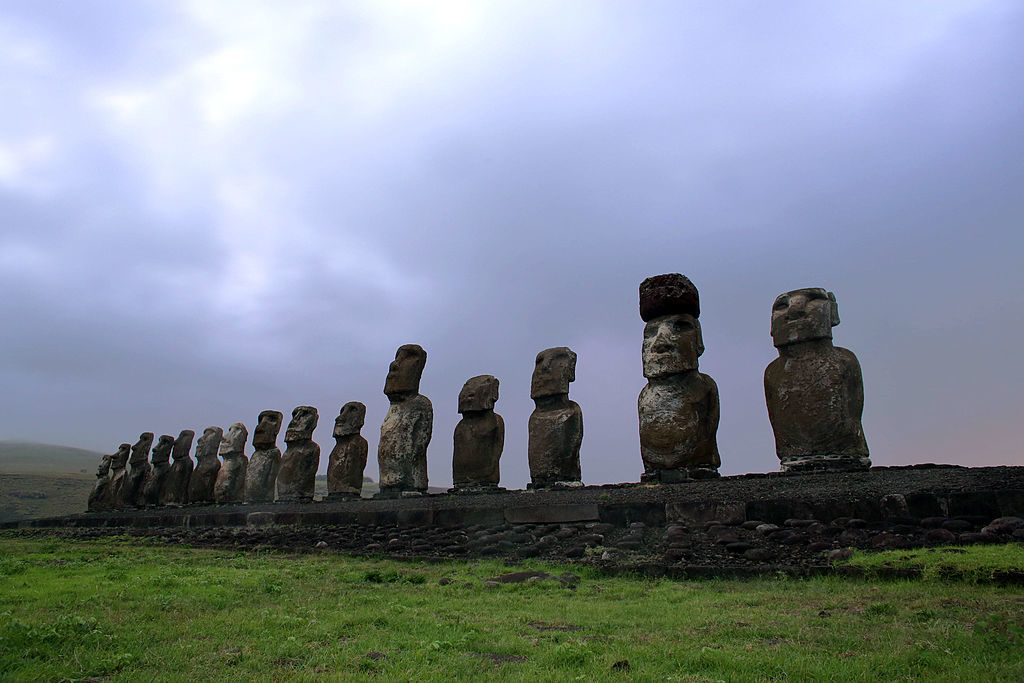
View of Moais Ahu Tongariki. Photo Gregory Boissy/AFP/Getty Images.


A campaign to return one of the famous Easter Island statues to its native Chile has been launched by a group of Chilean filmmakers, who believe that it should be returned by the UK.

Hoa Haka Nana’ia or Hidden or Stolen Friend is currently on view at the British Museum as one of its main attractions. The moai, believed by the Rapa Nui culture to be inhabited by spirits or mana that protected local tribes, was made in the 13th century. It stands at around eight feet tall and weighs around four tons.

The makers of a new documentary on the statues, called Te Kuhane o the Tupuna: El espíritu de los ancestros, claim that returning the moai to Easter Island could go some way to improve things there.

“One way to recover the mana to restore wellbeing to the island is to bring the spirit of the Moai Hoa Kaka Nana’ia back to its native land,” the new film says, according to AFP.

Photo: courtesy the Easter Island Statue Project.


The producer of the film, Paula Rossetti, told AFP that she has a petition of over 500 signatures asking the Chilean government to demand the return of the statue and other valuable artifacts to its shores, but admits: “It will be difficult to get them back.”

Countries from around the world are asking Britain to return items found, collected, or looted by British explorers that now sit in the some of the countries most famous institutions. The most famous example is that of the infamous Elgin marbles, which the Greek government has been campaigning to have returned for many years to no avail.

Related: Greece Puts International Pressure on British Museum to Return Parthenon Sculptures

Hoa Haka Nana’ia is one of an estimated 4,000 artifacts taken from Easter Island that are currently in collections around the world.

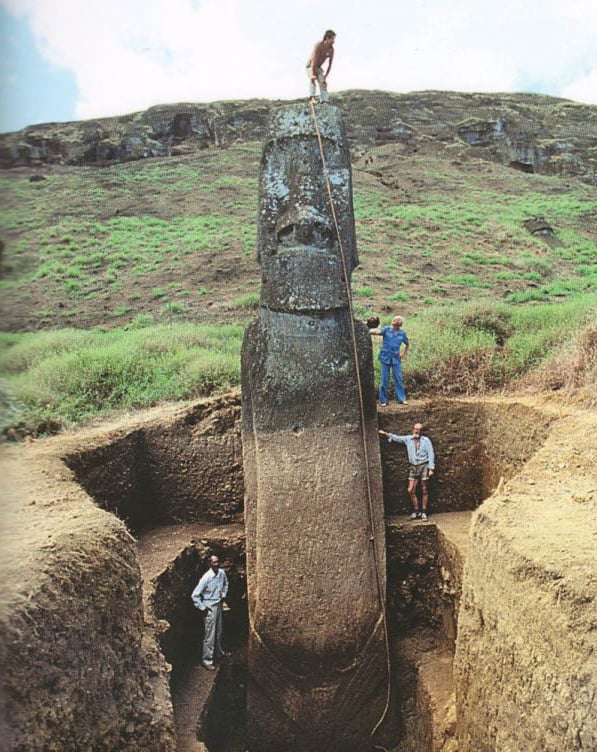
There are an estimated 887 of the largest moai on Easter Island, most of which were carved from volcanic rock between the years 1100 and 1680.


Follow artnet News on Facebook.

04 May 2015

Rapanui self-determination is in action

Save Rapanui


By DCRapaNui


Rapanui self-determination is in action. Rapanui have taken control of all the archeological sites on the islands. “We are constructing our self-determination…Rapanui Parliament are meeting everyday to make the traditional rights the norm, not Chilean laws…We are creating Rapanui government institutions to manage the 90,000+ tourists that enter the island…”


See also:

Rapa Nui Parliament close all archeological sites for tourists


05 June 2014

Decolonization Of Rapa Nui Advocated At UN Church Center


Link: Pacific Islands Report


Pacific Islands Development Program, East-West Center
With Support From Center for Pacific Islands Studies, University of Hawai‘i


Decolonization Of Rapa Nui Advocated At UN Church Center

By Dr. Forrest Wade Young

NEW YORK CITY, New York (May 23, 2014) – On May 13th and 14th 2014, Santi Hitorangi, special advisor to the President of Rapa Nui Parliament—Leviante Araki—advocated for the political decolonization of the Rapa Nui Nation from the state of Chile during the "Decolonization Dialogues" at the United Nations Church Center in New York City. The dialogues were addressed to an audience of over a hundred participants of the 2014 13th annual UN Permanent Forum on the Rights of Indigenous Peoples, and sponsored by the General Board of Church & Society of the United Methodist Church, the World Council of Churches, and members of the Decolonization Alliance organization housed at UN Plaza.

Emphasizing that decolonization must engage cultural minds, social bodies, and state governments both political and theological decolonization were discussed during the dialogues. Hitorangi, a panel speaker, was joined by fellow Decolonization Alliance members of the Pacific Islands: Menase W. Kaisiepo and Rosa Moiwend advocating for the political decolonization of West Papua, and Leon K. Siu who advocated for the political decolonization of Hawai`i. Theological dimensions of decolonization were emphasized by Sarah Augustine of the World Council of Churches, Rev. Dr. Heather Elkins of Drew University, Rev. Dr. Thomas Fassett of the Seneca Nation and the United Methodist Church General Board, and Jerry Freefa of West Papua and the Indigenous Peoples Reference Group to the World Council of Churches. Moderators of the dialogues included Kai Landow of the Decolonization Alliance and United Methodist Church representative to the United Nations and International Affairs Rev. Liberato Bautista.

READ THE FULL ANALYSIS IN PACIFIC ISLANDS REPORT 


07 May 2013

Rapa Nui elder says indigenous people must own marine reserves


A Rapa Nui elder says if reserves are established around her island her people must own them.

Pew Environment Group’s Kermadec Initiative hosted a group from Rapa Nui or Easter Island, French Polynesia and Chile looking to New Zealand for expertise on how to protect their ocean resources.
eisp.org
The trip has been described as an opportunity for the indigenous delegates to see how iwi have been able to negotiate with the government.

But Jacqueline Rapu Tuki says indigenous people should get the benefit of marine reserves.
“Here in New Zealand the government owns the reserve. What we’d like to see on Rapa Nui is that the Rapa Nui own the reserve.”
Jacqueline Rapu Tuki says a marine reserve would be very important for Rapa Nui’s identity but also for the rest of the world.

*****


The Federation of Maori Authorities says the recent waka tapu voyage to Rapanui or Easter Island late last year gave tangata whenua there hope and inspiration about trade and exchange with their Maori cousins.

Te Aurere and Ngahiraka Mai Tawhiti left Auckland in September last year for a return journey to the island to complete the last leg of the Polynesian triangle.

Traci Houpapa, who was in Rapanui in March says the waka expedition also reminded the Easter Islanders of their early relationship with Maori, and started conversations about on-going cultural exchanges, and confirmed an ancient prophesy.

She says the Rapanui people were overwhelmed to host their Maori cousins because their historical stories told them that when the Maori of Aotearoa come to Easter Island it's time for them to stand up.

Ms Houpapa says this isn't the first time Polynesian canoes have made it to the shores of Rapanui or other parts of the Pacific, but indeed confirmation that the ancestors of the Maori travelled , traded and returned, and navigated the seas - not by chance, but by strategy and a deliberate decision to trade, export and exchange.


26 March 2012

L'Île de Pâques inquiète face à l'immigration continentale


Rédigé par Par Mike LEYRAL 


L'Île de Pâques inquiète face à l'immigration continentale

HANGA ROA (Chili) - Une importante partie des habitants autochtones de l'Île de Pâques, territoire chilien perdu au milieu du Pacifique, s'inquiètent de la forte immigration venue de la terre ferme, et craignent de voir menacée leur identité polynésienne.
Moins de la moitié des 6.700 habitants de l'Île de Pâques en sont originaires. Les autres sont, pour la plupart, des Chiliens du continent. 

Le coût de la vie, mais aussi les revenus, sont environ 40% plus élevés sur l'Île de Pâques que dans le reste du Chili. Et les besoins de main-d'oeuvre sont importants, surtout dans les secteurs du bâtiment et du tourisme, l'île accueillant plus de 65.000 visiteurs par an. 

Les travailleurs peu qualifiés et peu fortunés provenant du Chili continental sont donc nombreux à venir s'installer dans l'île. Face à ce flux constant, les Pascuans d'origine polynésienne s'inquiètent de la montée de la délinquance, mais surtout de la mise en péril de leur patrimoine culturel. 

"On veut bien qu'ils viennent, mais seulement quand ils ont un contrat de travail, et qu'ensuite ils repartent", affirme Virginia Atan Tuki, qui se revendique indépendantiste. 
"Ils arrivent pour un chantier, et quand c'est fini, ils restent, se mettent à voler et s'entassent à dix ou vingt dans une maison!", n'hésite pas à renchérir l'une de ses amies, qui souhaite rester anonyme. 

Face à ce type d'accusation, la gouverneure Carmen Cardinali Paoa, qui représente le gouvernement chilien sur l'île, affirme que "ce que souhaite le Chili, c'est assurer la protection de Rapa Nui (nom autochtone de l'Île de Pâques, ndlr), cette richesse qui appartient au Chili". "Rapa Nui, c'est le Chili", explique-t-elle, assurant que "seuls environ 10% des Pascuans sont indépendantistes". 

Mais le rejet des immigrés nationaux ne concerne pas seulement les indépendantistes. Il touche une partie importante de la population défavorisée, qui s'est vue écartée du développement économique lié au tourisme. 

Les autochtones de Rapa Nui dénoncent également la multiplication des vols de la compagnie chilienne LAN à destination de l'Amérique du Sud (une rotation quotidienne vers Santiago, et deux par semaine vers Lima), alors qu'il n'y a plus qu'un vol par semaine vers Papeete, en Polynésie française, liaison qui serait maintenant menacée. 

"Nous couper de Tahiti, du reste de la Polynésie, c'est nous arracher nos racines", clame Yvonne Calderon Haoa, porte-parole du Makenu Reo Rapa Nui, un mouvement qui défend le patrimoine et la langue autochtones. 

Ce patrimoine est symbolisé par les moaïs, ces immenses statues de Rapa Nui; mais c'est aussi un mode de vie, centré sur l'agriculture, la pêche, la danse et les arts polynésiens. 

En août 2009, plusieurs familles avaient bloqué l'aéroport d'Hanga Roa pour protester contre l'immigration chilienne non contrôlée. 

En 2010 la contestation a pris de l'ampleur après la vente par l'Etat d'un vaste terrain en bord de mer pour la construction d'un hôtel de luxe - qui vient de s'achever - alors qu'une loi interdit de vendre des terrains de Rapa Nui aux personnes qui n'en sont pas originaires. 

Le terrain et plusieurs maisons de fonctionnaires d'Etat, avaient été occupés par des Pascuans revendiquant ces terres. Les squatteurs avaient été évacués par la police chilienne et des renforts militaires au cours d'une opération qui avait fait plusieurs blessés.

Le conflit s'était apaisé avec la transformation de la vente en bail locatif de 30 ans, mais les questions d'immigration et de terres restent conflictuelles. 

Les Chiliens venus du continent, pour leur part, estiment être moins bien lotis que les Pascuans. Ces derniers soulignent qu'ils paient davantage de taxes, ne peuvent acquérir de terrains à Rapa Nui, et perçoivent moins d'aides pour l'éducation de leurs enfants. 
 le Dimanche 11 Mars 2012 à 20:34 | Lu 612 fois

29 February 2012

Indigenous Focus: Chile’s Indigenous Peoples Seek Government Protection of Languages


Tuesday, February 21st, was the “International Mother Language Day,” although in Chile it is sometimes referred to as “International Day of Indigenous Languages.” International Mother Language Day is a creation of UNESCO and has been celebrated each year since 2000 and, as its name implies, the purpose is to promote native languages around the globe. In Chile, Indigenous peoples took time during the day to promote their own languages and cultures in a variety of ways, including celebrations, marches and public statements.

In Santiago, one of the largest organizations dedicated to Indigenous languages—Red por los Derechos Educativos y Lingüísticos de los Pueblos Indígenas de Chile (Red EIB)—released a public statement summarizing the current state of  Indigenous languages in the country and calling on the government to take concrete steps to preserve those same languages. Red EIB indicated that Chile originally had eight spoken Indigenous languages, but now that number has dropped to four, and none of those four languages are spoken by more than one-third of their respective populations. The statement went on to say that action was required to reverse this trend.
conadi langauges 270x141 Indigenous Focus: Chile’s Indigenous Peoples Seek Government Protection of Languages
CONADI meets with speakers of endangered Indigenous languages in Chile. Photo credit: Gobierno de Chile

Specifically, Red EIB made three policy suggestions. First, Red EIB asked that the national curriculum reinstate the Indigenous education units that used to be found in history, geography and social science classes, but that were cut out earlier this year. Second, Red EIB called for strengthening Indigenous language rights under Chilean law, which might include the creation of a “National Institute on Indigenous Languages.” And finally, the organization submitted a proposal to include intercultural education—including bilingual education—throughout the country.

Elsewhere, in the Araucanía Region of Chile, there was a march and several public statements requesting that the government make Mapuzungun—the language of the Mapuche people, and the most-spoken language in Chile outside of Spanish—an official language (along with Spanish) of the Region. For instance, members of the Mapuche organization Kolectivo We Newen, sent letters to local government leaders requesting that the change occur and that names of certain landmarks be expressed in Mapuzungun as well.  In Temuco—the largest city in the Araucanía Region—a peaceful march was organized in support of the Mapuche language being made official in that region of the country.

In other parts of Chile large celebrations were organized for International Mother Language Day. In Osorno, the main plaza held a two hour celebration during the afternoon which included singing and poetry readings in Indigenous languages. The celebrations were also a time to educate community memebers about Indigenous languages and provided an opportunity for Indigenous youth to hear the tongue of their ancestors. Similar celebrations took place in other Mapuche communities as well as Aymara, Quechua and Rapa Nui communities throughout the country.

Meanwhile...

Spokesperson for Rapa Nui family upset that hotel has opened on dispute site

Radio New Zealand International

A New York-based Rapa Nui man says he is saddened and disappointed by the opening of a luxury hotel on his ancestral land in Easter Island.

The Hangaroa Eco Village opened this month, a year after Chile sent police units from the mainland to end protests by Rapa Nui on several sites including the former Hangaroa Hotel.

Santi Hitorangi’s family staged a protest at the hotel over several months until being forcibly dispersed.

Their legal challenge against the use of their land by the Chilean/German consortium which owns the hotel is still in the courts.

However Mr Hitorangi says the government has done little to help resolve the issue:
“The government has been in bed with the owners of the Hangaroa Hotel and they’re in fact using their police, their local justice system, to criminalise my people, my family, and use the local police as the private guards to keep out any protest and any attempt to re-take the Hangaroa Hotel.”

13 May 2011

Unfold Rapanui: Reporting the Underreported

*****


By LEE-ANNE DUNCAN

Their words are difficult to make out but their message is clear – Give us back our land. Give us back our Rapanui.

The rising sun shoots a golden glow over Rapanui. The moai, huge stone human figures for which Rapanui is world-famous, throw long shadows down the ancient hillsides, towards the foaming Pacific. This is the image of Rapanui, of Easter Island, depicted in the tourist brochures; a tiny, peaceful, archeology-rich island at the far eastern tip of the Polynesian triangle.

Amateur video footage shows another Rapanui; a Rapanui that’s not in any promotional material. T-shirted or bare breasted men stand face-to-face with flak-jacketed Chilean paratroopers. Their sticks are no match for troopers’ pellet guns. Their traditional feathered headdresses offer none of the protection afforded by the Carabineros’ helmets. Their words are difficult to make out but their message is clear – give us back our land. Give us back our Rapanui.

Annexed by Chile in 1888, during its contact with Europeans this island’s slender population endured slave raiding, disease, deforestation, and colonization. The Rapanui people also endured having their sustainability stripped when the Chilean government leased the entire island to the Williamson-Balfour Company as a sheep farm in the late 19th Century. Following that, the agrarian Rapanui were herded into Hangaroa, the only town, forbidden from venturing out without permission.

The Chilean navy took over the island’s management in 1953, but the people were forced to remain in Hangaroa until 1966 – a mere 45 years ago.

When I saw a small story pop up on the Internet about the Hitorangi family’s occupation – or repossession – of their land, I knew we had to go.

This is the story Annabelle Lee-Harris, from New Zealand’s Māori Television, traveled more than 7,000 kilometers to cover. In November 2010, she and cameraman Ethan Smith flew to Rapanui to report on the Indigenous people’s fight for the return of their land. In particular she focused on the Hitorangi family’s ongoing dispute over its ancestral land that the Chilean government took from them. Following its appropriation, in breach of its own laws, the government sold their land to a third party—that land now boasts a multi-million dollar, German-owned hotel – but the land’s original owners are not welcome there.

To force their claim, the family peacefully occupied the hotel on Aug. 1, 2010. Over the six months they were in the hotel, the family endured on-going confrontations with armed Chilean forces, who were transported to the remote island to quell rising tensions. The clan was eventually removed from the hotel by armed Carabineros on Feb. 6, 2011.

“I’ve always wanted to go to Rapanui,” Lee-Harris said. “We’re so close culturally, and I’ve always been intrigued by the island. Rapanui doesn’t get a lot of international media attention, but when I saw a small story pop up on the Internet about the Hitorangi family’s occupation – or repossession – of their land, I knew we had to go. Going all that way was a big financial commitment to make, and there was always a chance we would have our cameras confiscated at the airport, but this story was too important to ignore. It’s such an intrinsically Māori story – for Māori across the Pacific – and Rapanui’s story deserved to be told.”

Lee-Harris says she was struck by how similar New Zealand Māori are to the Rapanui, and loved how she could have a conversation in the Māori language with the locals. She was also struck, and saddened, by how similar their two situations were.

“When I was writing the script for Rapanui, I felt it was a cut and paste job from what land issues Māori had experienced and are still experiencing,” she says. “They are facing exactly the same problems Māori in New Zealand are facing. For example, there as here, the government has stepped in to try to sort out land issues, but in many cases it’s created more problems than they solved, with the land being given to the wrong families.

“But one thing that stood out for me was how the Rapanui stand together so staunchly. Even if privately they disagree on how an issue should be handled, in public they are 100 percent united. There is no ‘divide and conquer’ on Rapanui. Whatever issues there are between families, they stand united in the face of the Chilean government and are a force to be reckoned with. I think Māori in New Zealand could learn something from that.”

And it’s not only land that’s the Rapanui are denied of. Indigenous Rapanui now represent only 50 percent of the island’s population of 5,000. The rest are made up primarily of Chileans who immigrated to the island, taking most of the jobs at either end of the pay scale, cutting opportunities for the Rapanui.

But it’s the latest Chilean influx that has the Rapanui most fearful – the armed police who now patrol the streets.

“As New Zealanders, it was freaky for us to see armed police on the streets, so for the Rapanui it is really terrifying,” Lee-Harris said. “The Chilean police had shipped and flown in literally hundreds of Carabineros and paramilitary troops, so they create a very sinister and scary presence on the streets. We knew we had to get shots of them, but we had to be pretty subtle about it. To do that, we’d lock the camera off, press record, and then pretend to be chatting away to each other and not recording. It worked very well.”

Luckily for Lee-Harris, Santi Hitorangi – who spearheads his clan’s claim – is a filmmaker, and had left cameras for his family to record any disputes with the police. It’s this video, which he generously allowed Lee-Harris to use, that so dramatically shows how heated the situation has become.

“After we got back to New Zealand, and only two days before my story went to air in November, there was a significant standoff between the military and the Rapanui,” Lee-Harris said. “Several Rapanui were shot by pellet guns at close range, and many people were hurt. I was so thankful we’d already gone there, and had the exclusive inside view of what was really going on.”

The Hitorangi’s story is also being fought in the courts. They have a case before the Inter-America Commission on Human Rights (IACHR) and have a lawyer from the Indian Law Resource Center in Washington DC to help them right the wrong. In fact, on Feb. 7, 2011, the day after the Hitorangi clan was evicted from the hotel, IACHR granted precautionary measures to immediately stop the violent use of armed forces against the Rapanui clans, and began an investigation into recent events on the island.

Lee-Harris’ finished story ran for 17 minutes – almost twice as long as stories usually run on Māori Television’s Native Affairs.

“I knew it was really important to make the story also as visually beautiful as possible,” she says. “Despite – or perhaps because of – its history, Rapanui is such a gorgeous place. Ethan Smith did a fantastic job of capturing the essence of the land and its people, and that meant some very early starts and late nights. We came back with eight hours of footage, which our editor Todd Mohi had to rifle through for the best images and craft them into this beautiful piece.”

Lee-Harris says Rapanui is such a special place because it has survived so much; slave raiding and disease reduced the population to only just over a hundred in the late 1870s. The Rapanui has had to fight their way back while retaining their culture.

“It was hard to leave Rapanui, and I was incredibly sad to go,” Lee Harris said. “I desperately want to go back, and I would love my children to come to Rapanui. It’s so exhilarating to see a tiny island band together and stand up to a huge country and strong government like Chile, all in the face of troops and guns and terror. They are an inspiration.”

“Māori across the Pacific might be separated by ocean and time, but for us the ocean doesn’t keep us apart, it connects us.”

It was hard to leave Rapanui, and I was incredibly sad to go. I desperately want to go back, and I would love my children to come to Rapanui … They are an inspiration.

ENDS

Lee-Anne Duncan is a freelance writer based in Wellington. She has worked as a broadcast journalist, and a public relations and media consultant in both New Zealand and the UK.

Annabelle Lee-Harris (Poutini Ngai Tahu/Ngati Kahungunu) has been a journalist for 10 years. She started her career as a radio reporter for the Ruia Mai News Service. Lee-Harris is the longest serving member of Māori Television’s news and current affairs department, having been with Māori Television for seven years. She has worked on Te Kāea, Te Hēteri, and is now a reporter and associate producer for Native Affairs.
01 April 2011

Amer. Samoa Congressional Delegate to Visit Rapa Nui on Fact-Finding Mission

[United States Congress]

Press Release

(Congressional Delegate Eni F.H.) Faleomavaega announced today that he will be traveling to Easter Island during the Congressional recess to assess recent developments between the legitimate representatives of the Rapa Nui clans and the Chilean government. Easter Island, or its Polynesian name of Rapa Nui, is one of the world’s most isolated inhabited islands.

“Conflict between the Rapa Nui natives and the Chilean government has existed since 1888 when Chile signed a disputed treaty with the Rapa Nui people,” Faleomavaega said. “At that time, Chile took control of the island and confined the Rapa Nui people to a small area of land, approximately one square mile.”

“In 1933, Chile leased the remaining land to private sheep-herding enterprises and took ownership of all untitled lands. In 1966, Chile passed a law which authorized the President to grant land titles to the Rapa Nui people and prohibited the transfer of lands to non-indigenous individuals. However, land was illegally privatized and sold to mainland Chileans during the Pinochet Dictatorship.”

“Today non-indigenous individuals and corporations possess most of the land, and the Chilean government continues to favor private companies interested in exploiting the Rapa Nui culture for private gain instead of restoring the land to the Rapa Nui people. Within the past five months, Chilean armed forces have been carrying out forced evictions of Rapa Nui natives.”

“In a letter dated February 3, 2011, U.S. Senator Daniel Akaka and I wrote to the President of the Republic of Chile, His Excellency Sebastian Pinera, expressing our deepest concerns about the current situation unfolding in Easter Island and, in response to that letter, I have since met with Ambassador Arturo Fermandois of the Republic of Chile and he has assured me that he is committed to a productive exchange of views and welcomes my visit to Rapa Nui,” the Congressman said.

“I will be traveling to Rapa Nui in my capacity as the Ranking Member of the Foreign Affairs Subcommittee on Asia and the Pacific and also as a Member of the House Foreign Affairs Subcommittee on the Western Hemisphere. Prior to my arrival in Rapa Nui, the Government of Chile will be arranging a series of meetings for me in Santiago with Minister of Foreign Affairs Alfredo Moreno, Minister of Planificacion Felipe Kast, Undersecretary for Regional Development Miguel Flores, and Special Advisor for Indian Affairs (SEGPRES) Sebastian Donoso.

While in Easter Island, the Rapa Nui Parliament is arranging meetings with Governor Carmen Cardinali, Mayor Luz Sasso, the Municipal Council, the Elders Council, the MakenuRe’o Rapa Nui women’s organization, the Development Commission and other interested parties.”

“I am pleased by these developments and, once more, I thank Ambassador Arturo Fermandois for making this visit possible and arranging this itinerary. I also thank the Rapa Nui Parliament for its assistance. It is my sincere hope that President Obama will support the indigenous rights of the Rapa Nui people during his planned visit to Chile this week since the United States should be a leader in promoting democracy and human rights. I also hope that the government of Chile will be responsive and allow for the people of Rapa Nui to live in peace on their land,” Faleomavaega concluded.


UPDATE

Radio New Zealand International


American Samoa’s...(Delegate) of the US Congress says he believes Chilean armed police on Easter Island overstepped their authority by shooting peaceful demonstrators from Rapa Nui clans during a violent clash in December.

Faleomavaega Eni Hunkin has met Rapa Nui leaders and Chilean officials in the hope of finding out more about a long-standing conflict over ancestral land rights on Easter Island. He says the dispute is over inconsistent policies set by the Chilean government towards the indigenous people and believes addressing land claims is a priority.

“The gist of my observations in meetings is that I honestly believe that the Chilean carabineros or the police, the armed police, I think they kind of went over their authority to end up shooting people who I understand were unarmed. And that was one of the things that I came back with in understanding that this is what took place and I’m going to continue pursuing this matter with Chilean officials in the government.”


Faleomavaega Eni Hunkin says he has also addressed the matter in writing to the President of Chile, Sebastian Pinera, the President of the United States, Barack Obama, and the US Secretary of State, Hillary Clinton.


18 February 2011

Rapa Nui Crisis Reaches US Congress

A very busy week for Rapa Nui Human Rights Defenders

Amer. Samoa Delegate Calls for Peaceful Solution to Rapa Nui Crisis in Adress to US Congress


By DCRapaNui

On February 3rd Senator Daniel Akaka of Hawaii and Congressman Eni H. Falemavenga of Samoa, wrote strong letters in support of Rapa Nui to Hillary Clinton and to President Pinera. Congressman Falemavenga put his concerns about Chile’s abuses against Rapa Nui on the Congressional record.

Last Sunday morning February 6th, Chilean police forcibly and illegally removed the Hitorangi clan from Hotel Hanga Roa. During the 6 months the Hitorangi Clan was in possession of the property there was no physical damage to the site. On Feb. 6th three women were locked into the hotel lobby waiting for their attorney to arrive from the airport when the police smashed the window and window frame, and violently evicted the women. They also arrested and beat anyone who tried to take pictures.

The Inter-American Commission on Human Rights (IACHR) has granted precautionary measures to immediately stop the violent use of armed forces against the Rapa Nui clans and to begin an investigation on recent events. The precautionary measures were requested by the Indian Law Resource Center on behalf of the Rapa Nui Nation. The IACHR will more than likely moderate negotiations between the Rapa Nui and the Chilean government to seek peaceful solutions.

On Feb, 8th, the newly assigned judge ruled that the police acted improperly in removing the Clan, and did not criminally charge the Hitorangi clan. She held that neither the Scheiss’ nor the Hitorangi’s can remain on the property until it is judicially determined who are the rightful owners. The next court date is scheduled for early April. We are very grateful for the individual contributions and for the emergency grant we received from Frontline to retain a legal counsel.

In the meantime, we are concerned and watchful that the Schiess are prevented from using financial pressures to get access to hotel from the Chilean police force.

We thank all our friends throughout the world who have been amazingly supportive through this difficult time.
We are hopeful that there will be a peaceful resolution and that the rights of Rapa Nui will be restore

Also see Rapanui Seek U.N. Intervention


Statement of American Samoa Congressional Delegate Eni Faleomavaega
Congressional Record


112th Congress (2011-2012)

CALLING FOR A PEACEFUL SOLUTION TO THE EASTER ISLAND CRISIS

(House of Representatives - February 16, 2011)


The SPEAKER pro tempore. The Chair recognizes the gentleman from American Samoa (Mr. Faleomavaega) for 5 minutes.

Mr. FALEOMAVAEGA. Mr. Speaker, I'm not wanting to detract from today's spirited discussion or debate on H.R. 1, which I will discuss at a later point of time in the day, but I want to discuss with my colleagues and the American people the current crisis now happening between the government of Chile and the people of Easter Island, also known as Rapa Nui among its native people.

Easter Island was settled by Polynesian voyagers about 700 AD. The island is famous for some 887 monumental statues carved out of stones weighing tens of tons. These statues are known throughout the world for their archeological wonder and mystery in terms of how these ancient Polynesians were able to carve and move these tremendous statues to different locations on the island. Less well-known is that Easter Island is home to roughly 2,500 indigenous people, known as the Rapa Nui Nation. The people of Easter Island carry a vibrant culture dating back centuries before the arrival of Europeans.

Like many other islands in the Pacific, Easter Island has had its sovereignty determined by more powerful outside influences. In 1888, the Rapa Nui Nation entered into a disputed treaty with the government of Chile. The Chilean government used the treaty as a license to treat the island and the indigenous people as property of the State. Chile confined the people to a small area, about 1 square mile, believe this, Mr. Speaker, today known as Hanga Roa. To this day, the validity of the 1888 agreement is contested by most of the Rapa Nui people.

Chile then annexed Easter Island in 1933 without the consent of or even consultation with the Rapa Nui people. The government of Chile unilaterally leased the majority of the island to private sheepherding enterprises, without the Rapa Nui Nation's consent.

The lands that were wrongfully taken from the Rapa Nui people have not been restored. Instead of returning the lands to their rightful owners, the Chilean government continues to favor private enterprises interested in exploiting the Rapa Nui culture for private gain.

In addition, Mr. Speaker, to the serious land rights disputes, several other issues threaten the livelihood of the people of Rapa Nui. For example, roughly 50,000 tourists each year flock to Easter Island to view these huge Moai statues. Yet the Chilean policies prevent the Rapa Nui people from benefiting from the tourism industry. Non-indigenous individuals and corporations possess most of the land, while jobs related to tourism often go to continental Chileans. Uncontrolled migration to the island has caused widespread unemployment among the native people, exploitation of natural resources and increased pollution.

Within this context, Mr. Speaker, the Rapa Nui Nation began taking a stand. In July and August of last year, the Rapa Nui people wrote several letters to the President of Chile, Sebastian Pinera, to negotiate a peaceful solution to the underlying problems of Chile's relationship with the people of Easter Island. The Rapa Nui people also began to peacefully reoccupy their ancestral lands, including the Hotel Hanga Roa, a five-star hotel supposedly being built by the Schiess family, a non-indigenous family, on ancestral Rapa Nui lands.

[Time: 11:10]

Mr. Speaker, while the Government of Chile attempted to initiate a dialogue with Rapa Nui individuals, the problem is that the Chilean Government also sent military police to this little island which is 2,300 miles from Chile. I can't believe, Mr. Speaker--we have 17 million people, good people, living in Chile--sending police forces to take control of this little island with some 2,500 Rapa Nuians and they have not even been given any consultation or even an opportunity to conduct consultations, serious consultations, with the Government of Chile.

Mr. Speaker, I sincerely hope that the Government of Chile can begin a dialogue for ways to help the Rapa Nui people achieve a greater sense of self-determination and self-governance in their lands. I ask President Pinera to advocate for a more positive approach for partnership and dialogue with the indigenous people of Easter Island. It is my honest belief that the indigenous people of Easter Island do not wish any harm to the good people of Chile. Nor is there a possibility that the people of Easter Island will ever pose a threat to the military and strategic or national security interests of the people and the Government of Chile.

Mr. Speaker, I also hope that the White House and the State Department and Assistant Secretary Valenzuela will take a stand against these violent

[Page: H948]

evictions and express solidarity with the Rapa Nui nation, especially in light of President Obama's planned visit to Chile next month and Assistant Secretary Valenzuela's recent testimony before the House Foreign Affairs Committee yesterday. I sincerely hope that even our international community will build pressure on President Pinera and the Government of Chile. Let's treat these poor people with justice and give them an opportunity to live in peace in this area. I ask that the good people of America make this appeal and that the Government of Chile be responsive to this request.

_________________________________________________________________________________

12 February 2011

Inter American Commission on Human Rights Grants Precautionary Measures for Rapa Nui


Commission of the Organisation of American States expresses concern that "Rapa Nui people's life and integrity are at risk due to acts of violence and intimidation reportedly carried out by police in the context of demonstrations and evictions."


Inter-American Commission on Human Rights
PM 321/10 - Rapa Nui Indigenous People, Chile

On February 7, 2011, the IACHR granted precautionary measures for the Rapa Nui Indigenous People of Easter Island, Chile. The request for precautionary measure alleges that the Rapa Nui people's life and integrity are at risk due to acts of violence and intimidation reportedly carried out by police in the context of demonstrations and evictions. The Inter-American Commission asked the State of Chile to immediately bring an end to the use of armed violence in the execution of State administrative or judicial actions against members of the Rapa Nui people, including evictions from public spaces or from public or private property; to guarantee that the actions of State agents in the framework of protests and evictions do not jeopardize the life or physical integrity of the members of the Rapa Nui people; to inform the IACHR within 10 days about the adoption of these precautionary measures; and to update this information periodically.


U.S. Senator and Congressional Delegate Send Letter to Chilean President on Rapa Nui Crisis


Daniel K. Akaka, Senator from the U.S. state of Hawaii, and Congressional Delegate Eni F. H. Faleomavaega, Delegate from the U.S. territory of American Samoa sent the following joint letter on 3rd February:

February 3, 2011
His Excellency Sebastián Piñera
President of the Republic of Chile
Palacio de la Moneda
Santiago, Chile


Dear President Piñera:


We are writing to express our concern over the situation unfolding in Easter Island (Rapa Nui), where Chilean armed forces have been carrying out forced evictions of Rapa Nui natives over the past five months. We continue to be very concerned about the physical safety of all of the Rapa Nui; but right now we are especially concerned about the welfare and security of Hito clan members inside the Hanga Roa Hotel. Several sources have informed us that heavily-armed Chilean police are surrounding the hotel, 24 hours a day. We have also been alerted that the electricity has been cut off, and that there are no provisions for food or medical care. At one point, it was reported that there were 13 individuals trapped in the hotel. Of the 13 individuals, 2 were children, 6 were women, and one was elderly and medically-compromised (diabetic). Sources say the clan members have no way to communicate with anyone outside the hotel, including their defense attorneys.


The Chilean government has threatened to evict the clan members inside the Hanga Roa Hotel on February 8, 2011. Some of the evictions carried out by Chilean troops in recent months have resulted in injuries to the Rapa Nui natives. According to news reports, an eviction on December 29, 2010 was carried out against peaceful protesters gathering at a public square. Some of these individuals suffered serious injuries, including fractures and head wounds, after police forces reportedly fired buckshot pellets at their heads. We are concerned that evictions on February 8th could lead to more injuries should Chile follow through.


We are also concerned by (1) the failure of the Ministry of the Interior to seriously consider the legitimate land ownership claims of the Rapa Nui clans; (2) criminal prosecutions of Rapa Nui political leaders for their involvement in the peaceful Rapa Nui land rights campaign; and (3) the ongoing disproportionate use of force by Chilean Special Forces against Rapa Nui clan members. These actions undermine the basic legal, political, and human rights that both of our countries share.


It is our understanding that the Chilean executive branch is operating unilaterally in its Rapa Nui policy. Chile’s Congressional Commission of Foreign Affairs and the Human Rights Commission of the House of Representatives both requested a review of your government’s policies regarding treatment of the Rapa Nui Nation. Likewise, the Chilean Supreme Court has spoken, most recently rejecting an amparo filed by a private party against the Hito clan. We also note the January 12th statement of the U.N. Special Rapporteur on the Rights of Indigenous Peoples which expresses similar concerns regarding your government’s policies.


Mr. President, we are also aware that on October 3, 2010, the Rapa Nui people filed a request for “precautionary measure” from the Inter-American Commission on Human Rights, of which Chile is a member. Because the Commission has yet to make a decision on the measure and since the number of Rapa Nui near the hotel grounds will soon increase from the support of other clans, there is an even greater need to prevent the February 8th eviction. We are concerned about reports that Chilean forces continue to target peaceful Rapa Nui individuals, including unarmed women and children. We strongly urge you to lower tensions on Rapa Nui by removing the police forces patrolling the Hanga Roa Hotel. Food, water, medicine, and other life-sustaining provisions should be immediately provided to the individuals inside the hotel. They should also be provided the means to communicate with their supporters outside the hotel, including their defense attorneys. Finally, we also urge you to refrain from the use of disproportionate force in dealing with peaceful Rapa Nui protesters occupying their ancestral land on the entire island.


It is our hope that your government will undertake efforts to peacefully resolve this conflict with the Rapa Nui Nation.

20 January 2011

U.N. Urges Chile to Halt Evictions of Indigenous Protesters

UN Special Rapporteur on the human rights of indigenous peoples James Anaya sent a letter to the Chilean government on Monday reminding Chile of their international obligations under the Convention 169, which outlines the protected rights of indigenous people, including the right to preserve an indigenous group’s ancestral land.

By Mark Briggs
Santiago Times

Following months of protests and sit-ins surrounding ancestral land claims on Chile’s Easter Island, the United Nations has officially called on the Chilean government to help diffuse tensions.
The international body’s primary recommendation was to “avoid new evictions and police presence on the island that exceeds what is necessary and proportional.”

The U.N. Special Rapporteur James Anaya said he was dismayed by the lack of dialogue between government parties and the Rapa Nui indigenous community, questioning the level of force used against the indigenous groups who have been occupying government buildings and hotels in the Island’s main town of Hanga Roa since August 2010.

Anaya sent a letter to the Chilean government on Monday reminding Chile of their international obligations under the Convention 169, which outlines the protected rights of indigenous people, including the right to preserve an indigenous group’s ancestral land. Chile ratified U.N. Convention 169 in 2008 under former President Michelle Bachelet, and the document came into full force in late 2009.

President Sebastián Piñera has defended a series of forceful evictions on the grounds of maintaining public order, including the most recent, violent evictions of Dec. 29, 2010. Yet the Rapa Nui maintains that they resorted to building occupation only after numerous attempted petitions proved fruitless.

The Chilean government rented nearly 90 percent of the island’s land to British sheep farmers during the latter part of the nineteenth century, disregarding indigenous groups historically on the island. Easter Island, located over 2,000 miles from the coast of Chile, came under the country’s mandate in 1888, although the Rapa Nui were denied Chilean citizenship until 1966.

The Hito Rangi Clan is currently occupying the Hotel Hanga Roa, which is constructed on land to which the group has claimed ancestral ownership.

In December 2010, the Mayor of Valparaiso, under whose jurisdiction Easter Island falls, signed an order to begin the evictions of protesters. On Dec. 3 government soldiers and police forces clashed with the occupants, leaving 25 people injured (ST, Dec. 6). Police allege they moved in after being attacked with Molotov cocktails and machetes, although eyewitnesses denied the claims.

Violence again flared on Dec. 29 as dozens of clan members were beaten by police.

The Chilean government has been attempting to promote tourism to the UNESCO World Heritage Site made famous through the Moai or Easter Island Heads. Tourist agencies have reportedly claimed that the ongoing land dispute has cost the island around US$3 million in lost revenue over the last six months.

20 December 2010

New Zealand Government Urges Peace On Rapa Nui (Easter Island)

Voxyco.nz

Voxy News Engine Wednesday,
Wellington,  NZPA

The New Zealand Government has urged those involved in violent clashes over a land dispute on Easter Island in the South Pacific to find a peaceful resolution.

Dozens of people were wounded on the island earlier this month when Chilean police tried to evict the indigenous Polynesian residents of Rapa Nui from the buildings they had been squatting in for several months.

"The New Zealand Government urges the parties to find a peaceful resolution to this matter, and will convey that view to the parties as appropriate," Foreign Affairs Minister Murray McCully said in Parliament today. About 2200 of the island's 5000 residents are Rapa Nui, and many fear a recent tourism boom on the island will force them out.

Fearing that the Chilean government, which annexed the island in 1888, wanted to turn the land into a sort of tourist attraction, a number of Rapa Nui seized properties in August, saying they were illegally taken from their families generations ago.

Mr McCully, replying to questions from Maori Party MP Hone Harawira, said the Government of Chile took the view that it had acted to try to maintain law and order. "I was delighted to see the statement of President [Sebastian] Pinera in recent days that he hoped the land claim could be settled in a peaceful and harmonious manner, through dialogue," Mr McCully said.

"I understand that sentiment has been reciprocated by some of the protestors, and that some progress, accordingly, is being made."

Pueblo Rapa Nui Denuncia Desalojos Ilegales

Especial a Overseas Terriories Review


Comunicador

Hanga Roa.- Cientos de policías fuertemente armados acordonaron este jueves el centro de Hanga Roa impidiendo el paso a isleños y turistas que no podían entender tamaño despliegue de fuerza. La razón: estaban resguardando las formalizaciones que el fiscal Guillermo Felipe estaba haciendo contra cinco isleños por los supuestos delitos de usurpación de morada. Se trata de Remigio Pakarati Tuki, Yudy Hey Brown, José Figueroa Riroroco, Ramón Gustavo Hey y Juan Tuki Atán, quienes ocupan propiedades –que reclaman como suyas- en el centro cívico de Hanga Roa.

El juez Bernardo Toro decretó, como medida cautelar para los cinco, no aproximarse a 500 metros de las viviendas que ocupan. Esto les imposibilita acercarse a sus moradas y lugares de trabajo que están todas en el centro.

Cuando los policías en compañía del fiscal fueron a la casa de Yudy Hey, esta salió junto a otras tres personas formalizadas, quedando otros miembros de la familia resguardando la propiedad recuperada. Pero Carabineros, excediendo las atribuciones entregadas por la Fiscalía, ingresó por los muros al interior de la propiedad: desalojándola. A pesar de los reclamos de los afectados, la ilegalidad y el abuso se consumó.

Lola Tuki expresó a Prensa Rapa Nui su espanto ante la gran cantidad de policías que invaden la Isla. Dijo que “en la Isla nunca se había visto eso”. Lola cuenta que la Policía “cada veinte metros nos revisa. No nos dejan cruzar la calle por donde queremos”. Nos preguntan que estamos haciendo, que para donde vamos. Esto es mucho peor que la dictadura”.

Carabineros estaba provisto con cámaras de video. E intentaba impedir que se sacaran fotos e hicieran filmaciones de su accionar.

Los jefes de clanes y otras autoridades del Pueblo Rapa Nui, como el Parlamento, se encuentran reunidos con el fin de reaccionar a los abusos cometidos.

Nadie entiende en la isla, en Chile y en el mundo entero cómo se cometen este tipo de atropellos contra un pueblo originario que reclama con justa razón, que los terrenos en los cuales siempre vivieron ellos y sus antesapados, les pertenecen, son sus derechos ancestrales, sentido de pertenenecia y propiedad que el Estado de Chile debiese comprender, promoviendo instancias de diáologo y no de represión y altanería como lo ha estado haciendo.

12 December 2010

Union of British Columbia Indian Chiefs Condemns Attack on Rapa Nui

UBCIC Condemns Attack on Unarmed Rapa Nui


Urgent News Release
 (Coast Salish Territory/Vancouver, Canada)

The Chilean government, and most recently the Canadian government, adopted the United Nations Declaration on the Rights of Indigenous Peoples within the bounds of their legal and constitutional frameworks. The Declaration on the Rights of Indigenous Peoples was adopted by Chile and 143 States at the United Nations General Assembly in September 2007. Yesterday, December 3, 2010, after months of relatively peaceful reoccupation of their lands, Chilean troops opened fire on unarmed Rapa Nui (Easter Island) People.

Grand Chief Stewart Phillip, President of the Union of BC Indian Chiefs stated “What the Chilean government did was ugly, unbelievable and reprehensible. We as Indigenous Peoples must condemn the Chilean government for these unacceptable acts of violence and brutality. The UBCIC supports the Rapa Nui People protecting their lands, their island and their archaeological treasure, the Moai. Chile's President Sebastian Pinera must be directly involved to resolve this growing crisis."

As many as 50,000 tourists travel each year to see the Moai - huge stone heads carved by the Rapa Nui's ancestors. In recent years, tourism and migration have increased pressure to control available land on the 10 mile by 15 mile island, and the Rapa Nui have increasingly taken matters into their own hands, seizing a dozen properties they said were illegally taken from their families generations ago. The latest media reports state additional reinforcements have landed on the island and Chile's Interior Minister stating they will continue "evicting" Rapa Nui People.

“As Indigenous Peoples, our fight is the same the world over. Indigenous Title and Rights are ignored, dismissed and violated," said Grand Chief Phillip. “Chile is one of many countries who adopted the UN Declaration but continue to deny the international legal reality of our Indigenous Title and Rights. As demonstrated yesterday, it seems the Chilean government would rather attack unarmed people than find a lasting and peaceful solution. In the spirit and true intent of the Declaration on the Rights of Indigenous Peoples, the UBCIC calls on the Canadian government to join the many voices of many Peoples to denounce the violent actions of the Chilean government.”

Media inquiries:
Grand Chief Stewart Phillip, Union of BC Indian Chiefs
Phone: (604) 684-0231

The UBCIC is an NGO in Special Consultative Status with the Economic and Social Council of the United Nations.

10 December 2010

Rapa Nui Demands Return of Indigenous Lands

Dozens injured in Easter Island land disputes

By Federico Quilodran        
The Associated Press


SANTIAGO, Chile -- A land dispute on Easter Island turned violent Friday when riot police evicting islanders from their ancestral home were surrounded by rock-throwing protesters. About two dozen people were injured in a seven-hours-long confrontation.

The clash began at 5 a.m. when officers moved in to evict 10 people from the home they had been occupying since ousting a government official from the property in September, Rapa Nui lawyer Maka Atan told The Associated Press.

The Rapa Nui resisted and the violence left 17 officers and eight civilians hurt, according to police. Three islanders and one policeman were evacuated to mainland Chile for treatment. But protesters said that 19 islanders were injured and denied seeing any police hurt.

The official native name of Easter Island, known for its stunning gigantic stone heads known as Moais, is Rapa Nui, and that's what many natives call themselves, refusing to identify with Chile, which annexed the island in 1888.

In recent years, tourism and migration have increased pressure to control available land on the 10 mile (16 kilometer) by 15 mile (24 kilometer) island, and the Rapa Nui have increasingly taken matters into their own hands, seizing a dozen properties they said were illegally taken from their families generations ago.

A woman who answered the local government official's phone in the island's main town of Hanga Roa said there would be no official comment on Friday's violence.

But Atan, speaking by phone from the island 2,237 miles (3,580 kilometers) west of Chile, said riot police used batons and shotguns against them, firing pellets at close range at their heads. He said he himself was shot in the back with pellets.  Images shared with The AP show several islanders bleeding from head wounds.

About a dozen buildings are currently being occupied by Rapa Nui people, who say Chile illegally took their family's ancestral homes on tiny Easter Island, where a total population of fewer than 5,000 people include about 2,200 Rapa Nuis.

The island's top government authority, Valparaiso Governor Raul Celis, said from mainland Chile that "the evictions will continue."  Chilean media reported that a planeload of police reinforcements was on its way to the island.

Atan said he witnessed police firing pellet guns at people's faces from a distance of just one meter (yard).
"They were shooting to kill. It seems like this is going to end with them killing the Rapa Nui," he said, adding: "The land on this island has always been Rapa Nui. That's why we're asking for our land to be returned."


Rapa Nui leader denounces Chile government over violent evictions
Radio New Zealand International


The president of the Rapa Nui Parliament has denounced Chilean leaders over the way they have tackled the land occupations on Easter Island.

Leviante Araki says the President of Chile, Sebastian Pinera, and the interior minister, Rodrigo Hinzpeter, are scoundrels and thieves following last Friday’s violent eviction of Rapa Nui occupiers of public buildings. Mr Pinera has justified the police action, saying they moved in to uphold public order and execute court orders.

But Mr Araki has told Chilean media his people have no fear and if they have to die they will. He says before last week’s violence they used to believe in Chile but now they want nothing from Chile and move away from it. The Chilean authorities say they want to end the remaining occupations within weeks.


Calls for calm in violence-hit Easter Island
TVNZ

There are calls for calm on Easter Island after Chilean security forces opened fire on indigenous land protesters, who have been occupying a government official's house for months.

Three islanders and one policeman were evacuated to mainland Chile for treatment following the violence, while another 20 were injured.

Chilean forces had gone to a property on the Polynesian island to evict 10 people who had been occupying the house since ousting the government official from it in September. They opened fire after being surrounded by rock-throwing protesters.

The protesters, who are the descendants of the original Polynesian inhabitants of the island, claim 13 properties on the island, including one hotel, were all illegally taken from their families decades ago and are demanding their return.

Last month, a Court of Appeal ruled they had a legitimate claim to ancestral ownership but the island tribunal decided to issue eviction notices anyway.

Speaking to ONE News on the Chilean mainland, the governor of the seaport city of Valparaiso, Raul Celis, said that the situation on Easter Island was complicated.

"The situation, I would not say it's serious, but complicated. There was an eviction and buildings had been occupied illegally for several months," he said.

"Obviously there isn't a situation of complete normality on Easter Island."

The Pacific Conference of Churches (PCC) has now intervened, urging all parties to seek a peaceful outcome. It says it is concerned for the indigenous people of the island.

"We are concerned about the outcome because we have not received any more news. I think there is a media clampdown on Rapanui as of now," PCC spokesperson Fe'iloakitau Tevi said.

The council has also asked the Red Cross for help in a bid to prevent violence escalating further. Easter Island, also called Rapanui, is one of the most isolated inhabited islands in the world and a territory of Chile.
The tiny island is famous for more than 800 moai or statues carved by the original Polynesian inhabitants.


Troops open fire as Rapa Nui land conflict escalates
Radio Australia

Armed Chilean troops have opened fire on unarmed civilians on the island of Rapa Nui during conflict over land rights. The Chilean government annexed the island which lies about three thousand miles off its coast, more than a century ago.

Hawaii Public Radio's Kayla Rosenfeld spoke to cameraman Santi Hitorangi who was filming the violence, when he was shot, along with dozens of other people. He has since told Pacific Beat that he has gone into hiding.

Grant McCall is an anthropologist from the University of New South Wales in Australia who lived on Rapa Nui, or Easter Island, for seven years.

18 August 2010

Rapa Nui (Easter Island) Seeks Self-Determination

Chilean Troops Rout Protestors
http://pidp.eastwestcenter.org/pireport/2010/August/08-18-01.htm

Reclaiming Land and Dignity on Easter Island

http://intercontinentalcry.org/reclaiming-land-and-dignity-on-easter-island/


Posted by Ahni on August 14, 2010
For the past two weeks, 500 Indigenous Peoples in Rapa Nui--a place more commonly known as Easter Island--have been occupying more than two dozen buildings over a land dispute that dates back to 1888.
In 1888, the remote island, known around the world for its monumental statues, called Moai, was annexed by a naval Officer, and turned into a province of the Chilean state.

From that point on, the Indigenous population was confined to the Hanga Roa settlement and the rest of the island was used as ranch land until 1953. 13 years later, in 1966, the Rapa Nui were given formal Chilean citizenship and the island was opened to the public for the first time.

In the years that followed, much of Easter Island was protected by the Rapa Nui National Park, a UNESCO World Heritage site; and, in 2007, a constitutional reform gave the island the status of a "special territory", which granted the Indigenous People at least a degree of internal sovereignty.

Despite the gradual--or, at least, partial--restoration of their freedoms and rights, the Rapa Nui are deeply troubled over the "uncontrollable influx of tourists and settlers" on the island; and the fact that the Chilean government appears to be taking their ancestral lands to build more and more state office buildings.

The protest itself was sparked when the newly-elected Chilean President Sebastian Pinera appointed Pedro Edmunds Paoa to be the new Governor of Easter Island. According to the Guardian, Paoa is "suspected of plotting land deals" on the island.

After the protesters made their move, Paoa Impressively offered to resign from his position; and the government, also impressively, opted for a more reasoned approach. Instead of just simply attacking them, such as when the Mapuche attempt to reclaim some their own land,the government sent in a team of negotiators to begin addressing the Rapa Nui's concerns.

Negotiations appeared to be going well. As reported by the Santiago Times. "The government on Friday [August 6]... issued a proposal to resolve the land issues. The proposal, signed by Interior Minister Rodrigo Hinzpeter, was given personally to Rapa Nui representatives by Celis. It proposes creating a committee to resolve the land issues, the protestors’ request for special status for the island, and their request for immigration regulation. The group would be made up of representatives from government ministries and the Rapa Nui community."

But then, just one day after the government offered its proposal, Celis, who is the Valparaiso Regional Governor [Easter Island falls with the Valparaiso Region of Chile] callously sent a team of police officers to the Island, according to the Times-Herald Record, with authorization to use force against the peaceful, unarmed indigenous protesters.

So far, the police have acted strictly as observers; however there is a grave risk--and an even greater concern among the Rapa Nui--that the police will make a move if the protesters don't leave the buildings by Monday, August 16. And in any case, the negotiations have been completely stalled.

With the deadline fast approaching, on Friday, August 13, the Rapa Nui parliament took things down an unexpected path. Representing almost half of the island's indigenous population of 5,000, the Parliament issued a letter to the Pacific Island Forum and President Pinera, requesting the Rapa Nui's right to secede from Chile.

The letter proposes that the island, situated on the southeastern point of the Polynesian triangle, would be better off if it was an official part of Oceania.

The government is attempting to downplay the request; nevertheless it is timely, given the fact that so many Rapa Nui may be brutally assaulted just two days from now, because they decided to occupy a handful of buildings on their ancestral land which is, as the same time, being inundated by settlers and tourists who went to get a glimpse into the history of the not-so-extinct Rapa Nui.


CHILEAN TROOPS ROUT PROTESTORS IN RAPA NUI
Pacific Islands Report

1,000 indigenous islanders occupy buildings

http://pidp.eastwestcenter.org/pireport/2010/August/08-18-01.htm

WELLINGTON, New Zealand (RNZI, Aug. 17, 2010) - A Rapa Nui man says 1,000 people who had been occupying buildings on the isolated Chilean island have been forced out at gunpoint by the military.
The indigenous people on Rapa Nui, or Easter Island, claim that the buildings are unlawfully on their land.

They are also protesting over immigration to the island.

[PIR editor’s note: Radio Australia News reported two days earlier that the indigenous people of Rapa Nui have officially affirmed their desire to secede from Chilean sovereignty and ally with Oceania.]

Santi Hitorangi, who’s based in New York, says his family has been occupying the Hangaroa Hotel for the past week.


He says all the protestors were removed from the buildings but haven’t been charged with any offences.

[PIR editor’s note: Rapa Nui native and indigenous rights activist Santi Hitorangi noted in a news release yesterday that "the indigenous Easter Islanders have lodged an order for protection with the Inter-American Court of Human Rights."]

"In the meantime the owners of the Hangaroa Hotel have filed a lawsuit against my sister and my aunt and the people who were there, you know, reclaiming the land. And I don’t know whether the Government has done the same thing for the other people who have been reclaiming the land."

Radio New Zealand International: http://www.rnzi.com/

23 April 2010

Easter Islands (Rapa Nui) Oppose Loaning Moai Statue to France

Easter Islanders set to refuse Moai statue loan to France
By Graciela Almendras in Santiago
From: AFP

THE Rapa Nui people on Easter Island are mobilising to preserve their heritage and, in the latest twist, have refused to loan one of their renowned Moai statues for an exhibition in Paris.

During a referendum in early March, 89 per cent of the islanders, most ethnic Polynesians, opposed transporting the ancient monolithic human rock figure 13,000km from the South Pacific to the Tuileries Gardens in Paris, where they were set to be put on display between April 26 and May 9. Chile's National Monuments Council, which had initially backed loaning the Moai, said it would make its final decision on April 14. But the "most likely" and "foreseeable" outcome is that it would abide by the islanders' choice, a source close to the institution said.

The mysterious basalt sculptures with outsized heads were made some 500 to 750 years ago and have become a symbol of Easter Island, a territory annexed to Chile in the late 19th century. Italy's Mare Nostrum and France's Louis Vuitton launched the project to haul the Moai across oceans for public view in Paris two years ago. They aimed to introduce the island's culture to Europe in exchange for helping preserve its heritage with a fund that initially included half a million dollars.

Archaeologists and logistics coordinators had scoped out the site and preselected a statue 5m tall that weighed 13 tonnes. They had planned to insure it for $2.14 million. The island's 4000 inhabitants were informed about the project during public meetings before a referendum was held under the auspices of the International Labour Organization's convention on indigenous people.

Out of 900 people who responded, 789 islanders said they opposed sending the Moai to France, while 94 said they supported the move. The islanders' clear refusal is an example of how inhabitants of this isolated piece of paradise are increasingly defending a heritage and ecosystem they say is under threat.

They have expressed worry at the 50,000 tourists who flood the tiny island each year and a growing number of immigrants from continental Chile some 3500km away. Authorities are also concerned about the large number of visitors expected for the solar eclipse set for July 11.Last year, islanders symbolically closed their island - which is just 24km by 12km - for 48 hours, blocking the Mataveri airport and urging increased awareness of their migration problem.

In October, they managed to obtain guarantees that the Chilean constitution would be revised to reflect those concerns. Now, they have focused their efforts on preserving the Moai. "You can understand their reaction," said Luis Carlos Parentini, a historian specialising in indigenous communities.

"Throughout their history, they saw much of their heritage disappear. They could be suspecting that what leaves the island won't come back. "And they don't have much to gain out of this, as the island is already immensely popular."

The islanders may have good reason to be sceptical. A smaller Moai standing 1.2m tall and weighing two tonnes that was offered to a head of state in 1927 travelled from Argentina to Europe for 80 years before it was finally returned in 2006.