Showing posts with label periphery. Show all posts

07 April 2017

French Guiana protestors dismiss offer of 1 billion euros, demand special status


PARAMARIBO--An offer of 1 billion euros by French Government Ministers to tackle persistent social problems in French Guiana, has failed to persuade protestors there to call off social unrest that has crippled this overseas territory for more than ten days now. The protestors have called the offer “unsatisfactory” and are now instead demanding a “new status” for the overseas territory.


Interior Minister Matthias Fekl and France’s Minister of Overseas Departments Ericka Bareigts arrived in French Guiana on Friday, to meet with the protest group Pou La Gwiyann dékolé that launched massive protests two weeks ago. The protestors demand attention from France for the record high unemployment and the scarcity of educational prospects among young people, the territory’s already high crime levels and illegal immigration, among other subjects.

They literally closed down the country, putting up roadblocks – including on the roads to neighbouring Brazil and Suriname – and many businesses and schools have closed. The airport in Cayenne was also closed, as was the space centre in Kourou, which caused the postponement of the launch of several satellites; this is costing the territory millions in income per day.

A high-level Government delegation rushed over from France and promised multi-million-euro injections into the territory and projects that would tackle crime and unemployment, but in response, the protestors called a general strike that brought some 10,000 people to the streets of the territory’s main cities of Cayenne and St. Laurent on Tuesday, March 28 – the largest protests ever witnessed in the territory. The protestors were sticking to their demand to speak to someone who is at least at the level of a Minister, which brought Ministers Bareigts and Fekl over.

Minister Fekl tried to underscore France’s long-term commitment to the territory. “We know that the crisis is deep and affects an entire territory,” Fekl told the delegation of about 50 people who took part in talks at the prefecture in Cayenne. There is a need for “immediate solutions, but also long-term work,” he said.


But the protesters’ collective said this was insufficient to tackle the persistent social problems French Guiana is facing. Instead they are demanding a “new status” for the territory, which they say has “too centralised and too vertical” a relationship with Paris that has prevented it from “moving forward.”

READ ALSO: 


Davy Rimane, a spokesman for the group, said the protesters are “asking the President of the Republic and the Government to begin open discussions with Guyanese society on endowing our country – which is too far from the centres of French decision-making – with a special status. With another kind of system, we could decide for ourselves what is good for us [rather than – Ed.] asking for permission for everything” from metropolitan France.

The demonstrations come as France’s mainland gears up for two rounds of presidential elections on April 23 and May 7; candidates from opposing sides of the political spectrum have seized upon the unrest in Guiana in a bid to boost their electoral chances. Both far-right candidate Marine Le Pen and far-left candidate Jean-Luc Mélenchon have blasted President François Hollande’s government for the strikes that have paralysed the territory.

Authorities in both Suriname and the US have warned citizens to be careful when traveling to French Guiana. Both have warned that there is potential for the protests to turn violent.

14 March 2017

'U.S. Virgin Islands at the centennial of U.S.dependency' explored at two academic conferences in United States and Denmark

by
Charice Antonia Rivera and Eldris Bradford II


Special to OTR

Scholarly papers on the political evolution of the U.S. Virgin Islands (USVI) were presented to two academic conferences in the the United States (U.S.) and Denmark in the run up to the 100th anniversary of the territory as a U.S. dependency. 


The most recent paper entitled "A Centennial of United States dependency - Decolonization or Colonial Reform for the U.S. Virgin Islands?" was presented at the 58th Annual Convention of the International Studies Association (ISA) which convened in Baltimore, Maryland from 22nd to 25th February 2017. ISA has over 6,500 members worldwide and is the most respected and widely known scholarly association dedicated to international studies. 

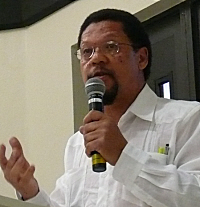
The analytical paper, delivered to the panel on Human Rights and Foreign Policy, was presented by International Advisor on Governance Dr. Carlyle Corbin.

OTR file photo
The paper focused on the choices before the people of the U.S. Virgin Islands as it examines options for its future political status evolution. In his presentation, the author noted that "the centennial is an appropriate time to take stock of developments since the transfer of the Danish West Indies to the U.S. in 1917, ushering in a transition from Danish to U.S. colonialism and the emergence of the territory as a U.S. dependency."

Corbin, who is a Senior Fellow in the global Dependency Studies Project, introduced the paper with an examination of the international standards for the full measure of self-government for those dependencies such as the U.S. Virgin Islands which were placed under United Nations (U.N.) review pursuant to the signing of the U.N. Charter in 1945. He noted that the standards were systematically refined over the next fifteen year period, culminating in the adoption of the 1960 Decolonization Declaration and its companion resolution [(1541 (XV)] which provided the minimum standards for full self-government under independence, free association and integration.

He also emphasized the significance of the core human rights conventions which confirmed self-determination as a fundamental human right for the people of the remaining territories. He made specific reference to the significance of the International Covenant on Civil and Political Rights (ICCPR), the International Covenant on Economic Social and Cultural Rights (ICESCR), and the Convention on the Elimination of Racial Discrimination (CERD), indicating that "these are among the respected international conventions which have direct relevance to the U.S. Virgin Islands and other dependent territories globally."

The author emphasized the "international legislative authority of decades of U.N. General Assembly resolutions on self-determination and its consequent decolonization as collective policy positions taken by the global community to give substance to the mandate of bringing the full measure of self-government to the remaining territories, and especially the island dependencies in the Caribbean and the Pacific." Extensive comparisons were made in the presentation to the existent dependency governance models in the two geographic regions of the Caribbean and Pacific administered by the United Kingdom, the United States, France and the Netherlands.

Moving to the U.S. Virgin Islands as the specific focus of the paper, Corbin cited the three historical time frames of the pre-Danish Period, the Danish Colonial Period, and the transition to U.S administration. Regarding the pre-Danish period, he discussed the evolution of the territory from the first European encounter over 4,000 years ago. He went on to address the various stages of Dutch, British and French rule through the seventeenth century, followed by the transition to Danish control through settlements on the islands of St. Thomas and St. John. He noted that Danish acquisition of the island of St. Croix from France in 1733 "served to unify the control of the three islands."

Corbin, who formerly served as Minister of State for External Affairs of the U.S. Virgin Islands Government, discussed the development of sugar cultivation as the basis of plantation economies on St. Croix and St. John made profitable through the use of the labour of those enslaved Africans who had been captured on the continent and who had survived the "infamous Atlantic passage" to the islands. While referring to this practice as a "crime against humanity," he contrasted the slave plantation economy of St, Croix and St. John to the emergence of St. Thomas as a transshipment port for trade in the Caribbean region. He noted that the plantation economy on St. Croix flourished until 1848 when "the enslaved Africans rebelled and forced their emancipation." 


Image result for Virgin Islands
en.wikipedia.org.
"The post emancipation period ushered in subsequent colonial governance mechanisms," he pointed out, "including the Danish Labour Act of 1849, and the later Colonial Laws of 1852, 1863 and 1906, before the three islands were ultimately sold to the U.S. in 1917 for U.S. 25 million in gold." Corbin went on to provide a chronology of "incremental political developments" through the century of U.S. rule dating from the earlier forms of military governance, the extension of citizenship, five attempts to draft a territorial constitution within the dependency status, as well as efforts to address the broader question of selecting a political status through referendum. He highlighted the importance of ongoing efforts by the University of the Virgin Islands' self-determination project to "rekindle a conversation on the political evolution of the territory." 

Corbin pointed out that "the specific areas of democratic deficiency such as lack of voting rights for the U.S. president and in the U.S. House of Representatives are clear indications of the political inequality which characterizes the U.S. dependency status of the U.S. Virgin Islands and other dependencies similarly situated in 2017."  He referred to Guam, American Samoa, the Northern Marianas Islands and Puerto Rico as further examples of the distinction between territories which are not legally part of the U.S. and integrated U.S. states which are a part of the U.S., and accordingly exercise full political rights.

Corbin cautioned that extension of such 'partial rights' for the U.S. territories within the U.S. political system without examining closely the implications of such a move "would not result in fuill political equality which is a basic tenant of democratic governance." 


"Before any such unilateral change in the political status is made, he argued, "the people of the territory should be given the opportunity to express whether they wish it to be so, and only after a thorough examination of the ramifications." 

Instead, Corbin argued that "overall political status evolution was a better approach in determining the equality of rights through integrated status as a state within the U.S. political system, or as independent or associated country status where the relationship with the U.S. would be on the basis of equality."

"Interestingly," he noted "the territories of Guam and Puerto Rico have adopted legislation surrounding these three options of full political equality, and are embarking on a referendum where the people will decide among these alternatives."   
In this context, he also cited existent examples of autonomous political status arrangements globally which meet the minimum global standards of self-government, including the Cook Islands in association with New Zealand, Greenland with Denmark, and Micronesia with the U.S. 

"Models like that which govern Curacao, Sint Maarten, and Puerto Rico in the Caribbean have been shown over time to have fallen below the acceptable level of these global standards," he indicated, while observing that "proposals for modernization to raise these polities to the level of full self-government are being actively pursued." 

He went on to differentiate the dependency status from the autonomous country status, while also shedding light on the models of political integration in referencing Martinique, Guadeloupe and French Guiana whose people have full political rights in the French Republic. 

Corbin discounted the efficacy of reforming the current U.S. territorial status models in the Caribbean and Pacific "if it means that the dependencies would remain subject to the unilateral power of the U.S. Congress and therefore deficient in terms of genuine self-governance sufficiency." In this connection, he concluded that decades of legislation repeatedly introduced in the U.S. Congress to extend certain political rights to the U.S. territories within the U.S. political system "have not borne fruit, and U.S. court decisions have continuously reaffirmed that such rights are constitutionally only available to integrated U.S. states."


Image result for Virgin Islands
britannica.com

With specific reference to the U.S. Virgin Islands, the author referred to "unresolved questions which would have to be addressed at the societal level as a precursor to advancing a genuine and sustainable political status process, as opposed to one of mere colonial reform of the status quo dependency arrangement where the unilateral authority of the cosmopole and the political inequality remain intact." 

In this regard, he referred to the importance of "societal realization of the democratic deficiencies of the status quo" and their impact on the political and economic situation in the territory.

"The importance of the realization by the political directorate in the territory of the need for a fundamental evolution towards full self-government cannot be underestimated," he said.

Corbin concluded the paper by indicating that "initiatives in other dependencies administered by the U.S. and European powers,  could serve as useful examples in determining a favorable approach which the U.S. Virgin Islands might take in moving forward from 100 years of political inequality to a status of full political equality." 


Diplomacy from the Periphery

An earlier paper on the U.S. Virgin Islands centennial was presented to an international conference convened last fall at the University of Copenhagen in Denmark from 24-26 November 2016. The paper, also presented by Dr. Corbin, was entitled "Diplomacy from the Periphery- the international relations of a former Danish colony," and was delivered to the Second Conference of the New Diplomatic History Network under the theme Borders, Networks and Organisations through the 20th century. Scholars from a range of tertiary institutions presented papers at the conference:


 National Graduate Institute for Policy Studies 
 American University 
 Instituto Universitario de Lisboa 
 Russian Fed. National Research University  
 University of Ghent  
 University of Birmingham  
 Chinese University of Hong Kong  
 Aarhus University 
 Lund University    
 University of Münster 
 University of Sussex   
 Aalborg University 
 University of Oslo  
 Södertörn University 
 Complutense University 
 Stockholm University 
 Catholic University of Chile
 Hebrew University 
 Bucknell University
 Georgetown University
 Aberystwyth University          
 Loughborough University         
 Universität der Bundeswehr          
  University of Turku                
 University of Strasbourg             


The paper focused on the evolution of the external affairs programme of the U.S. Virgin Islands from the period 1975 through 2006 during which time the international organization activity of the territory progressively evolved. 

Corbin noted that "despite the lack of devolved political autonomy for U.S. territories to participate in international organizations, the U.S. Virgin Islands successfully negotiated substantial delegated power to engage an array of global organizations through membership, associate membership or observer status."

He pointed out that there were other areas where international organization participation was achieved "by utilizing the international legal principle of 'acquired right' as in the case of the engagement with the U.N. self-determination process where the territory's future political status remains the subject of formal review by the international community." 

Corbin recalled that the external affairs program of the Government of the U.S. Virgin Islands during the period "served as an important tool for the acquisition of information, training and international exposure on a wide range of social, economic and constitutional development issues, and helped to break the territory's isolation from the regional and global development debate." He noted that such global engagement "enhanced capacity through shared experience with other non-sovereign jurisdictions." 

The paper went on to identlfy the specific international organizations in which the U.S. Virgin Islands participated including the U.N. Decolonization Committee, the Economic Commission for Latin America and the Caribbean (ECLAC), the Caribbean Development and Cooperation Committee (CDCC), and an array of U.N. world conferences in the economic and social sphere.

He also made reference to the challenges faced as the territory sought the delegation of authority to formally engage the Caribbean Community (CARICOM), the Organization of Eastern Caribbean States (OECS) and the Association of Caribbean States.

The paper went on to chronicle successful initiatives in the creation of the Inter Virgin Islands Conference (and later Council) between neighboring British Virgin Islands and U.S. Virgin Islands; and the Alliance of Dependent Territories between the Pacific and Caribbean dependencies administered by the U.S.

The paper concluded with an examination of the challenges faced by successive territorial governments in their sustained engagement with the United Nations decolonization process.

"In many respects, the territory exercised, perhaps, the most active^ engagement with the international system among the territories," Corbin concluded, "and the experience gained from this activity was valuable in setting the territory's place in the global environment."


     EXTERNAL AFFAIRS OF THE U.S. VIRGIN ISLANDS (2006)

Inter- Territorial
Caribbean/Hemispheric
International

Political / Constitutional


Inter Virgin Islands Council
(IVIC)


(bilateral)

Economic Commission for Latin America & Caribbean (ECLAC)

(associate member)


Alliance of Small Islands States (AOSIS)

(observer status)


Study on political status & constitutional development


Offshore Governors' Forum (OGF)

(five party)


Caribbean Development & Cooperation Committee (CDCC)

(associate member)


United Nations (U.N.) economic and social development conferences

(observer status)


U.N. Review Process:

  Committee on Decolonization
(discussant)

Special Political and Decolonization Committee
(discussant)


Organization of Eastern Caribbean States (OECS)

(cooperation agreement)


Caribbean Tourism Organization (CTO)

(member)


[Caribbean Community (CARICOM)]

(eligible)

[Association of Caribbean States]

(eligible)


Source: 

Dependency Studies Project


18 June 2015

Pacific islanders try to stop US military's plans for a simulated war zone


the guardian


People of Pagan and Tinian to take their appeal directly to Obama to save islands’ rare ecosystems from ‘irreparable damage’ and residents from forced re.location.

If the Pentagon gets its way, a pair of idyllic Pacific islands have just two years before their tranquillity is pierced by the roar of US B-52 bombers, fighter jets and artillery fire.

Faced with the destruction of their homeland, residents are to take their appeal directly to Barack Obama in an attempt to block US military plans to turn Tinian and Pagan – US territories that form part of the Commonwealth of the Northern Mariana Islands – into a simulated theatre of war.

Campaigners say the arrival of thousands of navy seamen and marines on the tiny islands would obliterate rare coral ecosystems and wildlife, and force some residents to relocate.

READ THE FULL STORY IN THE GUARDIAN


06 March 2014

Dutch law set to restrict migration, trace and deport the Caribbean Dutch national

Anguilla News


Apartheid turning back? Dutch bill proposal to enact second class citizenship


The Dutch Lower House of Parliament is set to debate a motion concerning residency requirements for Dutch citizens originating from Aruba, Curaçao and Sint Maarten on March 5 2014 (1830 hrs Dutch local time). If passed, the migration law will ensure that the economically and educationally deprived be legally restricted from settling in the Netherlands. The legislation would also create the possibility for persons – who “objectively meet the criteria” and “upon reasonable suspicion” – to be checked by police in order to establish their identities, nationalities as well as residency status should these persons be found to be infringing the residency requirements (e.g. insufficient education and insufficient command of the Dutch language). The legislation will result in the possible deportation of citizens from the aforementioned islands. These deprived Dutch citizens, who migrate to the Netherlands seeking employment opportunities, will, in turn be disadvantaged in their search for employment. 

READ FULL ARTICLE HERE.

20 October 2013

Spain and Morocco plan oil exploration near Canary Islands


thecanaryislands.info

 The Spanish and Moroccan governments are moving forward with plans to explore for oil near the Canary Islands despite opposition from the tourism industry and environmentalists in the Spanish archipelago.


The two governments have authorized oil exploration projects in the area even though the maritime boundaries are not set, with territorial limits established by an imaginary line equidistant between the Moroccan coast and the Canary Islands, which belong to Spain.

Some residents of the islands, whose economy relies on tourism, are concerned about the possible effects of an oil spill, while others contend the energy industry would create jobs in a region dealing with an unemployment rate of 33 percent.

The fields in the area could hold up to 1.4 billion barrels of petroleum and produce 140,000 barrels per day (bpd) of crude, helping Spain meet 10 percent of its daily demand for oil, Spanish oil company Repsol said.

Morocco, meanwhile, said Scottish oil company Cairn Energy planned to begin exploration work in the next few weeks in blocks adjacent to those granted by the Spanish government to Repsol some 60 kilometers (37 miles) off Lanzarote and Fuerteventura.

The Cajun Express rig leased by Cairn Energy will begin operations in early October some 555 kilometers (about 345 miles) northeast of the Canary Islands.

The start of exploration by Repsol, which is working with Germany's RWE and Australia's Woodside, is still pending completion of the environmental review process.

SEE ALSO:   No 0il Canarias