04 April 2016

West Papuans object to Indonesian envoy idea


The United Liberation Movement for West Papua has objected to a move by Indonesia to commission an envoy to the Pacific on behalf of its Melanesian population.


Indonesia's Coordinating Political, Legal and Security Affairs Minister Luhut Pandjaitan said he would propose assigning a Foreign Ministry official to engage with Pacific neighbours and advance Indonesia's commitment to resolving complicated issues surrounding Papua.

Minister Pandjaitan made the call this week on his Pacific regional tour which included visits to Fiji, New Caledonia and Papua New Guinea.

His tour was described by Indonesian officials as a bid to suppress regional support for the Liberation Movement which was recently granted observer status at the Melanesian Spearhead Group.

Explaining the need for an envoy, Pandjaitan said it was crucial that Jakarta start to “aggressively” inform the international community on its many undertakings in Papua.

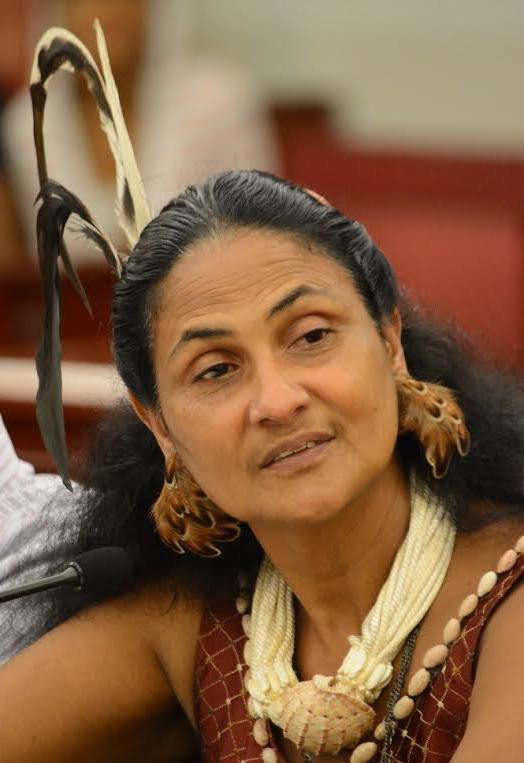
However, the Liberation Movement's ambassador for Oceania and the Pacific Islands region, Amatus Douw, pointed out that he already serves the role as envoy for Papuan interests in the Pacific.

The Australia-based diplomat warned that Indonesia's envoy plan was about expanding its colonialist agenda and nothing to do with representing the interests of Papuans.

The Liberation Movement was established in 2014 by a unification process involving all the major West Papuan political representative groups.

Its admission into the MSG fold was an acknowledgment by the MSG full members (PNG, Fiji, Solomon Islands, Vanuatu and New Caledonia's indigenous Kanak movement) of West Papuan rights to regional representation.

Douw said Indonesia should not interfere with the representations of Papuan interests in Melanesia and the wider Pacific region.

“We never interfere over Asian affairs in your region,” said Douw. “Indonesia is not real Pacific or Melanesian states.”

However the Fiji-based Pacific Conference of Churches (PCC) warned that donors and foreign governments must not attach conditions to relief efforts, amidst concern that Indonesia is using financial inducements to ensure silence among other governments regarding Papua.

PCC General Secretary, Reverend Francois Pihaatae, said Minister Padjaitan had been “extremely vocal against groups seeking self-determination in Papua” and had publicly called for West Papuan activists to be removed from the country.
This comes after signs as early as 2014 that Fiji authorities were doing the bidding of Indonesia on the West Papua question.

“By accepting conditional aid," Reverend Pihaatae said, “regional governments do their people a great disservice.”

This sentiment was echoed by Amatus Douw who said that the support for West Papuan rights and self-determination efforts was very strong in Fiji.

“I strongly oppose Indonesia's use of natural disaster momentum to promote (its) political stand on West Papua's Independence movement in the Pacific region,” he said.

“If Indonesia really provide humanitarian aid, you must do with your good and pure heart without any dirty political motivation,” he said.


*****

THE JAKARTA POST/PACNEWS


Indonesia is looking to strengthen its diplomatic ties with South Pacific countries by appointing a special envoy to the region.
Coordinating Political, Legal and Security Affairs Minister Luhut Pandjaitan on Wednesday said he would propose assigning an official from the Foreign Ministry to engage with the easterly neighbors and underscore Indonesia’s commitment to resolving complicated issues surrounding Papua.
Luhut said Jakarta’s eastward gaze was part of its wider efforts to counter the separatist narrative that had thus far prevented the government from developing Indonesia’s easternmost province.
“I will propose this to the President [Joko “Jokowi” Widodo] and the Foreign Minister [Retno LP Marsudi]. It is important that there is an envoy who can deliver our message to the Pacific island countries,” he told The Jakarta Post aboard an Indonesian Air Force aircraft en route to New Caledonia.
Luhut is in the region to consolidate support from member states of the Melanesian Spearhead Group (MSG), which have struggled to balance their growing ties with Jakarta with ongoing support for regional grassroot movements dedicated to protecting the rights of indigenous people of Papua and West Papua during decades of separatism.
The MSG is a sub-regional grouping in the Pacific, comprising Papua New Guinea, the Solomon Islands, Vanuatu, Fiji and New Caledonia. Indonesia is an associate member.
Luhut said it was crucial that the government start to “aggressively” inform the international community on its many undertakings in Papua, with support from MSG members a crucial factor of success.
To this end, Luhut invited a number of Papuan regional heads and representatives of other provinces with a large Melanesian presence — Maluku, North Maluku, East Nusa Tenggara and West Papua.
“We have to thoroughly explain what’s being done — and we’re doing a lot,” he said.
According to him, the government is supporting Papua on a number of fronts, starting with increased regional funds, a renewed focus on health and education initiatives, the promise to resolve past human rights abuses and plans for more infrastructure and logistics projects.
Kicking off a three-day tour to countries in the region, Luhut will be in Fiji for bilateral meetings with Prime Minister Voreqe Bainimarama, Foreign Minister Ratu Inoke Kubuabola, and Agriculture, Maritime Development and Disaster Mitigation Minister Inia Seruiratu.
Luhut’s advisor Djauhari Oratmangun said the visit aimed to strengthen Indonesian ties with Fiji, consolidating the Pacific Island country’s continued support of Indonesia in the MSG forum.
Fiji, along with Papua New Guinea, has supported Indonesia’s role in the sub-regional forum as the country with the largest population of Melanesians.
Djauhari said the trip also had humanitarian goals, with Indonesia providing Fiji with US$5 million in disaster relief as well as a container of supplies from the Indonesian Army’s engineering directorate.
Meanwhile, General Elections Commission (KPU) chairman Husni Kamil Manik is set to sign a memorandum of understanding with the Fijian government on the transfer of knowledge on election organising.
After Fiji, Luhut and his entourage plan to visit Papua New Guinea before returning to Jakarta.


03 April 2016

St. Thomas Senator calls for intensified pursuit of self-government


VIRGIN ISLANDS TRANSFER DAY MESSAGE 

The Honorable Tregenza A. Roach, Esq. 
Senator, 31st Legislature 


"On the occasion of the Transfer, we should reflect on the need to grow further in our pursuit of self-government."


The sale and purchase of the Danish West Indies, transferring sovereignty from Denmark to the United States of America, in March of 1917 was several years in the making. It took several treaties and many years of informal negotiations to bring about the sale of these three islands with provisions to protect the civil rights for the inhabitants. 

The Treaty of 1867 for the sale and purchase of St. Thomas and St. John was drafted and signed by the King of Denmark, but was not favorably regarded by the United States Senate. The asking price was $7.5 million and incorporated a plebiscite, religious and civil liberties, and citizenship provisions. 

The US Senate, however, was recuperating from the Civil War and wanted to focus on that conflict rather than acquiring overseas territories. The Treaty of 1902 which was drafted by the US Senate differed from the previous treaty. It included all three islands; it did not hold the US responsible for any debt resulting from the islands’ failing economy; and it counter offered $5 million. 

Additionally, the civil rights and political status of the people would be determined by the United States of America. The Danish Rigsdag or Senate did not favor this treaty and was still embittered by the US Senate’s rejection of their 1867 Treaty. The Monroe Doctrine which prohibited further European colonization of the Americas gave the United States leverage with the Treaty of August 4, 1916. 

Under the treaty, the US would have been the preferred body to purchase the Territory. This would defeat the aspirations of Germany which saw the islands as a way to gain a strategic military advantage, a reality which the US could not afford. Finally, the Treaty of August 4, 1916 was ratified by the Danish Rigsdag and signed by the King of Denmark on December 22, 1916, after negotiating the purchase price of $25 million in gold. 

The United States President Thomas Woodrow Wilson signed and the US Senate ratified the treaty in January of 1917. The Transfer Day Ceremonies took place on St. Thomas and St. Croix at 4:00 pm on March 31, 1917. 

On the occasion of the Transfer, we should reflect on the need to grow further in our pursuit of self-government. We should as well act always to encourage the aspirations of our people in ways which support their diverse talents and unlimited potential. 

Transfer Day gives us the opportunity to reflect on our rich heritage even as we aspire to a bright and promising future. 

01 April 2016

Guam Governor proposes 2016 referendum on political status

Image result for eddie baza calvo
Excerpts


Governor Eddie Baza Calvo
Territory of Guam
.....
"...It’s time we confronted the fact that, for nearly 400 years, the state of the island has also been colonial. It is the unchanged and unrepentant shadow cast upon our unshackled destiny.
Confidence may be the one trigger that can change our colonial state once and for all.
.....
I know that we can do this. We can determine for ourselves the course we will take to achieve the dreams we set. In a sense, that truly is self determination.
But it is incomplete until we exercise our right of political self determination.
Are we ready to determine our future? Are we mature enough to decide for ourselves? It’s funny that no one asked us these questions when they took our determination from us.
  • We survived a wave of disease, war, and genocide brought by the Spanish conquest. Of course we are ready!
  • We adapted 300 years of cultural and political change, together with a Catholic heritage that runs through our veins. Of course we are ready!
  • We sacrificed our identity throughout the 20th Century so that we could be patriotic Americans. We’ve paid our dues, and our time has come.
There’s this thinking among some that Guam is not ready. That we need a guiding hand because, all too often, we fail at what we’re supposed to do. Ask yourselves this, though. What was it that we failed to do? What rules did we fail to follow? And then ask yourselves, who made those rules?
I get it. I understand that we failed as a local government to do some important things in following federal laws. But could it at least have been a partnership for improvement and progress, rather than a parent slapping his child? Could there have been a conversation of two people at the table, instead of a command from the master to his subject? Better yet, could we at least have had a say in those federal laws – laws that we are paying for - with even one vote in Congress? And how about a check mark at the ballot box that counts to elect the President, who sends our sons and daughters to war?
These inalienable rights have been denied us. Yet, even if granted a voice in the U.S. political process, one inalienable right remains and blankets all others. Before you include us, can you ask us if that’s what we want? Because, it has been nearly 400 years since anyone asked us that. It’s been centuries since we had a choice.
Colonial sympathizers are now hopping off their seats to point out that we made a choice in 1949 when the elected Guam Congress petitioned President Truman and Congress for citizenship. Let me explain this for those of you who don’t know the history of these things.
Before the Organic Act, the Chamorro people did not have the freedom of speech or religion in three centuries. The supremacy of colonizers over what we could say and where we could say it was so great that the very language we spoke was forbidden and systematically brought to the brink of extinction. All it took was a paragraph on a piece of paper signed by a Naval captain, and his will be done. But these weren’t the only rights deprived from us. We neither had rights to privacy, trial by jury, property, education, nor the plenary power of local law established by a legislature of our election. We were subjects.
What the Guam Congress of 1949 petitioned the federal government for wasn’t a political status choice. It was recognition of our human rights and dignity, and the application of the law to protect our rights. For what is an island of people and no citizens? It is a colony of subjects.
President Truman, at the will of Congress, transformed us from a colony of subjects to a colony of citizens with human rights. The key part there is, ‘at the will of Congress.’ So, as things go in this world, we should be thankful that in 1949 Congress was populated by enough progressive thinkers, who determined that the Indios of its outlying possession deserved human rights. It was possible then, as it is possible now, that a majority of its members can press a button in the House and Senate chambers and take all our rights away. We are not citizens by virtue of the Constitution. We are citizens by virtue of a benevolent Congress. And what Congress giveth, Congress can taketh away. Some people want to build a wall to keep non-Americans out of the country. I’ve oftentimes wondered whether that wall already exists, and we’re the ones stranded outside the fort. What more if another wall goes up? Will we be considered Americans when we knock at the gate?
The progressive movement of 1949 was seven decades ago. We’ve since established local governance. We manage our finances far better than our federal parent. As measurements of maturity go, we care for one another, we carry the burdens of the downtrodden on our shoulders, we are masters of industries that sustain our economy and propel our workforce, and now, we are confident. Manelu’hu yan manaina’hu… man’mapos manaina’ta… ekunguk yu yan in komprendi este todu i Lina-lot-ta… after almost 400 years, it is time we make a choice.
If we are committed to our self determination, then there’s no reason to wait for another election to pass. There are two triggers to conduct the political status plebiscite, according to Guam law. The first is that an education campaign should be conducted before the vote happens. But in order for the vote to be scheduled, the law says 70 percent of the native inhabitants eligible to vote must be registered to vote.
We can certainly conduct a massive registration drive, but it won’t matter. How do you determine 70 percent of the eligible voters if 100 percent of them aren’t already registered? There is no mathematical way of determining how many native inhabitants must register to vote to meet the 70 percent requirement.
If the Legislature would like to change this law, I welcome it. But this has been a known problem to all of us who served as senators. It is just too controversial an issue to touch. We have to get over that. We need to do what is right. It’s been 20 years!
As the Chairman of the Commission on Decolonization, I have ordered its staff and my office to design a massive education campaign. We will not create any content. We leave that to the academics at UOG, in partnership with the three status task forces. But we will do something that we do well: carry out a winning campaign. Our strategy starts with a major information campaign that helps people understand what self determination is, why it’s important, our history, and the facts and myths of the different status options.
If, by mid-July, indications are strong that voters will be ready to choose, I will ask the Commission on Decolonization to release equal portions of funds to the task forces. The task forces then will have a four-month period, with equal resources, to make their case. This is a realistic timetable for an education campaign. We just have to be committed to it.
As for the changes needed to law in order for the plebiscite to take place in the November General Election, I will not hold my breath. There’s an old saying that if the mountain won’t come to Muhammad, then Muhammad must go to the mountain. And go I shall.
Tomorrow morning, I, registered native inhabitant Eddie Calvo, will submit, a draft measure to petition for the referendum of the political status plebiscite. I have organized a campaign to secure the required signatures. I’m not changing any of the status options or even the wording and order of the plebiscite question and choices. A second question will appear below the status choices. It will ask the voter whether he or she was made a U.S. Citizen by virtue of the Organic Act of Guam, which is the definition of “Native Inhabitant.”
We will aggressively seek the required number of signatures, making this a grassroots decolonization effort. If, by mid-July, we determine that the education campaign is succeeding, I will file the petitions, and we will vote – FINALLY – on our political status.
Some may fear this issue or feel removed from it. Look at me, and look at my name. I am the great grandson of an Scotch-Irish-American named John Francis McDonald. The Calvo name? It came from my great great great grandfather, Felix Calvo, a Spanish officer in Manila, whose Philippine-born son married a Chamorrita. Baza didn’t come from the Chamorro language either. I am proud of my heritage as a Filipino, a Spaniard, and an American. I do love America, very much.
But I’m also the descendent of Hurao. His words here, spoken in this city to Chamorro warriors who did not submit to their colonizers, reverberate through my heart. While we all claim pride in heritages and cultures throughout the world, we all owe our lives in paradise to the Lord and to the ancestors of this land. Self determination isn’t about loving or hating the United States. It’s about our right to be part of something, or to be on our own. It’s a choice that was taken from us with the blood of this great man and all those who died so that we could choose. This unfinished business looms upon our heritage. It is our legacy.
The burden of this duty looms heavily on my conscience. I would like to recognize that there are many leaders, past and present, who have taken this mantle. Besides our former governors, the late Speaker Ben Pangelinan – for all that we disagreed on – I bow my head in prayer and reverence for his leadership on this issue. It is something that Speaker Won Pat and Sen. Respicio have been lobbying me to focus on.
But I came to this idea after I had a meeting with Victoria Leon Guerrero, Melvin Won Pat Borja, and Moneka De Oro. They were upset with me a few months ago because of my statements in support of the military buildup. Their point was that if we, as an island community, were to embrace the buildup of a sovereign power in our land, should we not – at the least – determine that this was by the consent of the governed? Should we not at least self-determine how this should move forward in the context of a political status?
Here’s the part that weighs on me, and I’ll never forget it. They said, “You are our Maga Lahe. You are the one we look to first, who should be standing at the front of this.”
They are right. I’m not simply the governor of Guam. I am the descendent of Hurao – I am the Maga Lahe. And while my duty is to the administration of government, my allegiance belongs to Guam and the inalienable rights of her people.
What I’m saying, my dear people, is that, I love America, lao hu guiaya Guahan mas.
Si Yu’us ma’ase yan Hita I man taotao tano!..."

Samoan Affairs will administer new office of self determination


A new ASG office will open after Flag Day to house a committee for the territory’s self-determination headed by Tapaau Dr. Dan Aga.

Dr. Aga who is currently director of the Natural Resources Division of the American Samoa Community College was a staffer of the last Future Political Study Commission and Constitutional Review back in 2010.

He was the presenter from American Samoa at the Office of Insular Affairs panel on self determination for the territories of  American Samoa, Guam , Northern Marianas and  the Virgin Islands held last month.

Governor Lolo Moliga said at a cabinet meeting Thursday that funding has been allocated to finance the Office of Self-Determination.

He said he decided to give funding that OIA has provided for the office  to be administered by the Office of the Samoan Affairs because he felt that this office and the funding for it should not be politically influenced.

Governor Lolo said he learnt a great deal from the Washington discussion and was especially proud that American Samoa had a voice...as in previous years the territory didnt.

Lolo also pointed to the fact that the territory’s Delegate to the US Congress is now sitting in important committees that wield influence on decisions pertaining to American Samoa.

The governor has asked several cabinet members who were part of the American Samoa contingent to Washington to provide reports on their meetings after Flag Day to share with the rest of the cabinet who were not able to make the trip. 

There was heavy criticism of the governor taking more than a dozen directors and staff members with him, at a time when the government was experiencing financial difficulties.


31 March 2016

Argentina Hails UN Extension of Its Continental Shelf


BUENOS AIRES – Argentine President Mauricio Macri hailed the decision by the UN Commission on the Limits of the Continental Shelf, which approved extending the limits of his country’s continental shelf.

“We are very happy with this favorable response from the United Nations and thankful to the Argentines who worked to obtain it,” the president said on his Facebook page.

“This extension of the limits of our country’s shelf allows us to defend the riches of our seas, which belong to each and every Argentine citizen,” he said.

For Macri, this is “good news for Argentine sovereignty” and will bring the South American country a series of benefits.

“The country will gain 1.7 million sq. kilometers (656,000 sq. miles) many meters (yards) deep and acknowledgment by the UN of the dispute existing over the sovereignty of the Malvinas Islands,” he said, referring to the Falklands.

“The is a project that has been under consideration for almost two decades, the result of teamwork by specialists in different areas and different governments who continued with this claim throughout the years, in a true example of national policy,” he said.

The new limits were approved March 11 by the UN panel made up of 21 international experts.

The UN sees the Argentine matter as a test case, since it is the first time a country has used all available resources, from geological measurements to considerations of distances and depths, in order to demonstrate the limits of its territory.

The Falkland Islands were the object of a brief war in the early 1980s pitting Argentina against Britain.

Argentine troops invaded the South Atlantic archipelago on April 2, 1982, at the order of the military junta then in power in Buenos Aires.

Full-fledged fighting officially began on May 1, 1982, with the arrival of a British task force, and ended 45 days later with the surrender of the Argentines.

The conflict claimed nearly 1,000 lives – some 700 Argentines and 255 British soldiers and sailors.

Buenos Aires demands that Britain comply with a 1965 United Nations resolution describing London’s control of the Falklands – which dates from 1833 – as colonialism and calling on the parties to resolve the dispute through dialogue.

London has refused to discuss the question of sovereignty and says the Falklanders should decide their own future.


*****

...and the U.K responds to the "rule of law")

Britain has rejected Argentine claims to the waters surrounding the Falkland Islands following a UN commission ruling that extended the South American nation’s maritime territory by 35 percent.
Downing Street dismissed the move as “not legally binding,” insisting the UN commission does not have jurisdiction over national sovereignty.
The government of the Falklands has expressed concern over the decision, while, shares in Rockhopper Exploration – an oil firm drilling near the islands – slumped following the announcement.
According to the UN, Argentine waters have expanded 1.7 million sq km to encompass the disputed Falklands, or, as they are known in Argentina, Islas Malvinas.


30 March 2016

Puerto Rico: Junta de Control Imperial ¿qué hacer?


Cinco procónsules determinarán el presupuesto, los planes fiscales, el manejo de las agencias y las corporaciones públicas, el sistema de permisos, las reglamentaciones ambientales, la reducción del salario mínimo, la privatización de la Autoridad de Energía Eléctrica y todo lo que caiga en su objetivo de garantizar el pago a los acreedores de la deuda de Puerto Rico. No hay ámbito o área de gestión pública que no escape a su intervención. Contarán además para su agenda nefasta con las recomendaciones del Informe Krueger, hecho a la medida para sus propósitos.

Como si se tratara de aumentar el desprecio y la venganza hacia los puertorriqueños, esta versión nueva de la Junta de Control Fiscal es peor que la presentada por el senador Orrin Hatch, muy lejos de las esperanzas fofas de los políticos coloniales que fantasearon con sus dotes persuasivos.

READ THE FULL COLUMN HERE.

29 March 2016


SAN JUAN – Puerto Rico’s education secretary has informed the U.S. Congress that his agency does not have the money needed to serve the basic needs of the island’s public schools.

In a letter to House Speaker Paul Ryan released Tuesday, Rafael Roman asked him to take measures toward finding a solution to Puerto Rico’s $72 billion debt, which has spurred a “humanitarian crisis” among children on the island.

The secretary said the Puerto Rican government must use the little money it has available to pay down the debt, which leaves nothing for basic allocations like the amount budgeted for the Education Department.

There just isn’t enough money to meet the needs of the 379,000 public school students in Puerto Rico. Washington must act quickly to avoid some very predictable and irreparable damage, Roman said in the letter.

The official said that parents expect to find schools in top condition for educating their children, but due to his department’s lack of liquidity, the youngsters are paying the consequences of a do-nothing Congress.

Roman said the fiscal crisis and lack of liquidity endanger teachers’ wages and the payment of basic services for students like school buses, janitors and lunches.

He recalled that 58 percent of Puerto Rican children live below the poverty line, and that lunches served in public schools are often the only food that many students get to eat all day.

This is something that I as education secretary and all of us as U.S. citizens cannot allow, the education secretary said.

25 March 2016

Puerto Rico Says It’s Running Short of Money for Schools


SAN JUAN – Puerto Rico’s education secretary has informed the U.S. Congress that his agency does not have the money needed to serve the basic needs of the island’s public schools.

In a letter to House Speaker Paul Ryan released Tuesday, Rafael Roman asked him to take measures toward finding a solution to Puerto Rico’s $72 billion debt, which has spurred a “humanitarian crisis” among children on the island.

The secretary said the Puerto Rican government must use the little money it has available to pay down the debt, which leaves nothing for basic allocations like the amount budgeted for the Education Department.

There just isn’t enough money to meet the needs of the 379,000 public school students in Puerto Rico. Washington must act quickly to avoid some very predictable and irreparable damage, Roman said in the letter.

The official said that parents expect to find schools in top condition for educating their children, but due to his department’s lack of liquidity, the youngsters are paying the consequences of a do-nothing Congress.

Roman said the fiscal crisis and lack of liquidity endanger teachers’ wages and the payment of basic services for students like school buses, janitors and lunches.

He recalled that 58 percent of Puerto Rican children live below the poverty line, and that lunches served in public schools are often the only food that many students get to eat all day.

This is something that I as education secretary and all of us as U.S. citizens cannot allow, the education secretary said.

24 March 2016

Thousands Protest in East Timor over Maritime Boundary with Australia


DILI, Timor Leste – Thousands of people gathered outside the Australian embassy in Dili urging negotiations to settle the maritime boundary between Timor Leste and Australia, ABC news reported on Wednesday.

According to the Dili Weekly newspaper, Tuesday’s march drew about 10,000 people and was the first of a two-day protest over the boundary.

The protest organizers claimed the border was unfair and that Timor Leste had lost AU$6.6 billion ($5 billion) in oil and gas revenues to Australia.

The demonstration was scheduled to mark Australia’s decision to pull out of the maritime boundary jurisdiction of the UN Convention on the Law of the Sea, UNCLOS.

Timor Leste Prime Minister Rui Araujo had earlier this year sought talks with Australian premier Malcolm Turnbull on resolving the boundary, which Turnbull turned down.

However, Australia’s federal opposition has pledged it would restart negotiations with Dili over the sea border if it were elected.

23 March 2016

CELAC WANTS REGION FREE OF COLONIALISM AND COLONIES


IV CELAC Summit, held in the city of Quito
 on January 27th , 2016 

EXCERPT

DECOLONIZATION 

72. Reiterate the Latin American and Caribbean character of Puerto Rico and, in noting the resolutions on Puerto Rico adopted by the United Nations Special Committee on Decolonization, reiterate that it is an issue of interest for CELAC. 

73. CELAC member countries pledge to continue working, within the framework of International Law, and in particular in Resolution 1514/(XV) of the United Nations General Assembly of December 14th, 1960, to ensure that the region of Latin America and the Caribbean be a territory free of colonialism and colonies. 

74. Entrust the CELAC Quartet, together with the participation of other Member States wishing to join this mandate, to submit proposals to advance as stated in paragraph 72 of this Declaration. 

75. Reiterate our firm regional support for the legitimate rights of the Argentine Republic in the sovereignty dispute over the Malvinas, South Georgia and the South Sandwich Islands and the surrounding maritime areas, as well as the permanent interest that this dispute be solved by peaceful means and through negotiations, in accordance with the Resolution 31/49 of the United Nations General Assembly

22 March 2016

Japan demands Okinawa allow reclamation permit

National government orders Okinawa to reinstate permit, Okinawa to file objection with dispute committee


Ryukyu Shimpo

On March 8, Minister of Land, Infrastructure, Transport and Tourism Keiichi Ishii sent Okinawa Governor Takeshi Onaga an official order to revoke his nullification of the Henoko land reclamation permit. The permit is needed to implement the relocation of U.S. Marine Corps Air Station Futenma to Henoko. The order is expected to arrive in Okinawa by mail on March 8. The order holds that Governor Onaga’s nullification of the permit was unlawful, and demands that he revoke the nullification by March 15. The Okinawa prefectural government plans to reject the order, meaning that within seven days from the day after the order is received, the prefectural government will file an official objection to the order with the Committee for Settling National-Local Disputes. After the Committee reaches a verdict on the issue, the Japanese national government and the Okinawa prefectural government will likely face each other in another lawsuit.

The national government had previously brought a proxy execution lawsuit against Okinawa prefecture, hoping for a court ruling that would allow the national government to authorize the permit in place of the local governor. However, the two parties later accepted a settlement recommended by the court. While the agreed-upon settlement did encourage the national government to issue an order for Governor Onaga to revoke the nullification of the permit, it also stipulates that the government must engage in negotiation with Okinawa in an attempt to reach an “amicable solution.” In spite of this, plans for talks have yet to be made. By immediately issuing the order to Okinawa after the settlement was reached, without engaging in any negotiation, the government has shown that it places priority on carrying out the procedures that will lead to a new court verdict. It has become all the more clear that the government intends to push forward with the Henoko base construction.

According to the order issued by the government, Governor Onaga’s nullification of the permit constitutes “an act, as stipulated in Article 245.7.1 of the Local Autonomy Act, in which a prefectural government nullifies a legally prescribed transaction entrusted to it, which is recognized to be in violation of the law.” The order demands that Governor Onaga revoke the permit nullification.

Meanwhile, on March 7, the head of the Okinawa Defense Bureau (ODB) withdrew the formal objection and request for a stay of execution of the governor’s permit nullification that it had made to the national government. The ODB acted in the capacity of a private entity in making these demands, with the aim of temporarily voiding the governor’s permit nullification. The Okinawa prefectural government had filed a protest lawsuit objecting to the stay of execution, which was ordered by the Ministry of Land, Infrastructure, Transport and Tourism in response to the ODB’s request. However, because the request was withdrawn, the stay of execution will be terminated, and as soon as Okinawa receives notice from the review agency of its termination, the Okinawa prefectural government will withdraw its protest lawsuit.

At a press meeting on the same day, Chief Cabinet Secretary Yoshihide Suga stated that it was natural for the government to issue the order based on the content of the settlement terms. He also said that the government wants to engage in talks with Okinawa soon, and that the two parties will discuss how to move forward with negotiations. Defense Minister Gen Nakatani plans to visit Okinawa later this month in order to try to gain acceptance of the relocation plan.

Upon receiving the national government’s order, the Okinawa prefectural government will discuss with its team of lawyers how to proceed. It will likely file a complaint with the Committee for Settling National-Local Disputes as early as next week.

(English translation by T&CT and Sandi Aritza)


SEE ALSO:  
Japan arrests U.S. soldier suspected of rape in Okinawa


Taino heritage legislation considered for US Virgin Islands

St. Croix Source

Bill May Commemorate Taino Heritage at Magens Bay and Salt River

21 March 2016

U.S. provides resources to Guam for self-determination process


Office of the Assistant Secretary for Insular Areas


Interior Approves $1.5 Million in FY 2016 Funds for Guam

For Self-Determination Educational Outreach, Climate Change Projects, Public Safety, Emergency and Facility Assessments, Natural and Cultural Resource Preservation, and Leadership Building for Non-Governmental Organizations

WASHINGTON, D.C. (March 14, 2016) – Today the U.S. Department of the Interior’s Assistant Secretary for Insular Areas Esther Kia’aina approved $1.5 million in grant assistance for fiscal year 2016 to the Government of Guam and non-profit organizations from the Office of Insular Affairs’ (OIA) Technical Assistance Program and the Maintenance Assistance Program.

“This year’s funding reflects the priorities and issues of importance to the people of Guam including self-determination, public safety, climate change, natural and cultural resources, and capacity building for non-governmental organizations,” said Assistant Secretary Kia’aina.  “I am especially pleased with the leadership and collaborative working relationships among Governor Eddie Calvo, Guam Legislature Speaker Judith Won Pat, and Congresswoman Madeleine Bordallo on the advancement of a community educational outreach plan in preparation for a 2018 plebiscite on self-determination.”

The various Technical Assistance Program grants, including one Maintenance Assistance Program grant awarded for 2016 are as follow:

Guam Self-Determination Community Education Outreach Program – $300,000 to the Commission on Decolonization to implement a comprehensive community educational outreach program in preparation for a planned 2018 plebiscite.


*****

Non-Self-Governing Territories


TERRITORY
LISTING AS NSGTADMINISTERING POWERLAND AREA
(sq.km.)1
POPULATION1
AFRICA
Western Sahara PDF documentSince 19632266,000586,000
ATLANTIC AND CARIBBEAN
Anguilla PDF documentSince 1946United Kingdom9615,700
Bermuda PDF documentSince 1946United Kingdom53.3561,777
British Virgin Islands PDF documentSince 1946United Kingdom15328,200
Cayman Islands PDF documentSince 1946United Kingdom26455,691
Falkland Islands (Malvinas)PDF documentSince 1946United Kingdom12,1732,500
Montserrat PDF documentSince 1946United Kingdom1035,000
Saint Helena PDF documentSince 1946United Kingdom3105,777
Turks and Caicos Islands PDF documentSince 1946United Kingdom948.231,458
United States Virgin IslandsPDF documentSince 1946United States352107,343
EUROPE
Gibraltar PDF documentSince 1946United Kingdom5.832,700
PACIFIC
American Samoa PDF documentSince 1946United States20055,170
French Polynesia PDF document
1946-1947    and
since 2013
France3,600268,207
Guam PDF documentSince 1946United States540159,358
New Caledonia PDF document
1946-1947     and
since 1986
France18,575268,767
Pitcairn PDF documentSince 1946United Kingdom35.537
Tokelau PDF documentSince 1946New Zealand12.21,411
1. All data is from United Nations Secretariat 2015 Working Papers on NSGTs, and for Western Sahara, from UNdata (http://data.un.org), a database by the United Nations Statistics Division of the Department of Economic and Social Affairs, United Nations.   
2. On 26 February 1976, Spain informed the Secretary-General that as of that date it had terminated its presence in the Territory of the Sahara and deemed it necessary to place on record that Spain considered itself thenceforth exempt from any responsibility of any international nature in connection with the administration of the Territory, in view of the cessation of its participation in the temporary administration established for the Territory. In 1990, the General Assembly reaffirmed that the question of Western Sahara was a question of decolonization which remained to be completed by the people of Western Sahara.

3. A dispute exists between the Governments of Argentina and the United Kingdom of Great Britain and Northern Ireland concerning sovereignty over the Falkland Islands (Malvinas) (see ST/CS/SER.A/42).