|
Britain’s Chancellor of the Exchequer George Osborne is reportedly finalising measures to clamp down on two Caribbean tax havens.
Under tough anti-evasion measures being drawn up by the Treasury, banks in the British Virgin Islands and the Cayman Islands will be forced to reveal details about customers suspected of hiding money offshore.
The Caribbean islands are among the world’s main offshore financial centres. More than one million offshore companies are registered in the British Virgin Islands alone, even though the total population is just 30,000.
“The places you can hide are getting smaller and smaller,” Osborne said at the weekend at the European finance ministers’ summit in Dublin.
“We are in advanced stages of discussion [with the two territories]. They are in no doubt about what we expect,” he added.
Osborne’s remarks drew an immediate reaction from Cayman Islands Stock Exchange Chairman, Anthony Travers.
According to Travers, if the UK recovery is dependent on revenues from Osborne’s tax crackdown on Caribbean financial centres, then he is in for a rude awakening.
Travers said, “I am deeply troubled that the meritless attacks on the Overseas Territories by [Austrian Finance Minister Maria] Fekter appear to be gaining traction. Furthermore, there seems to be no contrary assertion from the UK government and the chancellor as to the true position .This is in neither of our interests, as in turn it seems to me to leave the City open to further Franco-German attack by association. But this is an attack based on mischaracterization.
“A cursory review of the publically available statistics under the European Saving Directive which established fully transparent proactive tax reporting shows bank deposits in Cayman of EU residents of a statistically irrelevant US$25 million,” he pointed out.
“The correct answer to Ms Fekter should have been that the Overseas Territories already demonstrate full tax transparency .Given that HMRC already has full treaty access to Cayman accounts for UK tax purposes, the provisions of FATCA are simply duplicative, wholly unnecessary and will raise no additional revenue,” Travers added.
He went on to say that it has not escaped his notice that Osborne has also attacked the British Virgin Islands, which has similar tax transparency with the UK and the USA.
“He should know that the BVI has an extensive network of some twenty one tax information exchange agreements providing for complete tax transparency notably to HMRC and the IRS; that they are concluding the FATCA negotiation with the UK, and the US and that they are considering moving to proactive reporting with the EU under the Directive,” he said.
He pointed out that the Cayman Islands, as well as the BVI and Bermuda, regard tax evasion as firmly off the table but yet they are continually labeled tax havens, a term that has become synonymous with illegality and wrongdoing.
“Our measures in Cayman far exceed the tax transparency available in Austria (and many other places, including the US) and yet we find no rebuttal from Chancellor Osborne, rather the contrary. One can only gaze in awe at the misinformation being promoted by a UK chancellor and wonder why he appears willing to assist the French and Germans in their avowed quest to irretrievably damage The City of London’s global dominance,” Travers concluded.
Meanwhile, in a letter on Sunday to the editor of Britain’s Daily Mirror newspaper, BVI Premier Dr Orlando Smith responded to an article published on Saturday, headlined “Margaret Thatcher the tax snatcher?”
The article claimed that Thatcher’s £6 million (US$9 million) London townhouse is owned by a BVI company, which could have been a scheme that would help her estate avoid millions in inheritance tax.
John Christensen, of the Tax Justice Network, said: “How can a former prime minister spend more than two decades living in a house in London that has been owned for many years by a company based in the British Virgin Islands? We all have a duty to pay our taxes, and that includes former politicians.”
However, Smith said that the article makes the classic error of assuming that the use of an offshore structure is in some way improper for UK tax purposes or that some unauthorised benefit is obtained.
“That is simply an unsound assumption. The fact that HMRC has clear avenues to obtain all tax information from the BVI should in fact lead your correspondent to the contrary conclusion; that offshore structuring in the Overseas Territories is correct and within the law,” Smith said.
“The legitimate use of transparent offshore financial centres needs to be better understood by your journalists,” he concluded.
|
17 May 2013
UK "clamping down" on dependency financial sectors


14 May 2013
Homage to a Martyr - A Freedom Fighter joins the ancestors
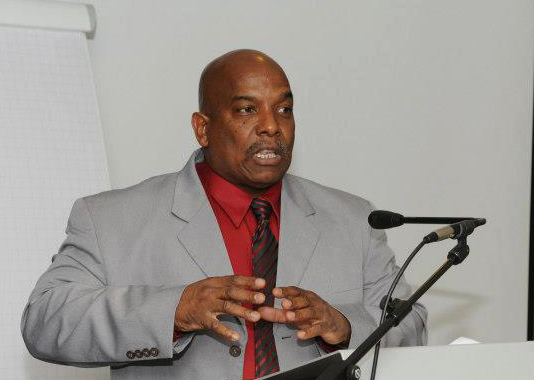
Helmin Wiels (Photo: Pueblo Soberano)
STEEL PULSE - TRIBUTE TO THE MARTYRS
When Martyrs died
They save our lives
They save our lives
They had an early grave
Sacrifice has taken place
...
Here was one they crucified
Dead man tell no tales
There were some
They hung so high
They hung so high
We know the reason why
Caught and tried
Bound and beat
Locked, locked away inside
But won their war of words
Patriots lost their lives
Remember.........
Message preach to all
you hear something
Doctrine for the soul
you feel something
The story has been told
you know something
Now answer martyrs call,
Do something
Prophesise the fall
Backs against the wall no more
Be something!
10 May 2013
Vieques, a Target in the Sun
George Withers
Senior Fellow for Regional Security Policy
Washington Office on Latin America
Executive Summary
May 1, 2013 marks the tenth anniversary of the day that the U.S. Navy left the small island of Vieques, Puerto Rico. The Navy had used portions of the inhabited island for military training ranges and ammunitions storage. On the training ranges, the Navy and Marines conducted aggressive air-to-ground bombing, amphibious assaults, ship-to-shore shelling, artillery practice, and a variety of other training exercises involving the use of a wide range of explosives and toxic materials.
Four years earlier, on April 19, 1999, a local citizen named David Sanes Rodríguez was working as a guard at one of the ranges and was killed when a 500-pound bomb from a Marine jet missed its target and landed on an observation post. Local non-violent protests which shut down the ranges grew to national and international dimensions, and the U.S. Congress and two succeeding administrations grappled with controversy until finally the Navy was forced by congressional and administrative action to leave the island.

It could be a mistake to think that the controversy started in 1999, however. Since the 1940s, the island and its people had endured six decades of forced relocation, bombardment, and the introduction of toxic materials to its environment. The Navy made promises over that time to improve the environment, lessen the impact of the training, improve the economy and treat the people with respect. Congress held hearings in 1980, 1981 and for three years after the 1999 accident. Today, ten years after the Navy left, the people of the island continue to suffer from poor health, high unemployment, a lack of basic services and limited access to much of the land that were taken from them 60 years ago.
This paper examines the history of the use of the island by the Navy, of the eventual legislation that furthered the punishment of the people, and the need for a more aggressive response to address the conditions that continue to afflict the people of Vieques.
Read the full report here.
08 May 2013
France’s Reactions To Tahiti Election Results Mixed
Radio New Zealand International
MP: France ‘shamed’ after victory for ‘most corrupt’ Flosse
WELLINGTON, New Zealand (Radio New Zealand International, May 8, 2013) – The French minister in charge of overseas territories, Victorin Lurel, has acknowledged the Tahoeraa Huiraatira’s victory in French Polynesia’s territorial election.
The ministry says Mr. Lurel has taken note of the result and called the party leader, Gaston Flosse.
It says Paris will work with the democratically elected members.
However, a Socialist MP, Rene Dosiere, says the election outcome has brought shame on France as Mr. Flosse is now bound to be restored as president.
Mr. Dosiere says while the French president and the government value transparency and probity, it wouldn’t be acceptable for French Polynesia to return to its old corrupt practices.
He says the election result has to be officially acknowledged, but one can only be saddened that the victory was achieved by the French republic’s most sentenced and most corrupt politician.
Despite a raft of convictions, Mr. Flosse insists he has done no wrong.
Churches in Tahiti urge French Polynesia independence steps
ECUMENICAL NEWS
Peter Kenny
 |
| PHOTO: WCC |
Members of an ecumenical delegation with President Oscar Manutahi Temaru of French Polynesia in Tahiti during a visit from April 26 to May 1, 2013.
Representatives of churches and Christian organizations worldwide are calling for French Polynesia (Maohi Nui), an area where France does nuclear testing, to be placed on a list of United Nations countries to be decolonized.
In Tahiti, delegates from ecumenical organizations supported this during a meeting with local church leaders, civil society organizations and President Oscar Manutahi Temaru during a visit to French Polynesia from April 26 to May 1.
"The international ecumenical solidarity visit to French Polynesia comes at the right time," said Rev. Francois Pihaatae, general secretary of the Pacific Conference of Churches.
"This is significant in terms of accompanying the EPM [Maohi Protestant Church] and the Maohi people while they are struggling to deal with the critical issue of re-inscription of French Polynesia on the U.N. list," he said.
Members of the ecumenical delegation met President Oscar Manutahi Temaru of French Polynesia in Tahiti during their visit.
The visit was coordinated by the Commission of the Churches on International Affairs of the World Council of Churches in collaboration with the Pacific Conference of Churches and the Maohi Protestant Church.
In 1947 the French government had managed to remove Maohi Nui from the UN list of countries to be decolonized.
The backing from the ecumenical group follows a statement issued by the main governing body of the WCC, its central committee in Greece last year, supporting advocacy on re-inscription of French Polynesia on the UN list.
This WCC statement and the visit were initiated by the EPM, asking for CCIA support on the issue.
The 2012 Synod of the EPM also urged the WCC and the PCC to "support its efforts for advocacy on re-inscription of French Polynesia."
Rev. Taaroanui Maraea, president of the EPM, said that the EPM "considers re-inscription of French Polynesia on this list as means to protect the people from decisions and initiatives taken by the French State contrary to its interests." He noted a decision made at the EPM 2012 Synod.
John Taroanui Doom, WCC president from the Pacific, spoke about the consequences of nuclear testing by France in French Polynesia.
"The problems directly and indirectly linked with the nuclear tests in the past thirty years in the French Polynesia are not yet settled," he said.
"Successive governments in France suppressed the demands from the affected local people and denied people's legitimate demand for the sovereignty of their land and right to self-determination," noted Taroanui Doom.
The meeting organized by the EPM in conjunction with the international ecumenical solidarity team visit, explored the issue re-inscription of French Polynesia and was attended by more than 100 people.
07 May 2013
Curacao Government condemns assassination of Helmin Wiels


WILLEMSTAD – “The Curacao Government condemns the assassination act against the political leader Helmin Wiels, which took place on Sunday May 5, 2013 a few minutes before five.
We for the people of Curacao to stay calm. The Government will do its utmost to solve this case. There are lots of emotion and pain, but we have to demonstrate civism and let the authorities do their work,” this is what outgoing Prime Minister of Curacao, Daniel Hodge said during a press conference on Sunday night at Fort Amsterdam. He was accompanied by the Minister of Justice, Nelson Navarro.
During the press conference, Chief of Police, Marlon Wernet, Senior Prosecutor, Heiko de Jong, Ivar Asjes of Pueblo Soberano and President of Parliament Mike Franco were also present. Some members of the Hodge Cabinet and also other Members of Parliament attended the press conference.
Mr. Wernet gave a short report on what exactly happened but emphasized that not all details are yet available. “A few minutes before five, there were shots fired at Marie Pampoen Beach. Mr. Helmin Wiels was fatally shot. Medical assistance was in vain.
When the official police doctor arrives he confirmed the death of Mr. Wiels,’ Wernet said. “A petition goes to the whole community to please report any information you might have on this incident which could help authorities solve the case. Please call 911, 866-6124 or the anonymous line 108,” Wernet concluded. The Public Prosecution’s Office started immediately with the investigation. Senior Prosecutor, De Jong, said that all legal resources will be used to solve this case and bring justice to those who committed this horrendous act.
Ivar Asjes, representative of the political party Pueblo Soberano, which was headed by Helmin Wiels, expressed his condolences to the family of the late Helmin Wiels and has asked all the sympathizers to stay calm but alert. “What has happened is unacceptable for the Curacao that we all desire,” Asjes said.
President of Parliament, Mike Franco, also expressed his sincere condolences to the family of the member of Parliament, Helmin Wiels and declared that starting Monday the flag at the Parliament building will be at half mast.
Prime Minister Daniel Hodge concluded by asking everyone once again to stay calm and give any information that could lead to those who have committed this crime.
Rapa Nui elder says indigenous people must own marine reserves
A Rapa Nui elder says if reserves are established around her island her people must own them.
Pew Environment Group’s Kermadec Initiative hosted a group from Rapa Nui or Easter Island, French Polynesia and Chile looking to New Zealand for expertise on how to protect their ocean resources.
| eisp.org |
But Jacqueline Rapu Tuki says indigenous people should get the benefit of marine reserves.
“Here in New Zealand the government owns the reserve. What we’d like to see on Rapa Nui is that the Rapa Nui own the reserve.”
Jacqueline Rapu Tuki says a marine reserve would be very important for Rapa Nui’s identity but also for the rest of the world.
*****
The Federation of Maori Authorities says the recent waka tapu voyage to Rapanui or Easter Island late last year gave tangata whenua there hope and inspiration about trade and exchange with their Maori cousins.
Te Aurere and Ngahiraka Mai Tawhiti left Auckland in September last year for a return journey to the island to complete the last leg of the Polynesian triangle.
Traci Houpapa, who was in Rapanui in March says the waka expedition also reminded the Easter Islanders of their early relationship with Maori, and started conversations about on-going cultural exchanges, and confirmed an ancient prophesy.
She says the Rapanui people were overwhelmed to host their Maori cousins because their historical stories told them that when the Maori of Aotearoa come to Easter Island it's time for them to stand up.
Ms Houpapa says this isn't the first time Polynesian canoes have made it to the shores of Rapanui or other parts of the Pacific, but indeed confirmation that the ancestors of the Maori travelled , traded and returned, and navigated the seas - not by chance, but by strategy and a deliberate decision to trade, export and exchange.
02 May 2013
Threat of the Trans-Pacific Agreement
by Alejandro Nadal

This week negotiations begin again in Singapore on the Transpacific agreement, a project hailed by its promoters as the biggest, most ambitious trade agreement ever. Eleven countries participate: Australia, Brunei, Canada, Chile, United States, Malaysia, Mexico, New Zeeland, Peru, Singapore and Vietnam. It’s billed as a tool for growth, employment and prosperity, but the reality will be quite different.
The world economy has seen three decades of neoliberal trade agreements along with strong financial liberalization, both domestically and in transborder flows. They have been accompanied by new rules on intellectual property, government procurement, sanitary and phytosanitary measures, labor relations and the prohibition of performance requirements on international corporations. These agreements radically redefine any nation’s development strategy, delivering it into the hands of transnationals and the “free market”.
What has the result been? A semi-stagnant world economy, high unemployment, rapid environmental deterioration and the worst crisis in 80 years. One might think that with these “achievements” we would have stopped negotiating new trade agreements. But it’s exactly the opposite.
READ FULL ARTICLE HERE.
01 May 2013
Puerto Rico: Characteristics of the Island’s Maritime Trade and Possible Effects of Modifying the Jones Act
U.S. General Accountability Office (GAO)
Puerto Rico is subject to Section 27 of the Merchant Marine Act of 1920, known as the “Jones Act” (Act), which requires that maritime transport of cargo between points in the United States be carried by vessels that are (1) owned by U.S. citizens and registered in the United States, (2) built in the United States, and (3) operated with predominantly U.S.-citizen crews.
| commons.wikimedia.org |
The general purposes of the Jones Act include providing the nation with a strong merchant marine that can provide transportation for the nation’s maritime commerce, serve in time of war or national emergency, and support an adequate shipyard industrial base.
Companies (shippers) that use Jones Act carriers for shipping in the Puerto Rico trade have expressed concerns that, as a result of the Jones Act, freight rates between the United States and Puerto Rico are higher than they otherwise would be, and given the reliance on waterborne transportation have an adverse economic impact on Puerto Rico.
Companies (shippers) that use Jones Act carriers for shipping in the Puerto Rico trade have expressed concerns that, as a result of the Jones Act, freight rates between the United States and Puerto Rico are higher than they otherwise would be, and given the reliance on waterborne transportation have an adverse economic impact on Puerto Rico.
This report examines (1) maritime transportation to and from Puerto Rico and how the Jones Act affects that trade and (2) possible effects of modifying the application of the Jones Act in Puerto Rico. GAO collected and analyzed information and literature relevant to the market and gathered the views of numerous public and private sector stakeholders through interviews and written responses. GAO is not making recommendations in this report. The Department of Transportation (DOT) generally agreed with the report, but emphasized that many of the issues related to the Jones Act are complex and multifaceted.
*****
Jones Act requirements have resulted in a discrete shipping market between Puerto Rico and the United States. Most of the cargo shipped between the United States and Puerto Rico is carried by four Jones Act carriers that provide dedicated, scheduled weekly service using containerships and container barges. Although some vessels are operating beyond their expected useful service life, many have been reconstructed or refurbished. Jones Act dry and liquid bulkcargo vessels also operate in the market, although some shippers report that qualified bulk-cargo vessels may not always be available to meet their needs.
Cargo moving between Puerto Rico and foreign destinations is carried by numerous foreign-flag vessels, often with greater capacity, and typically as part of longer global trade routes. Freight rates are determined by a number of factors, including the supply of vessels and consumer demand in the market, as well as costs that carriers face to operate, some of which (e.g., crew costs) are affected by Jones Act requirements. The average freight rates of the four major Jones Act carriers in this market were lower in 2010 than they were in 2006, which was the onset of the recent recession in Puerto Rico that has contributed to decreases in demand.
Foreign-flag carriers serving Puerto Rico from foreign ports operate under different rules, regulations, and supply and demand conditions and generally have lower costs to operate than Jones Act carriers have. Shippers doing business in Puerto Rico that GAO contacted reported that the freight rates are often—although not always—lower for foreign carriers going to and from Puerto Rico and foreign locations than the rates shippers pay to ship similar cargo to and from the United States, despite longer distances. However, data were not available to allow us to validate the examples given or verify the extent to which this difference occurred. According to these shippers, lower rates, as well as the limited availability of qualified vessels in some cases, can lead companies to source products from foreign countries rather than the United States.
The effects of modifying the application of the Jones Act for Puerto Rico are highly uncertain, and various trade-offs could materialize depending on how the Act is modified. Under a full exemption from the Act, the rules and requirements that would apply to all carriers would need to be determined. While proponents of this change expect increased competition and greater availability of vessels to suit shippers’ needs, it is also possible that the reliability and other beneficial aspects of the current service could be affected.
Furthermore, because of cost advantages, unrestricted competition from foreign-flag vessels could result in the disappearance of most U.S.-flag vessels in this trade, having a negative impact on the U.S. merchant marine and the shipyard industrial base that the Act was meant to protect. Instead of a full exemption, some stakeholders advocate an exemption from the U.S.-build requirement for vessels.
According to proponents of this change, the availability of lower-cost, foreign-built vessels could encourage existing carriers to recapitalize their aging fleets (although one existing carrier has recently ordered two new U.S.-built vessels for this trade), and could encourage new carriers to enter the market. However, as with a full exemption, this partial exemption could also reduce or eliminate existing and future shipbuilding orders for vessels to be used in the Puerto Rico trade, having a negative impact on the shipyard industrial base the Act was meant to support.
Read full document here.
30 April 2013
Anguilla Chief Minister wants 2013 referendum on political status
Newspaper online
CM HUGHES HAS TWO QUESTIONS FOR ANGUILLIANS: “Do You Want Complete Internal Self-Government Or Independence?”

Chief Minister Hubert Hughes
Chief Minister Hubert Hughes said he had been so busy these days that issues such as a referendum and independence were not spoken about by him recently.
Speaking in a Radio Anguilla interview on April 10, Mr. Hughes told Keithstone Greaves: “I have been so busy with several other things, but I have the constitution ready. I want to ask the people of Anguilla two questions – one or the other: whether they want complete internal self-government at this time or whether they want complete independence.
“I intend to have a referendum to that extent – although Mr. Ronald Webster told me if I want independence I don’t need a referendum because that was agreed before. Bernice Lake also reiterated that. We do not have to go for a referendum on independence. But because there are certain people who say it is better to have complete self-government, I like to be democratic. I like the people to decide.
“I would like to formulate a paper which is based on two options: complete internal self-government or independence.”
The Chief Minister said he would like to embark on that way forward “by the end of the year at least.” He emphasised: “Before the end of 2013 I would like to see that referendum. I think a lot of work has been done already. The British Government is fully acquainted with what we have been doing and it wouldn’t take long to go to the House of Assembly and to go to London…
“We have been trying our best. We have gone around trying to educate the people. I went around with the Government delegation –Osbourne Fleming and his team…trying to educate the people on the question of constitutional advance.
Even at that time Osbourne Fleming had agreed on complete internal self-government because Bernice Lake was one of his advisers. She advised on it and we went along with it. So I don’t think the process should take too long. By the end of the year we should be able to go for a referendum on one of those two choices.”
29 April 2013
Behind The North Korean Crisis
Dennis Bernstein
An interview with Christine Hong, one of the foremost authorities on Korea.
***
DB: There’s a lot of disinformation and patriotic reporting coming out of the U.S. Why don’t you tell us what is going on right now. What is the situation and how dangerous is it?
CH: You put your finger on it. All we see is media reporting that singularly ascribes blame to North Korea, which is portrayed as a kind of unquestionable evil, so what the U.S. is doing in response to the supposed provocation seems eminently justified. I think we are in a crisis point. It doesn’t feel dissimilar to the kind of media rhetoric that surrounded the run-up to the U.S. invasion in Iraq. During that time also, there was a steady drumbeat to war. …
 |
| Globalresearch.ca |
If we were to look at the facts, what do those facts tell us? I will give one example of the inverted logic that is operative, coming out of the media and U.S. administration. In a recent Pentagon press conference, [Defense Secretary] Chuck Hagel was asked whether or not the U.S. sending D2 stealth bombers from Missouri to fly and conduct a sortie over South Korea and drop what the DOD calls inert munitions in a simulated run against North Korea could be understood as provocative. He said no, they can’t be understood as provocative. And it was dutifully reported as such.
Read the full article in THE HAWAII INDEPENDENT
27 April 2013
"Europe Meets the Americas Business Conference" scheduled for Aruba
| ||||||||||||||

26 April 2013
Virgin Islands International Finance Centre launches new website in response to recent media reports
Read:
Territory's Premier aggressively defends financial service sector
The British Virgin Islands International Finance Centre (BVIIFC) has launched a stand alone micro-website, ‘BVIfacts.info’, as a direct response to those reports.
International media interest has been generated as a result of the recent leak of confidential data from two trust companies connected to the BVI; information which was then passed on to selected media groups around the world.
Executive Director of the BVI IFC, Ms. Elise Donovan, told the Department of Information and Public Relations that her department launched the website in order to correct any misleading information being propagated in relation to the data leak.
“It is very important that we set the record straight on a number of key issues. While it is encouraging to see that some of the media reports have been balanced, misinformation is being published which we felt ought to be clearly addressed,” Ms. Donovan said.
The executive director added, “We are confident that this website will help us convey the highly positive role the BVI plays in the global economy as well as the strength of the services we provide, the breadth of our business base, and the world-class level of our legislation.”
In addressing Government’s stance on the recent media reports, Ms. Donovan said, “The BVI takes its reputation very seriously indeed. We abhor the use of private information that has been leaked and disseminated to the media. We strive to adhere and adapt to best-practice standards at all times.”
She continued, “It is our confidence in ensuring the jurisdiction stays current with international standards that has allowed us to maintain the view that the BVI now rivals, and in many cases, exceeds the regulatory standards of many onshore jurisdictions, particularly in the fight against financial crime.”
Referencing the information that can be found on the new site, Ms. Donovan said, “The site contains succinct facts about the BVI, along with other relevant collateral, and will grow and develop as an official resource base for all stakeholders.”
Ms. Donovan also said that anyone viewing the site should note based on the information contained on the site that the BVI is not a secrecy jurisdiction, demonstrated by the various agreements, regulatory bodies and legislations with which the BVI has signed on to, or to which the Territory is presently associated.
For example, the site contains information on the BVI’s 2002 agreement for the Organisation for Economic Co-operation and Development (OECD) principles of Transparency, Accountability and information exchange as they relate to tax matters.
As a member of the OECD Global Forum, the jurisdiction has signed 22 tax information exchange agreements (TIEAs) and continues to negotiate with more than 10 other countries. In addition, the BVI shares information when legitimate requests are
made by the relevant treaty partners. The first TIEA BVI signed was in 2002 was with the USA.
Another fact highlighted on BVIfacts.info is the 1999 introduction of anti-money laundering (AML) legislation. The BVI was one of the first jurisdictions to do so and has implemented comprehensive AML laws and adopts stringent rules on know-your-customer
due diligence consistent with the Financial Action Task Force’s (FATF) 40 + 9 recommendations.
The website also highlights BVI’s compliance to international standards; as recognised by the governments of several G8 and G20 countries, and by international organisations like the International Monetary Fund (IMF), FATF, Caribbean Financial Action Task Force (CFATF) and the OECD.
Lastly, BVIfacts.info speaks to the progressive discussions on the Foreign Account Tax Compliance Act (FATCA) and the BVI’s commitment to concluding FATCA negotiations with the US Treasury and entering into a similar arrangement with the UK
Government.
The BVI International Finance Centre promotes the Territory as a preeminent financial services jurisdiction, while protecting the BVI industry’s reputation worldwide.
25 April 2013
Promotion of Pacific Plan central to public ownership in Niue
Press Statement
Pacific Islands Forum 
Promoting the Pacific Plan to all levels of society is central to generating a sense of public ownership of the Pacific Plan. This was a key message highlighted during Pacific Plan Review consultations held in Niue.
At the Review team’s first general public consultation to date, a small but vocal group of Niue citizens voiced the view that the Pacific Plan should be better promoted among all citizens, not only among government officials.
Former Niue MP and Public Service Commissioner, Ms Esther Pavihi, said there was a need for greater understanding of the Pacific Plan among the general public. She also noted that the regional Plan could support national interests.
“But the issue of regionalism versus national interests and the role of the Pacific Plan in addressing this remains unclear,” she added.
During the public consultation, there was general interest in what the Pacific Plan had achieved since it was adopted by Forum Leaders in 2005, and how those achievements had impacted on Niue as a Smaller Island State.
Several participants suggested that a regional mechanism was needed to ensure decisions made at the highest regional level on the Pacific Plan were measurable. They also proposed that those making such decisions should be held to account for them.
The Pacific Plan Review team in Niue, comprising country official Mr Redley Killion, deputizing for Review Chair SirMekere Morauta, KCMG, and consultant Dr Nick Poletti, also meet this week with Members of Parliament, heads of Government departments, representatives from the private sector, and civil society organisations, culminating in a final meeting with members of Cabinet and the Premier, Hon. Toke Talagi.
For further information please email PacificPlanMedia@forumsec.org.fj
|
24 April 2013
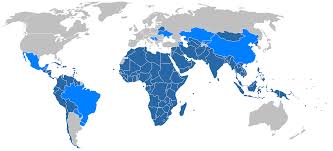
Union of South American States, Non Aligned Movement endorse Venezuelan election results
Declaración del Consejo de Jefes y Jefas de Estado y de Gobierno de la Unión de Naciones Suramericanas (UNASUR)

El Consejo de Jefes y Jefas de Estado y de Gobierno de UNASUR, reunidos en sesión extraordinaria en Lima:
1.- Expresan su felicitación al pueblo venezolano por su masiva participación en la elección presidencial del 14 de abril último, que ratifica su vocación democrática y saluda al Presidente Nicolás Maduro por los resultados de los comicios y su elección como Presidente de la República Bolivariana de Venezuela.
2.- Insta a todos los sectores que participaron en el proceso electoral a respetar los resultados oficiales de la elección presidencial emanados del Consejo Nacional Electoral (CNE), autoridad venezolana competente en la materia.
3.- Ratifica en la línea de lo señalado en la Declaración de la Misión Electoral de UNASUR a Venezuela del 15 de abril último, que todo reclamo, cuestionamiento o procedimiento extraordinario que solicite algunos de los participantes del proceso electoral, deberá ser canalizado y resuelto dentro del ordenamiento jurídico vigente y la voluntad democrática de las partes. En tal sentido, toma nota positiva de la decisión del Consejo Nacional Electoral de implementar una metodología que permita la auditoría del total de las mesas electorales.
4.- Hace un llamado a deponer toda actitud o acto de violencia que ponga en riesgo la paz social del país y expresa su solidaridad con los heridos y las familias de las víctimas fatales del 15 de abril del 2013. Invoca asimismo al diálogo y a contribuir a preservar un clima de tolerancia en beneficio de todo el pueblo venezolano.
5.- Acuerda la designación de una comisión de UNASUR para acompañar la investigación de los hechos violentos del 15 de abril del 2013.
New York, April, 17, 2013
*****
Statement from Movement of
Non-Aligned Countries Coordinating Bureau on elections in the Bolivarian Republic of Venezuela
Non-Aligned Countries Coordinating Bureau on elections in the Bolivarian Republic of Venezuela
The Movement of Non-Aligned Countries Coordinating Bureau salutes the elections held in the Bolivarian Republic of Venezuela, April 14, 2013, which were characterized by massive participation and conducted transparently in a climate of democracy.
The members of our Movement congratulate President Nicolás Maduro Moros for his election and express our confidence that the Bolivarian Republic of Venezuela will continue to contribute, during his administration, to the consolidation of unity within the Movement of Non-Aligned Countries and to the struggle which together we have undertaken to protect its principles.
The Movement of Non-Aligned Countries Coordinating Bureau calls for the preservation of a climate of peace, tolerance and harmony among Venezuelans and an end to all acts of violence.
New York, April, 17, 2013
22 April 2013
The "Bossman" Richie Havens joins the ancestors
Follow - Richie Havens
Let the river rock you like a cradle
Climb to the treetops, child, if you're able
Let your hands tie a knot across the table.
Come and touch the things you cannot feel.
And close your fingertips and fly where I can't hold you
Let the sun-rain fall and let the dewy clouds enfold you
And maybe you can sing to me the words I just told you,
If all the things you feel ain't what they seem.
And don't mind me 'cos I ain't nothin' but a dream.
The mocking bird sings each different song
Each song has wings - they won't stay long.
Do those who hear think he's doing wrong?
While the church bell tolls its one-note song
And the school bell is tinkling to the throng.
Come here where your ears cannot hear.
And close your eyes, child, and listen to what I'll tell you
Follow in the darkest night the sounds that may impel you
And the song that I am singing may disturb or serve to quell you
And you can follow
Climb to the treetops, child, if you're able
Let your hands tie a knot across the table.
Come and touch the things you cannot feel.
And close your fingertips and fly where I can't hold you
Let the sun-rain fall and let the dewy clouds enfold you
And maybe you can sing to me the words I just told you,
If all the things you feel ain't what they seem.
And don't mind me 'cos I ain't nothin' but a dream.
The mocking bird sings each different song
Each song has wings - they won't stay long.
Do those who hear think he's doing wrong?
While the church bell tolls its one-note song
And the school bell is tinkling to the throng.
Come here where your ears cannot hear.
And close your eyes, child, and listen to what I'll tell you
Follow in the darkest night the sounds that may impel you
And the song that I am singing may disturb or serve to quell you
If all the sounds you hear ain't what they seem,
Then don't mind me 'cos I ain't nothin' but a dream
Then don't mind me 'cos I ain't nothin' but a dream
The rising smell of fresh-cut grass
Smothered cities choke and yell with fuming gas
I hold some grapes up to the sun
And their flavour breaks upon my tongue.
With eager tongues we taste our strife
And fill our lungs with seas of life.
Come taste and smell the waters of our time.
And close your lips, child, so softly I might kiss you,
Let your flower perfume out and let the winds caress you.
As I walk through the garden, I am hoping I don't miss you
If all the things you taste ain't what they seem,
Then don't mind me 'cos I ain't nothin' but a dream .
The sun and moon both arise
And we'll see them soon through days and nights
But now silver leaves are mirrors, bring delights.
And the colours of your eyes are fiery bright,
While darkness blinds the skies with all its light.
Come see where your eyes cannot see.
And close your eyes, child, and look at what I'll show you;
Let your mind go reeling out and let the breezes blow you,
And maybe when we meet then suddenly I will know you.
If all the things you see ain t what they seem,
Then don't mind me 'cos I ain't nothin' but a dream .
Smothered cities choke and yell with fuming gas
I hold some grapes up to the sun
And their flavour breaks upon my tongue.
With eager tongues we taste our strife
And fill our lungs with seas of life.
Come taste and smell the waters of our time.
And close your lips, child, so softly I might kiss you,
Let your flower perfume out and let the winds caress you.
As I walk through the garden, I am hoping I don't miss you
If all the things you taste ain't what they seem,
Then don't mind me 'cos I ain't nothin' but a dream .
The sun and moon both arise
And we'll see them soon through days and nights
But now silver leaves are mirrors, bring delights.
And the colours of your eyes are fiery bright,
While darkness blinds the skies with all its light.
Come see where your eyes cannot see.
And close your eyes, child, and look at what I'll show you;
Let your mind go reeling out and let the breezes blow you,
And maybe when we meet then suddenly I will know you.
If all the things you see ain t what they seem,
Then don't mind me 'cos I ain't nothin' but a dream .
And you can follow
And you can follow
Follow .....
Turks & Caicos Islands still pondering independence

The Turks and Caicos Islands is still considering political independence from Britain, Premier Dr Rufus Ewing has said.
Ewing told the Caribbean Media Corporation (CMC) that "independence remains a major issue" three years after Britain suspended the island's constitution and set up a one-man commission to probe the government of then premier Michael Misick.
  EWING... I think any right-thinking country should have independence as its destination EWING... I think any right-thinking country should have independence as its destination |

"I think any right-thinking country should have independence as its destination. The time period however is the question. The need for independence must be the goal and so everything you do should be to prepare your people and country for that giant step.
"There will be a number of factors that will come into play as to whether or not that time should be fast tracked or continue along the pace that you would desire to have or would like to have and that would depend on the ongoing relationship with the United Kingdom government and the people in the territory," he said.
Ewing said that the government "of the day" would also have a role to play and "allowed to do what is right by the people, for the people to improve their standard of living and to prepare us for our plans for moving towards that step of independence.
"If it doesn't happen, all it does is to make the people even more convinced that independence is our only way out," said Ewing, who is here attending the 14th annual Caribbean Tourism Organisation organised Sustainable Tourism Conference (STC-14).
He told CMC that over the past three years, more citizens have become convinced "that independence is the way to go, more than ever before in the past because of the relationship we have had (with Britain) over the past three years.
Ewing said while he would not commit personally to a timeframe" for independence, "what I know we will do is to appoint an independence commission from the House of Assembly to look at timeframes to look at milestones that need to be achieved and to look at referendum settings...".
Ewing, whose government holds a slender one seat majority in Parliament, said there is stability in the country.
"The stability is just about there. We have elected a government that we have confidence in from a standpoint of investors," he said, aware that with a one seat majority in the House "if anything happens then we can keep on going back to by-elections and by elections and so it may not give the people the level of security they would want".
While he would not comment on the re-arrest of former premier Misick in Brazil and the extradition proceedings that had been started against him by Britain, Ewing told CMC he was still "awaiting" a response to suggestions that Britain was trying to re-colonise its territories in the Caribbean including the Cayman Islands.
"Well, I am sure everybody has a reason for doing things and I still awaiting the answer to the question," he said, adding "I were a conspiracy theorist that would be my theory" as to whether London was using finances to the territories to "keep them in check".
Subscribe to:
Posts (Atom)