13 March 2018

VIRGIN ISLANDS RECEIVES SUPPORT FROM PAHO FOR RECOVERY OF TERRITORYU'S HEALTH SECTOR


Home

Press Release


The Pan American Health Organisation (PAHO) is providing additional support to the recovery of the Territory’s Health Sector through funding from a number of donors.
Minister for Health and Social Development, Honourable Ronnie W Skelton said he is grateful for the additional support which came as a result of further discussions with PAHO’s officials. He has also expressed his deep appreciation to the organisation on behalf of the Government of the Virgin Islands.
Honorable Skelton said, “I am pleased to announce that PAHO has committed to providing a garbage truck for the Solid Waste Department worth over US$200,000 to support our debris management programme and to undertake repairs to the Rosalind Penn Clinic in Long Look.  Essential equipment and supplies are also being procured for the elderly homes on both islands and support will be given to securing building material for clinics throughout the Territory.”
PAHO was one of the first teams on the ground following the impact of Hurricane Irma.  The five member team integrated within the National Emergency Operations Centre and supported the initial needs assessment of the health sector. This team was followed by a number of specialists who supported the emergency medical response activities.
A pledge of $1 million dollars was made to the Ministry of Health and Social Development to assist in the relief and immediate recovery needs.  Commitments were made to providing medical supplies to clinics and the Peebles Hospital, to undertake emergency repairs to the elderly homes on Tortola and Virgin Gorda and to support the Environmental Health Unit.
The repair works and the procurement of the equipment and supplies is expected to be completed by the end of March at which time PAHO will undertake a review of the various interventions and will assess the level of progress being made.
Meanwhile, Regional Advisor and head of the PAHO Public Health Emergencies Programme based in Barbados, Dr. Dana van Alphen said she met with Minister of Health and Social Development in October 2017 and discussed the recovery plan for the Health Sector and the commitments that PAHO will make.
Dr. van Alphen explained, “We had an extremely productive meeting which focused on the progress being made by the health sector and the assistance that was needed to advance the immediate recovery efforts.  We have reached out to a number of donor partners including Department for International Development (DFID) European Commission Humanitarian Aid office, Global Affairs Canada and they have provided the funding required by the Ministry of Health and Social Development.”
“Currently in the BVI, we have Dr. Echeveria of Colombia, an experienced psychiatrist, who is working directly with the BVI Health Services Authority to review the psychosocial programmes in place and to provide support to the mental health teams in the Territory,” Dr. van Alphen added.
PAHO established the new Health Emergencies Programme in September of 2016 which reports directly to the organisation’s director.  The programmes aims to deliver rapid, predictable and comprehensive support to member states in terms of prevention, risk reduction, preparedness, surveillance, response and early recovery in case of any threat to human health, including outbreaks or disasters caused by natural phenomenon, human activities or conflicts.

12 March 2018

CARICOM ASSIST TO VIRGIN ISLANDS IN HURRICANE RECOVERY

Home


The Caribbean Community (CARICOM) has been commended for its immediate assistance to the Territory following the passage of hurricanes Irma and Maria.

Deputy Premier and Minister for Natural Resources and Labour, Dr. the Honourable Kedrick D. Pickering conveyed the Territory’s gratitude while addressing the 29th Intersessional Meeting of the Conference of CARICOM Heads of Government held in Port-au-Prince, Haiti from February 26 through 27.
Honourable Pickering said, “We would like to convey the heartfelt appreciation of the entire BVI community for the overwhelming support given to us from the CARICOM community in the immediate aftermath of the storms.”
 He added, “The collective efforts from the Caribbean community have re-emphasised the wisdom of this family of nations as one Caribbean Community, and highlights the value of regional cooperation and integration movement.”
Honourable Pickering addressed the meeting on behalf of Premier, Dr. the Honourable D. Orlando Smith, OBE and expressed gratitude to OECS and CARICOM, particularly the Government of St. Lucia for accepting BVI prisoners and for temporarily hosting the Commercial Division of the Eastern Caribbean Supreme Court.
He thanked the Government of St. Vincent and the Grenadines for making arrangements to welcome BVI Secondary level students to ensure their education towards graduation would not be interrupted.
The entire Caribbean community through the Caribbean Electric Utility Services Corporation was recognised for their assistance in providing crews to assist in the restoration of the electricity distribution network, some of whom are still in the Territory.
Appreciation was also expressed to the Governments of Jamaica and Guyana who sent officials to support the coordination of evacuation and humanitarian relief efforts in the immediate aftermath of hurricane Irma.
“Indeed as the implications of the destruction wrought by the past hurricane season continues to grip us all, we stand in solidarity with all the people of the region who are currently at varying stages of rebuilding our lives,” the Deputy Premier said.
Honourable Pickering updated the conference on the Territory’s progress in its recovery and rebuilding efforts.
The leaders also reflected on the destruction suffered across the region by the 2017 hurricane season and the urgent need to augment preparations for the upcoming hurricane season.
The Caribbean Disaster Emergency Management Agency (CDEMA) presented the report of their activities in 2017 and updated the meeting on the forecast and preparation for the upcoming season.
Author
Bria Smith
Information Officer I
Department of Information and Public Relations (GIS)
Telephone: 468-2747
Email: BriaSmith@gov.vg

11 March 2018

U.S. REPORT ANALYSES NORTHERN MARIANAS WORKFORCE


COMMONWEALTH OF THE NORTHERN MARIANA ISLANDS 

Recent Economic Trends and Preliminary Observations on Workforce Data 

Report of the U.S. General Accountability Office


What GAO Found The Commonwealth of the Northern Mariana Islands’ (CNMI) inflation-adjusted gross domestic product (GDP) has grown each year since 2012, according to the Bureau of Economic Analysis. 

In 2016, the CNMI’s GDP rose by 29 percent, partly as a result of construction investment. While tourism has fluctuated in recent years, visitor arrivals in the CNMI rose by nearly a third from 2016 to 2017. 

After nearly a decade of annual decline, the total number of workers employed in the CNMI increased from 2013 through 2016, according to the most recent available CNMI tax data. Foreign workers made up 53 percent of those employed in 2016, compared with roughly 75 percent in 2002. 

GAO’s preliminary analysis indicates that the number of approved CNMI-Only Transitional Worker (CW-1) permits for foreign workers in the CNMI grew from over 7,100 for fiscal year 2012 to nearly 13,000 for fiscal year 2017. 

In addition, GAO identified trends in the country of birth, occupation, and employment duration of foreign workers with CW-1 permits approved for fiscal years 2012 through 2018. Workers born in the Philippines received the highest number of CW-1 permits each year. As of January 2018, 750 CW-1 permits had been granted to construction workers for fiscal year 2018—a 75 percent decline from the prior fiscal year. 

GAO estimated that approximately 2,350 foreign workers with approved CW-1 permits maintained continuous employment in the CNMI from fiscal year 2014 through January 2018. About 80 percent of these workers were born in the Philippines.
___________________________________________


Why GAO Did This Study 


Pub. L. No. 110-229, enacted in 2008, amended the U.S.-CNMI covenant to apply federal immigration law to the CNMI after a transition period. The law required the Department of Homeland Security (DHS) to establish a temporary work permit program for foreign workers. 

DHS is required to decrease the number of permits issued annually, reducing them to zero by the end of the transition period, scheduled for December 31, 2019. To implement the law, DHS established a new work permit program in 2011. 

Under the program, foreign workers can obtain, through their employers, nonimmigrant CW-1 status that allows them to work in the CNMI. The law was amended in August 2017 to, among other things, restrict future permits for workers in construction and extraction occupations. 

Proposed legislation—Senate bill S. 2325—would, among other things, extend the transition period through December 31, 2029; increase the number of available permits from the 2018 level; and set required decreases in the annual numerical limit for the permits. (See figure for past numerical limits established by DHS and future limits proposed by S. 2325.) This testimony (report) discusses (1) recent trends in the CNMI economy and (2) preliminary observations about the number of approved CW-1 permits and characteristics of permit holders, drawn from GAO’s ongoing work. 

GAO updated information about the CNMI’s economy that it reported in May 2017 (see GAO-17-437). GAO also analyzed data and documents from U.S. agencies and the CNMI government.


08 March 2018

VIRGIN ISLANDS COMMEMORATES LATE CHIEF MINISTER STOUTT

Home

Press Release


The Territory’s residents paid homeage to the Virgin Islands’ first Chief Minister, Hamilton Lavity Stoutt at the 23rd Annual Memorial Celebration and 18th Wreath Laying ceremony on March 5.
The ceremony was held at the Cappoons Bay cemetery under the theme, “What would H. Lavity Stoutt do? Right here! Right now!”          
Premier and Minister of Finance, Dr. the Honourable D, Orlando Smith, OBE said the Territory is commemorating the anniversary with a difference, and that H. L Lavity Stoutt was a man of action, a man of inclusiveness and a man who never forgot to say thank you.
Premier Smith said, “H. L. Stoutt never failed to express his gratitude and appreciation to people. He would have been proud of all the men and women who work in all our utilities and infrastructure and who came out in the early days to get our community back on track. He would have been proud of all the volunteers from here and abroad, of the voluntary organisations and all who sacrificed to give humanitarian assistance and support to the BVI in the time of greatest need.”
Meanwhile, Minister for Education and Culture, Honourable Myron V. Walwyn said the late Chief Minister was a consummate politician who dearly loved his country and someone who had a passion for the growth and development of the people of this Territory. 
“Today we remember the legacy of a man whose existence and vision has contributed to the benefits that we have come to enjoy as a Territory,” Honourable Walwyn said. He added, “As we continue on our path towards recovery, may we be guided by the principles and lessons that H.L. would have taught us – asking ourselves: what would H Lavity Stoutt do? Right here! Right now!”
Presentations were also made by Leader of the Opposition and Representative for the First District, Honourable Andrew A. Fahie and keynote speaker former Deputy Governor, Mrs. V. Inez Archibald.
The late H. Lavity Stoutt was born on March 7, 1929. He served as Chief Minister of the Virgin Islands for over sixteen years and is credited with establishing the cruise ship pier, creating the Social Security scheme, overseeing the construction of the Central Administration Complex and spearheading the development of the local community college, which is named in his honour.
Mr. Stoutt was at the helm throughout the Territory’s development as an international finance centre and was described as being very passionate and committed to the development of educational opportunities for the people of these islands.  The first Monday in March is declared a public holiday in celebration of the anniversary of his birthday. He died on May 14, 1995.
The Government of the Virgin Islands through the Ministry of Education and Culture celebrates the life of the late Honourable H. Lavity Stoutt as a person of historic significance to the Territory.

Author

Berta McKelly Adams
Assistant Information Officer
Department of Information & Public Relations
Telephone: 468-2740
Email:   bmckelly@gov.vg


06 March 2018

What’s Left in Puerto Rico?

JACOBIN
At the founding general assembly of Puerto Rico’s Popular Democratic Party (PDP) in July 1940, Luis Muñoz Marín made a momentous decision. Long an advocate for independence from the United States, Muñoz also recognized that many rural poor viewed the PDP’s position on the island’s political status suspiciously. In a party meeting just days earlier, a militant asked him how the party would demand independence if it won the elections. Muñoz answered: “Political status is not an issue in these elections. The votes for the party will not be counted in favor or against any political status.”
The militant turned away, disheartened — a feeling the then-senator shared: “And I, still an independentista [pro-independence advocate], understood the desolation in his spirit,” he recounted in his autobiography. But this offhand remark would soon turn into party dogma. Muñoz had found the slogan at the heart of his upcoming senatorial campaign, one he repeated thousands of times: “Status is not at issue.”
At the time, many of Muñoz’s colleagues condemned his remark. While his counterparts in the PDP leadership understood the electoral considerations that motivated his pragmatic turn — independence remained an unpopular, even terrifying, prospect for the peasantry in Puerto Rico’s mountainous interior — many were unconvinced.
Vicente Géigel Polanco was a key skeptic. He did not want to leave the future of Puerto Rico’s political relationship with the United States to a referendum called only on that issue. Heartbroken by Muñoz’s statement, he denounced the senator for abandoning the cause of independence. Though their schism was briefly overcome — Muñoz chose Géigel Polanco as attorney general in his first cabinet as governor in 1948 — they eventually split over a disagreement about how to deal with those responsible for the failed nationalist uprising of October 1950.
Indeed, the divisions within the PDP would persist, even if they were long overshadowed by the force of personality and three-decade-long electoral successes engendered by Muñoz’s leadership. Today, this historic split is crucial to understanding the Puerto Rican political panorama and the emergence of its rising star, San Juan mayor Carmen Yulín Cruz.
READ THE FULL REPORT HERE .

05 March 2018

USVI DELEGATE TO U.S. CONGRESS ON V.I. HISTORY MONTH


PRESS RELEASE
For Immediate Release
March 1, 2018
Press Contact
Richard Motta | 202.445.4558

Plaskett Statement on Virgin Islands History Month

ST. CROIX - Virgin Islands Congresswoman Stacey Plaskett issued the following statement on the 2018 celebration of Virgin Islands History Month:“This year, as we celebrate the life, legacy, and achievement of our Virgin Islands and its people, and the significant events that define us all, we must also remember the journey told, and employ the same resilient spirit of our ancestors in our continued push forward in building upon their many hard-fought achievements. Let us continue our efforts to educate ourselves and the coming generations of our history and our culture not just during March, but every day."


Owain Johnston-Barnes
Bermuda is to open an office in Brussels to protect the island’s interests as Britain prepares to leave the European Union.
David Burt, Premier and Minister of Finance, said the office would cut the cost of consultants in Europe.
He said in his Budget Statement on Friday: “Efforts to protect and strengthen the economy will require increased resources to be allocated to external affairs.
“With increased pressures from Europe owing to the EU review of non-cooperative tax jurisdictions together with Brexit, it is necessary for Bermuda to increase its engagement with the European Union and member-state governments.”
The office would fall under the Cabinet Office’s budget, which was increased by $748,000.
The bulk of that rise was listed as going towards the Government’s London and Washington offices.
The London Office will see its budget increase by $403,000, a 39 per cent rise.
The Washington DC office will have its budget almost doubled with an additional $194,000 — a 94 per cent increase.
Mr Burt said the island is not on the recently published list of non-cooperative jurisdictions, but the EU Code of Conduct Group has expressed concerns about the island.
He said: “Since December, the Government has been meeting with various local stakeholders and is in the process of formulating a response to address the European Council’s concerns.
“It is the Government’s view that the mischief that the EU is trying to cure — tax leakage from companies operating in their jurisdictions — has largely been mitigated by advances in international tax transparency and regimes.”
Mr Burt added recent tax changes in the US were the “most pressing threat” to the island’s international business sector.
He said: “Although the tax changes were not directly targeted at Bermuda, many of Bermuda’s international companies have had to make quick adjustments to their operations to avoid an additional tax burden.”
Mr Burt said the Government has continued to work with the Association of Bermuda Insurers and Reinsurers to protect Bermuda’s interests.
He added: “Although we feared the worst, the resulting tax changes will not be fatal to our insurance industry and may present some opportunities for growth due to the superior regulatory advantages for companies operating from Bermuda.
“Recently, the minister responsible for immigration met with the leadership of Abir and made it clear that the Government will facilitate any transfer of jobs to Bermuda that may result from any restructuring caused by the US tax reform.
“Any transfer of jobs to Bermuda will create additional opportunities for Bermudians, and this government is committed to preparing Bermudians to take advantage of those opportunities.”
The Premier said the Government has remained focused on the island’s upcoming assessment by the Caribbean Financial Action Task Force.
Mr Burt said the assessment is vital as a poor report card could harm the local economy.
He said: “Other countries that have not done well have seen correspondent banking relationships disappear. If this were to happen in Bermuda, it would pose a critical threat to our financial services industry.
“The full resources of the Government have been marshalled to ensure that Bermuda is prepared for the assessment and we will continue to work with the Bermuda Monetary Authority and our industry partners.”

02 March 2018

GUAM'S WILDLIFE DEVASTATED BY U.S. MILITARY ACTIVITIES


the Atlantic


The island’s wildlife has been a casualty of the military presence.


Since North Korea threatened to fire missiles into the water around Guam, much has been made of the island’s strategic importance. It is the westernmost U.S. territory; it is home to two existing military bases—for the air force and the navy—and a planned third, for the marines.

The United States retook Guam from the Japanese in World War II, and the military has been an outsized and sometimes controversial presence on the island ever since.

These geopolitical circumstances have physically remade the island—a third of which is under U.S. military control. It has meant the dredging of wharves for the navy’s ships, the construction of housing for thousands of U.S. soldiers, and a planned live-fire range right next to the island’s national wildlife refuge.
And then there are the snakes.
Sometime in the years right after WWII, as military planes were flying in and out of Guam, a species called the brown tree snake hitched a ride from the South Pacific. It grows several feet long and feeds on small mammals, lizards, and birds. On the island, this invasive predator found easy prey. It feasted on Micronesian kingfishers and Mariana fruit doves and rufous fantails; in just a few decades, it ate 10 out of 12 native forest-bird species off the face of the island.
“It’s a really eerie feeling to spend a day by yourself in the jungle on Guam,” a scientist told the BBC recently. There are no bird songs, no mating calls, no chattering.

Efforts to curb the snake population have become as extreme as dropping thousands of dead mice by airplane over the island. The mice are laced with acetaminophen—the active ingredient in Tylenol—which is poisonous to the snakes.
The effects of the snake’s appetite have rippled through Guam’s ecosystem. Without birds to eat them, spiders have flourished. Without birds to spread seeds, forests have thinned. According to one estimate, the growth of new tree seedlings has declined between 61 to 92 percent.

All this has been compounded by the buildup of military bases on the island. “The military development of Guam has taken out a lot of forest,” says Susan Haig, a wildlife biologist at the U.S. Geological Survey.

The military is uniquely exempt from “critical habitat” provisions in the Endangered Species Act, thanks to an amendment that Congress passed in 2004. Critical habitats are areas deemed crucial to an endangered or threatened species, and it’s harder to develop on those lands. Instead of going through the same process as everyone else when building on critical habitat, the military can work out an integrated natural-resources management plan with the U.S. Fish and Wildlife Service. In 2004, the Los Angeles Times reported, “The agency initially proposed designating 24,803 acres of Guam's forests as critical habitat for the birds. After Congress gave the military the exemption from critical habitat, the agency slashed its proposal to 376 acres.”

The plan to relocate a marine base from Okinawa to Guam will mean more habitat disruption. New housing for thousands of marines and their families will impact hundreds of acres of recovery habitat for birds and the endangered Mariana fruit bat. And a proposed live-fire training range will affect dozens to hundreds of acres.

The buildup on Guam has consequences for other islands nearby, too. The military has proposed conducting war games on Tinian and PÃ¥gan, two islands north of Guam that belong to the U.S. Commonwealth of the Northern Mariana Islands. Pagan would become a bombing range and coral reefs around Tinian practice grounds for amphibious vehicles. “[The islands] have extremely rich biological diversity, and the increase of military activity on these islands is just going to pummel all of that,” says Miyoko Sakashita, senior counsel for the Center for Biological Diversity. The center, along with several local groups, has filed a lawsuit against the military challenging this plan.

These remote islands will be key to the U.S. military’s readiness if there is trouble in Asia. But the environmental cost of projecting U.S. military power across the Pacific also falls disproportionately on them. Their wildlife has been a casualty of geopolitics. With Guam now the focus of North Korea’s threats, Gordon Rodda, a retired biologist with the U.S. Geological Survey who has worked on the island, closed out an email to me this way: “I do understand that nuclear exchanges would not be good for Guam’s wildlife!”

______________________________________________________

United Nations General Assembly Resolution 72/102 on "The Question of Guam" 
7 December 2017

(Excerpts)

The General Assembly,
.....

15.  Requests the Territory and the administering Power to take all measures necessary to protect and conserve the environment of the Territory against any degradation and the impact of militarization on the environment, 


16. Requests the Secretary-General to report on the environmental impact of the military activities of the administering Power in the Territory; 


01 March 2018

SINT EUSTATIUS DEFIANCE OF DUTCH 'COLONIAL COUP' CONTINUES


Director of Public Affairs Xavier Blackman says he does not recognize the new central government as legitimate.


BES REPORTER

Oranjestad- Director of Public Affairs and Government SupporT, Xavier Blackman, does not recognize the newly installed Central Government in St. Eustatius, consisting of Mike Franco and Mervyn Steegers. This much becomes clear from a letter Blackman sent to Central Government Representative Mike Franco yesterday, of which the BES-Reporter obtained a copy.

The main raison for Blackman not to recognize the new Central Government rule is because he believes this goes against Statia’s right to what is called ‘a Full Measure of Self Government’. “At the beginning of our meeting with you, Mr. Stegers, and Ms. Dijkshoorn-Lopes of 13 February, I indicated to you that I can not and will not acknowledge the positions in which you have been appointed by the Dutch government”, according to the letter written to Mike Franco, with copies to among others the Second and First chambers of Dutch Parliament.

Blackman in his letter to Franco also states that the legality of the appointment of Franco and Stegers, their actions, as well as the actions of the Dutch State can and should be checked against applicable international and national laws.

Article 2 of the “Draft Articles on State Liability for International Criminal Acts (Draft Articles on the Responsibility of States for Internationally Wrongful Acts) of the International Law Commission, ILC) is of an international unlawful act of a state when “a conduct consisting of an act or omission may be imputed to the State under international law, and when that act constitutes a violation of an international obligation of that State”, according to the letter written by the director, which was appointed to his position by the ousted local PLP/Merkman Government.

Blackman in his letter also warns that any action against him by the new Central Goverment will lead to legal action from his side.
“On the basis of the above (reference is made to the body of his letter, Editor), I will therefore not discuss the contents of your letters of 13 and 14 February, and it is sufficient for the time being to inform you that I will hold the Dutch State, and where possible and/or applicalbe you and Mr. Stegers personally liable for the consequences of the aforementioned (future) actions towards my person”, writes Blackman at the end of his letter, dated February 16, 2018.

27 February 2018

FRENCH "CONFLICT OF INTEREST" IN NEW CALEDONIA REFERENDUM


Anti-independence statements by French politicians threatens to unduly influence the referendum outcome even as France is in total administrative and political control of the "self-determination" process. 

_________________________________________

Radio New Zealand

Valls favours New Caledonia staying French


A former French prime minister Manuel Valls says the French government should say before New Caledonia's referendum what its preferred outcome is.
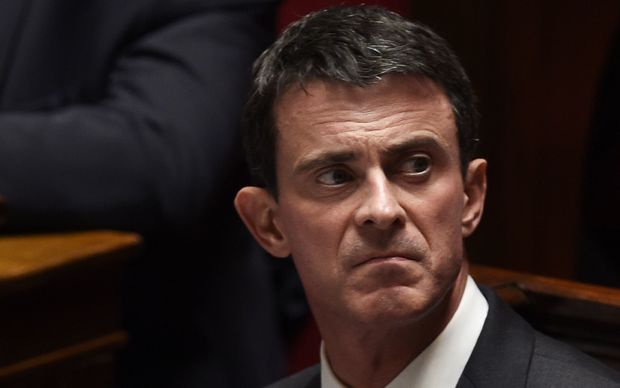
French Prime Minister Manuel Valls.
French Prime Minister Manuel Valls. Photo: AFP
Mr Valls, who is in Noumea as the head of a French National Assembly delegation, was speaking at a public debate.
He said he personally wants New Caledonia to stay French and expressed regret that there wouldn't be a third accord to follow the Matignon Accords and the Noumea Accord.
Mr Valls said, in view of Britain's exit from the European Union, France would be the only European power left in the Pacific, adding that its presence was wanted by Australia and New Zealand.
He has also advised caution about the concept of a Caledonian people, saying there is a Kanak people and a French people as well as a Caledonian citizenship.
Les Nouvelles Caledoniennes reported another Assembly member Cristian Jacob saying it was not possible to get independence and maintain funding from France.
Once independent, he said, New Caledonia could enter into co-operation treaties but that won't match the current French commitment.


_______________________________________


Former French PM upsets pro-independence side in New Caledonia


Pro-independence politicians in New Caledonia are upset at comments by a visiting former French prime minister Manuel Valls who said he was in favour of the territory remaining French.
Mr Valls, who is in Noumea as the head of a French National Assembly delegation, was speaking at a public debate as the territory readies for an independence referendum later this year.
One politician Louis Mapou said he had the impression that the whole French state machinery was being aligned to back the anti-independence camp.
He also said he wondered whether President Emmanuel Macron would use his upcoming visit to Noumea to unleash a no-campaign.
Another politician Roch Wamytan said he finds that Mr Valls had stepped out of his role and should report back to Paris what he sees on his fact-finding mission instead of advising what should be done.
Mr Wamytan said it was up to the New Caledonian population to decide.
An anti-independence politician Philippe Michel said Mr Valls's remarks add to a situation which already complicated.

26 February 2018

LAS ONG DEL CARIBE DESVANECEN EL GOLPE HOLANDÉS EN SINT EUSTATIUS

Los países independientes del Caribe permanecen curiosamente en silencio sobre la abolición del gobierno democrático que tiene lugar en una colonia Caribeña." - un académico caribeño


Alianza Progresista del Caribe

La Alianza Progresista del Caribe (CPA), una asociación formada durante una reunión de COPPPAL en St Maarten, en mayo de 2017, con organizaciones miembros de los restantes países no autónomos en general, a nivel mundial y regional, con un énfasis particular en las islas de las antiguas Antillas Holandesas.

Entre nuestros miembros en crecimiento figuran Puerto Rico, San Andrés, Providenciales y las Islas Vírgenes de los Estados Unidos, B.V.I., los territorios de ultramar franceses y holandeses.

El CPA ha seguido con consternación e incredulidad el trato dispensado por el gobierno holandés al pueblo de las antiguas Antillas Neerlandesas, especialmente las islas BES de Bonaire y San Eustaquio. Durante los últimos siete años, el gobierno holandés ha hecho todo lo que estaba en su poder, para frustrar y obstaculizar el correcto funcionamiento de los gobiernos debidamente elegidos en estas islas.

A través de instrumentos tales como, entre otros, instrucciones al Vicegobernador, extralimitación por parte de un representante designado del Reino, que es un funcionario público, con autoridad otorgada por el gobierno holandés para bloquear o demorar cualquier acción legítima del gobierno que los holandeses aprueben.

Además, el gobierno holandés ha procedido a anclar estas islas en la constitución holandesa en contra de los deseos de los pueblos expresados ​​en referendos celebrados en ambas islas.

El gobierno holandés, aunque no cumpla ningún acuerdo ni cumpla con sus obligaciones social, económica o políticamente con las islas, ha decidido unilateralmente sin diálogo o consulta con el gobierno de San Eustaquio debidamente elegido, dejando de lado la voluntad del pueblo, a través de un método de mayor supervisión y administrar la isla por un comisionado administrativo designado por los holandeses.

Esta acción no se ajusta a los principios de la democracia o de acuerdo con la Carta de las Naciones Unidas que prescribe una medida completa de autogobierno.

El CPA se opone con vehemencia a esta acción antidemocrática y draconiana del gobierno holandés, en la injusta toma del gobierno de San Eustaquio y la anulación de los miembros debidamente elegidos del consejo de la isla y los comisionados designados.

Por el buen orden que queremos dejar perfectamente claro, condenamos y rechazamos esta acción como ilegal, draconiana y sin mérito o justificación, y nos solidarizamos con nuestra isla hermana en su lucha por la justicia y el derecho a una medida completa de sí mismo gobierno.

Por lo tanto, buscaremos una reparación en cooperación con San Eustaquio por todos los medios legales disponibles para nosotros.


________________________________________________________________________________


"Independent Caribbean countries remain curiously silent on abolition of democratic government taking place in a Caribbean colony." -
a Caribbean academic 


Caribbean Progressive Alliance

Dutch overthrow of St.Eustatius legitimate elected government


The Caribbean Progressive Alliance (CPA) is an association formed during a meeting of COPPPAL on St Maarten in May 2017, with as members organizations from the remaining non-self governing countries in general, globally and regionally, with a particular emphasis on the islands of the former Netherlands Antilles.


Counted among our growing members are Puerto Rico, San Andres, Providenciales, and US Virgin Islands, BVI, the French and Dutch overseas territories.

The CPA has followed with consternation and disbelief the treatment meted out by the Dutch government on the people of the former Netherlands Antilles, especially the BES islands of Bonaire and St Eustatius. Over the past seven years the Dutch government has done everything within its power to frustrate and obstruct the proper functioning of the duly elected governments on these islands.

Through instruments such as but not limited to instructions to the Lt Governor, overreach by an appointed Kingdom Representative, who is a civil servant, with authority bestowed by the Dutch government to block and or delay any legitimate actions of government that the Dutch don’t approve of.

Additionally, the Dutch government has proceeded to anchor these islands into the Dutch constitution against the wishes of the peoples as expressed in referenda held on both islands.

The Dutch government while not living up to any agreement or complying with its obligations vis a vis the islands socially, economically or politically, have decided unilaterally without dialogue or consultation with the duly elected government of St Eustatius to put aside the will of the people, via a measure of higher supervision and administer the island by an administrative commissioner appointed by the Dutch.

This action is not keeping with the principles of democracy or in accordance with the United Nations Charter which prescribes a full measure of self government.

The CPA vehemently opposes this undemocratic and draconian action of the Dutch government, in the unjust take-over of the St Eustatius government and the setting aside of the duly elected members of the island council and the appointed commissioners.

For the good order we wish to perfectly make clear we condemn and reject this action as illegal, draconian and without merit or justification, and we stand in solidarity with our sister island in its struggle for justice and the right to a full measure of self government.

We shall therefore seek redress in cooperation with St Eustatius by all legal means available to us.


23 February 2018

PETITION DEMANDING ELECTIONS IN SINT EUSTATIUS FOR 2019


Action comes in response to the suspension of elected dependency governance and the imposition of direct rule from the Netherlands.
________________________________________

change.org


On February 7, 2018, King Willem Alexander of the Netherlands signed a law passed by parliament by which the Executive Council and Island Council of Public Entity St. Eustatius were dissolved and replaced by a Government Commissioner accountable only to the Minister of the Interior and Kingdom Relations.
As part of this law, the elections for the Island Council slated for March 2019 were postponed until a moment beyond that date deemed appropriate by the Minister of the Interior and Kingdom Relations.
Even though the law as a whole is of a highly questionable legal nature as it relates to the international treaties to which the Kingdom is a signatory, the postponement of the elections is in direct contravention of the people's rights to freedom of opinion expressed under article 19 and the people's right to political participation under article 25 of the International Covenant on Civil and Political Rights.
With the indefinite postponement of elections, the democratic order is all but erased and the citizens of St. Eustatius have been stripped of their democratic rights of participation and representation.
It is for those reasons that, through this petition, the undersigned protest and condemn the postponement of the elections for the Island Council of St. Eustatius and urgently demand that these elections are organized for March 2019 as scheduled to give the citizens of St. Eustatius the opportunity to directly elect their representatives.

20 February 2018

UNITED STATES PROPOSES CUTS IN AID TO ITS DEPENDENCIES


By Matt Kaye 

Washington, D.C. – President Trump’s fiscal 2019 Budget for the territories and Freely Associated States is down more than $20 million from the current fiscal year, including some reductions for Guam.

The $608 million request compares with close to $629 million for fiscal year 2018. Among the proposed reductions is a more than $251,000 cut in the request for Guam Capital Improvement Program funding that would leave the island with just over $6.3 million in CIP dollars next fiscal year.

Guam’s mandatory Compact Impact aid would stay flat under the president’s request at just over $14.9 million. The administration again zeroed out discretionary Compact aid of $3 million for all the islands.

Guam Congresswoman Madeleine Bordallo issued a statement that she will wage a battle over those funds once more.

Compact Impact funding is split between GovGuam general operations and the Guam Department of Education School Leaseback Program.

Section 30 income tax payments were reduced to $78 million from $85.7 million in the current fiscal year, likely reflecting the impact of federal tax reform.

Other requests include just over $14.7 million for technical assistance for all the islands which is down $2.9 million for Guam brown tree snake control.

The administration is also seeking $2.8 million total for the territories for the Empowering Insular Communities to spur strategies to reduce island electricity costs. But that’s a reduction of $639,000 from the current figure.