02 March 2016

Berríos: “El momento de la suprema definición se acerca”

Rubén Berríos Martínez, presidente del Partido Independentista Puertorriqueño.
Foto por: Alina Luciano/Claridad


Por Cándida Cotto

“Es momento de ir con un gran abrazo hacia la libertad.” 
Para el presidente del Partido Independentista Puertorriqueño (PIP), Rubén Berríos Martínez, no hay ninguna duda de que el momento está maduro para que el País adquiera su soberanía; que al igual que en el 1952 estaba maduro para el colonialismo porque era lo que le convenía a los Estados Unidos, hoy está maduro para la soberanía, porque es lo que le conviene a Estados Unidos. “Por primera vez coinciden los intereses de ellos con los intereses nuestros, los puertorriqueños”, afirmó en entrevista exclusiva con Claridad.


En un mensaje al país difundido a mediados de la semana pasada, el veterano luchador independentista presentó un plan de acción en el cual invitaba a los presidentes de los partidos de mayoría a reunirse para actuar en conjunto sobre el problema del estatus ante la Casa Blanca. El plan conlleva que el presidente del Partido Popular Democrático (PPD), David Bernier, y el presidente del Partido Nuevo Progresista (PNP), Pedro Pierluisi, junto a Berríos Martínez, se pongan de acuerdo para definir las diversas alternativas de estatus y luego demandar al Presidente de Estados Unidos, una reunión para exigir con una sola voz que cumpla con su obligación descolonizadora.

En entrevista con este semanario, Berríos Martínez abundó sobre su propuesta y la relevancia del momento histórico para Puerto Rico. De hecho, al otro día del anuncio, ya el Presidente del PNP le había contestado en la afirmativa a su petición. “Lo esencial es que me dice que sí con mucho gusto. Obviamente pone algunos puntos que va a presentar, pero que no tiene ninguna objeción a dilucidar todo eso conmigo”, comentó sobre la respuesta de Pierluisi. Berríos aclaró que hasta ese momento no había recibido una respuesta de parte de Bernier.

En esa invitación, ¿por qué dejar fuera a una institución como el Colegio de Abogados que lleva tiempo trabajando en una asamblea constitucional de estatus?

De entrada, el Presidente del PIP reconoció que la invitación deja fuera también a muchas otras organizaciones. “Hay que empezar por algún lado y yo hago muy claro en mi discurso ante el País que ésta es la forma de que empiece a caminar el proceso. Obviamente, en ese proceso deberán participar no solamente el Colegio de Abogados, sino innumerables otras instituciones en el País que versan sobre este asunto del estatus. La invitación se hizo a los tres presidentes de los partidos políticos porque son los tres partidos políticos que tienen diversas alternativas con respecto al estatus. Obviamente, una reunión de esta naturaleza es más sencilla que una reunión de un conglomerado más grande de personas, pero obviamente las diversas instituciones de nuestra sociedad deberán participar en todo este proceso. Esto es una forma de iniciar el proceso”.

¿En un año electoral, considera que este esfuerzo tendrá pertinencia, efectividad, tomando en consideración las elecciones y que en este caso Obama no es candidato?

“Primero, lo que Obama ha hecho es reflejar una posición que ya es de administraciones y él lo que ha hecho es culminar ese proceso. Los Bush hicieron lo mismo, Clinton dijo lo mismo en forma distinta. O sea, esto ya es una posición de los Estados Unidos. No hay que esperar más nada. Ya sabemos cuál es la posición del Ejecutivo y el Legislativo también, que lo ha repetido en varias ocasiones. Obviamente, la urgencia surge en este momento porque ya se hizo ante el mundo, ante el Tribunal Supremo de EE UU, sin haberlo peticionado nadie, sino espontáneamente por parte del Presidente. Además, se le añade el problema enorme de la crisis en Puerto Rico”.

El Presidente del PIP fue enfático en apuntar que éste es un momento mucho más apropiado para actuar sobre el problema del estatus porque precisamente no se está hablando de promesas postelectorales sino que hay entre ocho a diez meses para trabajar. Rechazó la teoría de que haya que esperar por las decisiones que pueda tomar el Tribunal Supremo de EE UU sobre los dos casos pendientes de Puerto Rico. Berríos Martínez apuntó que esos dos casos no tienen nada que ver con lo que el PIP está planteando y recalcó que el asunto es uno político.

“La posición del Ejecutivo y Legislativo americano es clave, son los que deciden las cuestiones políticas y van a actuar con respecto a Puerto Rico por decisiones, cuestiones políticas. Lo que diga el Tribunal Supremo es una cuestión técnica legal, que es inmaterial para el proceso que yo digo se inicie. Usar eso como excusa sería no quererse reunir”, afirmó Berríos Martínez.

Ante la experiencia de que los presidentes de los tres partidos, Pedro Rosselló, Sila Calderón, gobernadora en ese momento, y el mismo Berríos Martínez, tuvieron una reunión con el presidente Clinton, ¿como compararía esa reunión con la de ahora?

El Presidente del PIP recordó que esa reunión fue a petición del propio Presidente y se dio en la coyuntura de la lucha de Vieques. Sobre esa reunión, Berríos Martínez recapituló que tras los planteamientos de que el problema en Vieques era uno colonial, al cabo de cuatro años se produjo un primer informe de Casa Blanca. Luego le siguieron otros informes hasta el plebiscito de 2012 de no a la colonia.

“En todo esto, la economía de Puerto Rico en bancarrota, en bancarrota, en bancarrota. Ése es el tracto de cómo Estados Unidos actúa. Ya la decisión de que esto es una colonia, un territorio, está tomada, y ellos se han declarado culpables ante la comunidad internacional. La crisis económica, no tengo ni que describirla y la relación con el estatus, todo el mundo, de distinta forma lo acepta. Entonces la pregunta es qué hacer ahora”.

El líder independentista recabó que ese próximo paso depende de los puertorriqueños, de ahí su convocatoria a los presidentes de los otros dos partidos a que puedan ponerse de acuerdo para ir a demandar una reunión con el Presidente y exigir que definan las alternativas no coloniales, no territoriales, es decir, que el Ejecutivo adopte una política descolonizadora frente al poder Legislativo.

“No basta con decir Puerto Rico es una colonia y somos un país colonizador. Es, si ustedes son un país colonizador, colonial y una colonia tienen en Puerto Rico, entonces usted tiene que iniciar una política pública para descolonizar a Puerto Rico”, declaró Berríos Martínez. Agregó que esta exposición también se la hace a los presidentes del PNP y PPD en su carta. Esta misma postura que propone el PIP es la que los presidentes del PPD y PNP deben llevar a la ONU.

En esa dirección, el veterano luchador independentista reiteró en que esta oportunidad para atender el problema del estatus es única porque ahora Estados Unidos quiere resolverlo. “¿A dónde yo creo nos va a llevar el proceso? No tengo la menor duda adónde va a llegar, porque yo creo que la estadidad es un fantasma. Por eso yo digo que el momento de la suprema definición se acerca, ése es el plan”, aunque hizo la salvedad de que el PIP preferiría que el asunto se atienda mediante una asamblea de estatus.

¿Por qué insistir con el Ejecutivo y no con el Congreso?

“¡Ah!, porque el Congreso es el marasmo; ésos son 50 comités, lo mismo que pasó en el 1952. Es el Ejecutivo quien tiene que impulsar la política pública internacional. O sea, que le compete al Ejecutivo, que es el que se presentó y dijo ‘esto es una colonia’, haga buena su palabra y vamos a descolonizar. La forma de bregar es a través del Ejecutivo aunque uno siga haciendo las gestiones pertinentes en el Congreso”, insistió.

En términos partidistas, Berríos Martínez puntualizó en que no hay diferencias entre Demócratas y Republicanos con respecto a su política hacia Puerto Rico y que ambos partidos consideran que éste es el momento para ellos atender esa situación.

¿Cree que la postura de Obama, que se convenció de que la política de EE UU hacia Cuba no le daba resultado, también le está abriendo los ojos con relación a Puerto Rico?

“Hombre, sin duda alguna la política de Obama con respecto a Cuba no está aislada de los efectos respecto a Puerto Rico. Obama quiere normalizar con Cuba para poder armonizar con toda América Latina, y Puerto Rico y Cuba toda la historia han estado juntos. En eso la mejor cita es la de Martí: ‘En el fiel de América están las Antillas que serían, si esclavas, mero fortín de la Roma americana y si libres, serían en el continente la garantía del equilibrio, la de la independencia para la América española... Es un mundo lo que estamos equilibrando, no son dos islas las que vamos a libertar.’”

Con relación a los casos pendientes en el Tribunal Supremo –aunque como profesor de Derecho hizo la salvedad de que el tribunal lo más probable es que se descuelgue por algún tecnicismo- en términos políticos consideró que sin dudas va a abonar a descubrir la situación de Puerto Rico. Al aludir que eso- la apelación del Ejecutivo- ya lo tienen en sus manos los amigos de la independencia de Puerto Rico y el mundo entero, “ya no hay que abonar, ya lo admitió el Presidente de Estados Unidos, además del empuje que va a tener en la ONU”. Reiteró que si los presidentes de los tres partidos acuden a la ONU, la declaración del Presidente cambia de manera cualitativa los pasos que pueda tomar esa organización para “ejercer sus buenos oficios” con relación a la descolonización de Puerto Rico.

A la luz de su experiencia internacional, Berríos Martínez dijo sentirse jubiloso por considerar que los cambios cualitativos y cuantitativos a nivel internacional favorecen la independencia. Sólo lamentó que aquellos que lucharon y dejaron la vida y hacienda, los que sufrieron persecución, no hayan podido disfrutar de “ver la costa tan cercana”.

El líder del PIP no dejó pasar por alto que en sus gestiones con el presidente del PNP y el PPD, planteará la situación del prisionero político puertorriqueño Oscar López Rivera. Comentó que estando Obama de salida, “le da una ventaja al Presidente que no sé si la va a coger”.

Para concluir, Berríos Martínez apeló al independentismo: “Es natural el que muchos independentistas en el pasado han sufrido mucho desengaño, desilusiones, pero es momento de optimismo y de actuar cada uno con realismo, pero optimista, porque nunca, nunca ha estado la situación como ahora. Los independentistas tenemos una ventaja –se lo dijimos- cuando uno puede decir sencillamente ‘te lo dije’, eso da credibilidad para el futuro. Esto es una colonia, nos están engañando y nuestro pueblo sabe eso. Los que dicen es el momento de la definición suprema, es momento de trabajar mucho, con optimismo, cada uno desde su trinchera. Pero podemos trabajar juntos por la independencia en lo que podamos. Es momento de trabajar juntos, es momento de ir con un gran abrazo hacia la libertad.”

Everything to Lose: The Settler Colonial Stakes of The Revenant


by K2
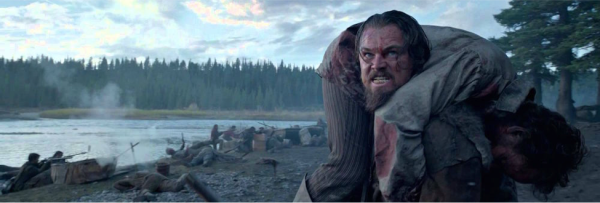
One thing is crystal clear from 20th Century Fox’s new blockbuster hit The Revenant: settler lives matter. Hugh Glass, the 19th century American frontiersman played by Leonardo DiCaprio, is so incredibly immune to death that he rises from his own grave after having been torn to shreds by a grizzly at the film’s outset. The signature series of shots that every spectator is sure to remember – DiCaprio’s own breath fogging up the camera lens as he stares down its chamber – constitutes such an essential element of the film’s aesthetic that one is led to believe that Leonardo’s own life (or maybe just his Oscar) is on the line. My claim, then, is that The Revenant is first and foremost a story of settler survival and is therefore not without its settler colonial stakes.
rev1
Throughout the film, all we know of Glass’ history is that he has found himself an Indigenous partner with whom he shares a child and from whom he has acquired enough hunting and language skills to become the source of survival for fellow fur trappers. Without a whisper of Glass’ own family history – the circumstances of his arrival on Turtle Island, or the reasons for his having “married in” – the terms of Glass’ colonial complicity go unchallenged along with his infantile innocence. 
This colonial narrative technique provides a classic example of what Tuck and Yang (2012) have termed “settler moves to innocence.” In the settler colonial context, they define these self-confessionary strategies as an “attempt to relieve the settler of feelings of guilt or responsibility without giving up land or power or privilege, without having to change much at all” (p. 10). One such move that they identify is that of settler nativism, embodied most emblematically in what Vine Deloria Jr. would term the “Indian-grandmother complex” (1969), whereby a settler conjures up a claim of Indian ancestry in order to come to terms with (aka: altogether avoid) the colonial contradictions of their own settler identity. 
READ THE FULL REPORT HERE

01 March 2016

Founding Father of the Solomon Islands joins the Ancestors


SOLOMON ISLANDS BUSINESS MAGAZINE

Solomon Islands first PM Sir Peter Kenilorea dies


Solomon Islands first Prime Minister Sir Peter Kenilorea and the country’s founding father has died.
Sir Peter, 72, was the Prime Minister when the country attained independence from Great Britain in 1978.
The cause of his death has not been announced but thousands of Solomon Islanders have already gone to the social media to express their condolences to his family and praise his efforts as the founding father of this nation.
In 1976, Kenilorea became the second Chief Minister of the Solomon Islands and, at independence on 7 July 1978, the first Prime Minister.


29 February 2016

30,000 signatures in French Polynesia anti-nuclear petition


More than 30,000 people in French Polynesia have signed a petition urging a local referendum on French weapon tests carried out in the South Pacific between 1966 and 1996.
 
The petition is being organised by the head French Polynesia Nuclear Workers' Association, or Mururoa e Tatou, Roland Oldham, and the Association 193.

Oldham said the groups would keep collecting signatures until July the 2nd, which would will be the 50th anniversary of the first French atmospheric nuclear weapons test in Mururoa.
He said the petition would then be presented to the territorial assembly, so that it local referendum could be organised.
“The petition is asking the people if the 193 bombs here in our country is a good thing, and the second question is does the French government have to do reparation. For us, this is to force the French government to assume its responsibility, also our local government.”
Although France conceded in a 2010 law that the tests had a negative effect on human health, practically all requests for compensation have been rejected.

U.N. Secretary-General - 'Implement U.N. decolonisation mandate'

United Nations Press Release
25 FEBRUARY 2016
GA/COL/3285


Intensify Action-oriented Dialogue to Boost Momentum for Self-determination, Urges Secretary-General, as Special Committee on Decolonization Begins 2016 Session

Special Committee on Decolonization,
1st Meeting (AM)
The Special Committee on Decolonization should intensify action-oriented dialogue with the aim of generating further momentum to fulfil the United Nations decolonization mandate, Secretary-General Ban Ki-moon said in a statement read out on his behalf at the opening of that body’s 2016 session today.
“The international community has the means to eradicate colonialism,” an urgent priority demanding prompt action, the Secretary-General told the Special Committee, known formally as the Special Committee on the Situation with regard to the Implementation of the Declaration on the Granting of Independence of Colonial Countries and Peoples.
In the statement, read out by Tayé-Brook Zerihoun, Assistant Secretary-General for Political Affairs, Secretary-General Ban urged the Special Committee, administering Powers, Non-Self-Governing Territories and other stakeholders to do their part to advance progress.  The international commitment to advance the decolonization agenda could be seen in the fact that the Special Committee had undertaken to dispatch one visiting mission to one Non-Self-Governing Territory every year, he said.  Thanking the Special Committee for its renewed vigour and creativity, he emphasized: “All of us must seize the opportunities at hand.”
Rafael Darío Ramírez Carreño (Venezuela), who was elected Chair of the Special Committee by acclamation, said decolonization had been one of the most important tasks in the history of the United Nations and had become one of its main symbols.  However, the persistence of colonial situations around the world undoubtedly represented a blatant violation of fundamental rights, contradicting the principles and purposes of the United Nations Charter, and a “stigma in the conscience of the world”.  Half a century after the adoption of the decolonization Declaration, 17 cases of colonialism had not been resolved, he noted.
Indeed, he continued, despite the noteworthy results of the Special Committee, those cases demonstrated that the decolonization process had not yet concluded.  It was therefore necessary to engage in permanent dialogue involving the administering Powers, the Special Committee and the peoples of the Non-Self-Governing Territories in order to reach a negotiated solution, in accordance with the relevant United Nations resolutions on decolonization.
He called upon the administering Powers to increase their efforts to take the necessary measures so that the Non-Self-Governing Territories could exercise fully their right to self-determination, in compliance with Chapter XI of the United Nations Charter.  It was also important that they provide the necessary cooperation, and, in accordance with section (e) of the Charter’s Article 73, provide appropriate information on each Territory under their respective administrations.
Noting that his country still faced the consequences of unpunished plunder of its territory by colonial Powers during the nineteenth century, he said it had always taken as its own the struggle of peoples under “detestable occupations and abhorrent colonial situations”.  Venezuela called upon the international community to pay all necessary attention to the Non-Self-Governing Territories, particularly island States, because they were more vulnerable to natural disasters and environmental degradation — including the risk of disappearance.  He also asked Member States to continue contributing to decolonization efforts in the name of peace, human rights and social and economic development.
In other elections today, the Special Committee re-elected, by acclamation, Rodolfo Reyes Rodríguez (Cuba), Vandi Chidi Minah (Sierra Leone) and Desra Percaya (Indonesia) as Vice-Chairs, and Bashar Ja’afari (Syria) as Rapporteur.  It then approved a timetable and organization of work (document A/AC.109/2016/L.2) for its 2016 session, with the understanding that it might be revised.
In other business, the Chair announced that the Special Committee had yet to find a host for its 2016 Pacific Regional Seminar, scheduled for June.  Inviting offers to host from Member States of the Asia-Pacific region, he added that should a host not be identified, offers by States in other regions would be entertained.
A number of speakers congratulated the new Chair and the other Bureau members on their re-election.  Several underlined the importance of the United Nations decolonization agenda and the Special Committee’s crucial role in that regard, with some warning against a “one-size-fits-all” approach in addressing the 17 cases remaining on the list of Non-Self-Governing Territories.
Ecuador’s representative said those situations remained, in large part, because of a lack of political will on the part of the administering Powers.  The Special Committee had an important mission to establish a road map to concluding the decolonization process before 2020, he added.
Indonesia’s representative agreed that the Special Committee should continue its work through a balanced and thorough assessment of each case, stressing that each was unique, and that the delisting process should be carried out on a “case-by-case” basis.
Nicaragua’s representative agreed that much remained to be done to resolve the situation of the 17 remaining Non-Self-Governing Territories, as well as that of Puerto Rico.  For Latin America and the Caribbean, the issue of decolonization was a very important one, he said, adding that the Community of Latin American and Caribbean States (CELAC) had declared the region a “zone of peace”, for which decolonization was a crucial requirement.

27 February 2016

A "geo-strategic" view of the United States role in Micronesia

The Diplomat


America’s Micronesia Problem

By Thomas R. Matelski
February 19, 2016

Lieutenant Colonel Tom Matelski is a U.S. Army War College Fellow at the Daniel K. Inouye Asia Pacific Center for Security Studies. The views expressed in this article are those of the author and do not necessarily reflect the official policy or position of the U.S. Army War College, the U.S. Army, the Daniel K. Inouye Asia Pacific Center for Security Studies, the Department of Defense, or the U.S. Government.

In December 2015, in an oft overlooked corner of the globe, the Congress of the Federated States of Micronesia (F.S.M.) passed a resolution signifying the intent to end the Compact of Free Association with the United States of America in 2018. The two sides were in the process of discussing a potential renewal of the Compact when it expires in 2023.

While the rest of the world watches events in the South China Sea and the East China Sea, the People’s Republic of China is positioning itself to be in the driver’s seat in an area of key strategic interest to the United States. If Washington fails to act in a timely manner to renew the sometimes troubled Compact relationship, it will inadvertently drive the Micronesians into the arms of China and simultaneously leave a gaping hole in strategic access.

READ THE FULL ARTICLE HERE.

25 February 2016

Virgin Islands Premier sees self-determination in territory's future

TCI NEWS


ROAD TOWN, BVI -- Premier and minister of finance, Dr Orlando Smith, has outlined his vision tor moving the British Virgin Islands towards self-sustainability.

While delivering the territory’s 2016 Budget Address at the House of Assembly on Monday, Smith said, “I envision a society that is environmentally friendly, our capital and main town is clean, the internet is freely accessible to anyone within its boundaries, our infrastructure meets and exceed the needs of our people and visitors that come to our shores, where our children and senior citizens are protected and taken care of and where crime is nonexistent.”

The premier added that, in order for the people of the territory to realise their full potential, everyone’s goal must be self-determination.

He stated, “We must do our work now and grow in maturity as a people. Our future continues to depend on our ability to meet the challenges as they present themselves and to adapt, but to do so, without losing our uniqueness.”

Smith affirmed his commitment to do everything in his power to put the territory on the path to achieving this goal. 

He said there is an often unheralded facet to why the BVI is able to thrive, adding that it is the rule of law and the territory’s relatively low crime rate.

He said, “I invite you and all the residents of the BVI to consider very carefully that the industries from which we earn our livelihood – tourism and financial services – are not compatible with crime.” 

He commended the work of the men and women of the security organisations, led by the police at the forefront, with customs and immigration on border control, backed up by the financial investigations agencies and the courts, to keep the British Virgin Islands safe and protected. 

The premier expressed his gratitude for the duties they perform, and pledged to provide them with the support they need to continue to operate efficiently and credibly. He noted that there is a bright future ahead, and that it will take commitment to country and selfless sacrifice. Smith further urged all citizens to work as a community to ensure the territory’s future and that of its children.

21 February 2016

New perspectives on Chamorro self-determination


by Michael Lujan Bevacqua

This Thursday, Feb. 18, the next “Around the Latte Special Seminar Series” will be held at the University of Guam. This series of symposia is being organized by Dr. Unaisi Nabobo-Baba and myself on behalf of the UOG School of Education and UOG Chamorro Studies. In the fall 2015 semester, we held four special seminars on topics ranging from female empowerment, the Japanese occupation of Guam and the state of education on Guam. To start the spring 2016 semester we have an exciting discussion titled “New Perspectives on Self-Determination in Guam.” The seminar will take place Feb. 18 from 4 to 6 p.m. in SBPA 129 at the University of Guam. The public is invited to attend and light refreshments will be provided.

This symposium will be focused on a newly published issue of the academic journal “Micronesian Educator” which is housed in the School of Education at the University of Guam. This special issue, edited by Victoria Leon Guerrero from the Micronesian Area Research Center and myself, is focused on presenting new scholarly and community ideas about the topic of Chamorro self-determination and decolonization in Guam. We invited a diverse group of intellectuals to tackle various aspects of the issue of decolonization with the hope of creating a forum where we can see ways to resolve some of the deadlocks we currently encounter and move the issue forward. The contributors include: Carlyle Corbin, international expert on self-governance; Mary Cruz, political science, UOG; Craig Santos Perez, creative writing, UH Manoa; Tiara Na’puti, communication, Western Kentucky University; Julian Aguon, human rights attorney; Robert Underwood, former member of the U.S. Congress and president of UOG; Moñeka de Oro, UOG graduate student; Kenneth Gofigan Kuper, UH Manoa graduate student; Felicidad Ogumoro, CNMI representative; and Edward Alvarez, executive director, Commission on Decolonization.

I’d like to share with the Guam Post readers a passage from the introduction penned by Victoria and me for this special edition. It is included below. I hope some of you will be able to join us this Thursday to learn more about the special edition and join the discussion about how to direct our energies and help move the decolonization process forward!

“Over the past century, while the rest of Micronesia has exercised some form of political self-determination, Guam has remained colonized. Other islands in Micronesia have begun the task of representing this part of the world on environmental and natural resource issues, yet Guam remains a place with no formal voice in regional or international affairs. As a colony of the United States, Guam is ‘foreign in a domestic sense,’ or in other words, it brushes up against both spheres but cannot claim to have fundamental power in either. While colonies were once the norm in a world that had been dominated by imperial conquests, in today’s world, to be a colony is to be a relic of a now disavowed past. The United Nations only recognizes that 17 Non-Self-Governing Territories remain in the world. Moving these colonies toward decolonization represents a fight for justice and human liberty that few around the world seem willing to take up.

As educators on Guam, we are faced with unique challenges when making decisions about how to teach our students. We must be students ourselves, ever exploring the unique place Guam has in the world, and seeking a deeper understanding of what it means to teach in a Non-Self-Governing Territory in the 21st century. How does one educate students in a colony in a world where colonialism is no longer supposed to exist? Furthermore, how does Guam’s reality as a heavily militarized island in the Pacific connect to this colonial status? We must be aware that we are teaching within a colonized framework and that we have the choice to either uphold that framework, or challenge it.

This special edition of Micronesian Educator takes a very specific focus on Chamorro self-determination in Guam because we believe that this is an issue educators throughout Micronesia should be more cognizant of, especially when shaping narratives about Guam in their classrooms. One of the biggest obstacles to achieving self-determination on Guam has been ignorance. Students on Guam are simply not taught about self-determination throughout their learning experience. This fundamental part of our historical journey and our contemporary reality is not incorporated into our public school curriculum. Instead, the values of the colonizer(s) are instilled in them every day they attend school, making it difficult for them to face the realities of being colonized, or to value their own unique culture and experiences.

Moreover, in classrooms throughout Micronesia, students are taught (without much context) that Guam is part of America. Thus, Guam is seen as America and not as part of Micronesia, and most definitely not a place where an indigenous people – the Chamorros – have long been deprived of their basic human rights. Ultimately, this weakens Guam’s power in the region and makes the indigenous people of Guam invisible in the eyes of their island neighbors. As a result, the Chamorro people are not included in regional decision-making, even when it pertains to Guam. The rest of Micronesia negotiates with the United States on important issues that affect Guam, but have no obligation or desire to consult Guam’s people. For example, a recent U.S.-FSM treaty, which formalized a maritime boundary between Guam and the Federated States of Micronesia, was signed in Palau on Aug. 1, 2014. This treaty officially gave ownership of the deepest part of the Mariana Trench to the FSM. The people of Guam were never consulted, or given a seat at the table when this treaty was signed.

Prior to colonization, the ancestors of these islands would have determined their ocean boundaries together, because they had to share the ocean and needed to do so peacefully. Today, the people of Guam are no longer seen as relevant in these discussions. As educators, this leaves us to wonder, whether Guam would be taken more seriously if the rest of Micronesia saw in the Chamorro people the aspiration to decolonize? Is the rest of the region aware of the need for Guam to exercise self-determination? By simply making these types of connections in their classrooms, teachers throughout Micronesia could play a critical role in Guam’s movement toward Chamorro Self-Determination.”

16 February 2016

Iraqi Kurdish Leader Calls for Non-Binding Referendum on Independence


CAIRO – President of the autonomous region of Iraqi Kurdistan Masoud Barzani said that it is time to hold a non-binding referendum on independence for the region, noting that nothing can prevent the Kurdish people from expressing their right to self-determination.

“The referendum is non-negotiable but does not mean proclaiming statehood immediately,” Barzani said in a statement released by the Kurdish presidency in the last hours.

It is “the will and opinion of the people of Kurdistan about their destiny and for the Kurdish political leadership to execute the will of the people at the appropriate time and conditions,” he added.

He was also surprised by the statements of some countries in the region that spoke out against the referendum, and accused them of interference.

Independence is an old claim of the Iraq’s autonomous region, which was planning to hold a referendum in 2014, but was postponed due to the advance of the Islamic State in northern Iraq.

15 February 2016

Puerto Rican Independence Group Rejects Referendum on Statehood


The debt crisis that the island facing has pushed legislators to give up the current political status and become a 51st state of the union. 

The Boricua Popular Army, better known as EPB-Macheteros, Sunday criticized a move by lawmakers two days ago urging their U.S. counterparts to make Puerto Rico the 51st state of the Union in a bid to save the island from default.

In a statement released by local news agency INS, the clandestine group also formally refused to talk with the governing Popular Democratic Party and New Progressive Party holding them responsible for the social and political crisis.

The group also condemned the calls for “a vague and weird unity” made by independentist and leftist sectors of the territory, arguing they also included sectors allied with “colonialism” that advocate for a Free Associated State – established since 1952 by Washington.

“In this moment, which could be decisive for our history, we don't see the protests, nor the struggle that an organized independence movement should be building and coordinating,” the group added in the press release.

The EPB found “obvious that the first purpose of the colony – preparing this people for submission, exploitation and potential annexation – seemed to have made its time 118 years after the U.S. invasion and four centuries of Spanish domination."

Puerto Rican Statehood Movement seeks a full integration to the United States and has been defended mainly by the PNP.

In the latest status plebiscite held Nov. 6, 2012, over 60 percent Puerto Ricans supported the idea of making Puerto Rico the 51st state of the Union, rejecting the independence or the sovereignty in free association with the United States. Washington acknowledged the result then, saying it would be up to the Puerto Rican Congress to rule on the matter.

INTERVIEW: Boron: Puerto Rico Will Find Many Friends If It Breaks with Colonial Condition

But since Puerto Rico was hit by a strong economic crisis last year, which included a US$72 billion public debt, the idea of statehood found more advocates than ever.

“Each year Puerto Rico loses out on billions of dollars in federal spending and tax credits that Congress sends to the states," explained Pedro Pierluisi, Puerto Rico’s resident commissioner to the island's Congress last year in a letter to the New Yorker.

To compensate for the shortfall in federal funding, Puerto Rico’s government has borrowed heavily in the bond market, leading to excessive debt.

On Friday, the Puerto Rican President of the state bank urged U.S. legislators to allocate to the island the financial powers required to restructure the debt, similarly to the other states of the union, in order to solve the “economic and human crisis.”

This content was originally published by teleSUR at the following address: 

 "http://www.telesurtv.net/english/news/Puerto-Rican-Independence-Group-Rejects-Referendum-on-Statehood-20160207-0037.html". If you intend to use it, please cite the source and provide a link to the original article. www.teleSURtv.net/english


Puerto Rican Independence Group Rejects Referendum on Statehood
 
A protester holding a Puerto Rico's flag takes part in a march in San Juan | Photo: Reuters
Previous
Next
Published 7 February 2016 (8 hours 34 minutes ago)
0
Comments
5
We Recommend

The debt crisis that the island facing has pushed legislators to give up the current political status and become a 51st state of the union. 

The Boricua Popular Army, better known as EPB-Macheteros, Sunday criticized a move by lawmakers two days ago urging their U.S. counterparts to make Puerto Rico the 51st state of the Union in a bid to save the island from default.

In a statement released by local news agency INS, the clandestine group also formally refused to talk with the governing Popular Democratic Party and New Progressive Party holding them responsible for the social and political crisis.

The group also condemned the calls for “a vague and weird unity” made by independentist and leftist sectors of the territory, arguing they also included sectors allied with “colonialism” that advocate for a Free Associated State – established since 1952 by Washington.

“In this moment, which could be decisive for our history, we don't see the protests, nor the struggle that an organized independence movement should be building and coordinating,” the group added in the press release.

The EPB found “obvious that the first purpose of the colony – preparing this people for submission, exploitation and potential annexation – seemed to have made its time 118 years after the U.S. invasion and four centuries of Spanish domination."

Puerto Rican Statehood Movement seeks a full integration to the United States and has been defended mainly by the PNP.

In the latest status plebiscite held Nov. 6, 2012, over 60 percent Puerto Ricans supported the idea of making Puerto Rico the 51st state of the Union, rejecting the independence or the sovereignty in free association with the United States. Washington acknowledged the result then, saying it would be up to the Puerto Rican Congress to rule on the matter.

INTERVIEW: Boron: Puerto Rico Will Find Many Friends If It Breaks with Colonial Condition

But since Puerto Rico was hit by a strong economic crisis last year, which included a US$72 billion public debt, the idea of statehood found more advocates than ever.

“Each year Puerto Rico loses out on billions of dollars in federal spending and tax credits that Congress sends to the states," explained Pedro Pierluisi, Puerto Rico’s resident commissioner to the island's Congress last year in a letter to the New Yorker.

To compensate for the shortfall in federal funding, Puerto Rico’s government has borrowed heavily in the bond market, leading to excessive debt.

On Friday, the Puerto Rican President of the state bank urged U.S. legislators to allocate to the island the financial powers required to restructure the debt, similarly to the other states of the union, in order to solve the “economic and human crisis.”

This content was originally published by teleSUR at the following address: 
 "http://www.telesurtv.net/english/news/Puerto-Rican-Independence-Group-Rejects-Referendum-on-Statehood-20160207-0037.html". If you intend to use it, please cite the source and provide a link to the original article. www.teleSURtv.net/englishPuerto Rican Independence Group Rejects Referendum on Statehood
 
A protester holding a Puerto Rico's flag takes part in a march in San Juan | Photo: Reuters
Previous
Next
Published 7 February 2016 (8 hours 34 minutes ago)
0
Comments
5
We Recommend

The debt crisis that the island facing has pushed legislators to give up the current political status and become a 51st state of the union. 

The Boricua Popular Army, better known as EPB-Macheteros, Sunday criticized a move by lawmakers two days ago urging their U.S. counterparts to make Puerto Rico the 51st state of the Union in a bid to save the island from default.

In a statement released by local news agency INS, the clandestine group also formally refused to talk with the governing Popular Democratic Party and New Progressive Party holding them responsible for the social and political crisis.

The group also condemned the calls for “a vague and weird unity” made by independentist and leftist sectors of the territory, arguing they also included sectors allied with “colonialism” that advocate for a Free Associated State – established since 1952 by Washington.

“In this moment, which could be decisive for our history, we don't see the protests, nor the struggle that an organized independence movement should be building and coordinating,” the group added in the press release.

The EPB found “obvious that the first purpose of the colony – preparing this people for submission, exploitation and potential annexation – seemed to have made its time 118 years after the U.S. invasion and four centuries of Spanish domination."

Puerto Rican Statehood Movement seeks a full integration to the United States and has been defended mainly by the PNP.

In the latest status plebiscite held Nov. 6, 2012, over 60 percent Puerto Ricans supported the idea of making Puerto Rico the 51st state of the Union, rejecting the independence or the sovereignty in free association with the United States. Washington acknowledged the result then, saying it would be up to the Puerto Rican Congress to rule on the matter.

INTERVIEW: Boron: Puerto Rico Will Find Many Friends If It Breaks with Colonial Condition

But since Puerto Rico was hit by a strong economic crisis last year, which included a US$72 billion public debt, the idea of statehood found more advocates than ever.

“Each year Puerto Rico loses out on billions of dollars in federal spending and tax credits that Congress sends to the states," explained Pedro Pierluisi, Puerto Rico’s resident commissioner to the island's Congress last year in a letter to the New Yorker.

To compensate for the shortfall in federal funding, Puerto Rico’s government has borrowed heavily in the bond market, leading to excessive debt.

On Friday, the Puerto Rican President of the state bank urged U.S. legislators to allocate to the island the financial powers required to restructure the debt, similarly to the other states of the union, in order to solve the “economic and human crisis.”

This content was originally published by teleSUR at the following address: 
 "http://www.telesurtv.net/english/news/Puerto-Rican-Independence-Group-Rejects-Referendum-on-Statehood-20160207-0037.html". If you intend to use it, please cite the source and provide a link to the original article. www.teleSURtv.net/english

09 February 2016

Sri Lanka Celebrates 68 Years of Independence from British Colonial Rule


COLOMBO – Sri Lanka kicks off its 68th anniversary celebrations of political independence from British colonial rule on Thursday in Colombo with a presidential speech at an oceanside urban park, the hoisting of the national flag and a colorful parade in the capital city.


“Our country is embarking on a new chapter in terms of strengthening democracy, good governance, rule of law, human rights and relations with the global community of nations,” said Foreign Affairs Minister Mangala Samaraweera, in a message posted on Twitter on Thursday.

Each year on Independence Day – a national holiday for the tiny island nation’s population of 20.5-million – the main festivities are held at Galle Face Green, a centrally located half-kilometer stretch of oceanside park in Colombo.

In 2016, the event – with the theme of “One Nation, Great Power,” or “Ekama Deyak, Maha Balayak” in the local Sinhalese language – is presided over by President Maithripala Sirisena and Prime Minister Ranil Wickremesinghe, online news ColomboPage reported.

While the ceremony and procession were held in the morning, cultural shows to promote national reconciliation will start at 7 p.m. local time (0030 Friday GMT) under the concept of the “Pulse of Freedom,” or “Nidahase Hada Gasma.”

Sri Lanka, formerly known as Ceylon, achieved independence from the United Kingdom through peaceful means on Feb. 4, 1948, and served as a dominion for 24 years until it finally became the Republic of Sri Lanka 24 years later, on May 22, 1972.

But the country was subsequently wracked by a 25-year civil war from 1983 to 2009 amid an insurgency by militant separatist group the Liberation Tigers of Tamil Eelam (LTTE, or Tamil Tigers), in which 80,000 to 100,000 people died, according to the United Nations.

In the final months of the war from March to May 2009, both the LTTE – which is listed as a terrorist organization by 32 countries – and the Sri Lankan military were accused of war crimes, including genocide, against civilians.

The government says Independence Day is a day of symbolic importance for the battle-scarred state’s ongoing efforts towards national reconciliation between the majority Sinhalese population (comprising roughly 74 percent of the total population) and the Tamil ethnic minority (making up about 11 percent).

“Let us, on this solemn occasion of the anniversary of our independence, re-dedicate ourselves to intensify our commitment to built a new, progressive and modern nation where all individuals... have equal rights and opportunities to fulfill their hopes and aspirations,” said Foreign Affairs Minister Samaraweera.

07 February 2016

Nucléaire : l’association 193 revendique "plus de 23000" soutiens

TAHITI INFOS, les informations de Tahiti


Nucléaire : 193 et Moruroa e tatou s'unissent pour demander un référendum local


Crispations autour du plutonium de Hao


PAPEETE, 1er février 2016 - L’association 193 assure être soutenue par "plus de 23000" pétitionnaires pour la soutenir dans sa demande d’un référendum populaire au sujet des conséquences de 193 essais nucléaires français en Polynésie de 1966 à 1996. Elle a réuni une cinquantaine de manifestants, lundi, devant le Haut-commissariat. 

Après la discrète manifestation qui s’est déroulée lundi devant le Haut-commissariat, les militants de 193 organisent ce mardi une marche pour présenter la pétition qu’ils font circuler depuis le 7 janvier en Polynésie française (également accessible sur internet). La pétition sera présentée au président de l’assemblée territoriale, au Président Fritch et au haut-commissaire de la République, à l’issue de cette marche organisée dans les rues de Papeete, au départ du rond-point Chirac à 8 heures. 

Cette pétition, portée par les associations 193 et Moruroa e tatou, demande aux responsables politiques polynésiens d’œuvrer pour l’organisation d’un référendum local, comme le permet le statut d’autonomie. Une consultation populaire qui permettrait aux Polynésiens de se prononcer sur l’opportunité des 193 essais nucléaires conduits par la France, à Moruroa et Fangataufau de 1966 à 1996, et sur d’éventuelles réparations dues par l'Etat. 

"Nucléaire tu nous tues ! ; Etat français, seul responsable ! ; Bombe propre, mensonge ! ; Faaea i te haavare" : lundi des slogans posaient le décor, placardés un peu partout sur l’avenue Pouvanaa’a Oopa devant le Haut-commissariat, tandis que des imprimés étaient distribués aux automobilistes à tous les carrefours du quartier. Mais en termes de participation on ne comptait guère plus d’une cinquantaine de militants à ce rassemblement. 

Une manifestation pour laquelle ses organisateurs pouvaient être certains d’une faible mobilisation, un lundi matin, compte tenu de l’emploi du temps de la plupart des personnes qui auraient pu être intéressées à se joindre à l’événement. Mais c’est en connaissance de cause que l’association l’a tout de même organisée au pied du monument aux morts, lundi. Le père Auguste, président du collectif 193 s’en est expliqué en milieu de matinée, questionné par la presse : "il s’agit d’une étape dans le cadre de la pétition lancée il y a trois semaines. Nous avons compté hier soir plus de 23 000 pétitionnaires. Demain, nous organisons une marche dans la ville et nous allons déposer ces milliers de pétitions à l’assemblée, à la Présidence et au Haussariat. Mais pour nous le lieu le plus symbolique, concernant ce dossier compliqué qu’est le nucléaire, c’est en face du Haussariat et à côté de la Présidence". 

Si elle est présentée ce mardi aux autorités institutionnelles, cette pétition pour l’organisation d’un référendum local sur la question du nucléaire circulera jusqu’au 2 juillet prochain, date du cinquantenaire du premier essai aérien à Moruroa.

05 February 2016

The Human Cost of Puerto Rico’s Limbo


It has become a daily bet, a cruel, painful, and unfair bet. Every day Puerto Rico wakes to a sort of Russian roulette, trying to determine which child, pensioner, or ward of the state is about to be left out in the cold in what has become a constant―and potentially deadly―balancing act, as officials try to manage the commonwealth’s dwindling and unpredictable cash flow while attempting to maintain basic public services. 

Since 2016 began, this forlorn island territory has been besieged by fiscal problems.

In the second week of January, the Puerto Rican government’s gasoline suppliers threatened to suspend service due to lack of payment. Ambulances and vehicles used by social workers (fundamental in a society plagued by child abuse and gender violence) were in danger of coming to a standstill. The government managed to make partial payments, but then faced a similar prospect with special education children, who were suddenly confronted with the possibility of losing therapies. They were spared by a last-minute scramble that produced payments big enough to keep services running―but not big enough to put accounts in the black.


These budget dramas play out daily while debt-ridden Puerto Rico awaits action by the U.S. Congress. Strapped with over US$70 billion in debt, Puerto Rico is spending more on debt service than on education, health, or security. Services are being curtailed as public agencies scramble to cut costs.

READ THE FULL REPORT AT: