06 June 2013

Guam to United Nations: "Implement decolonisation resolutions"

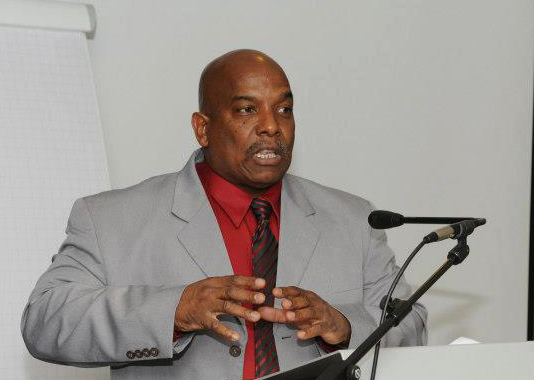
STATEMENT OF ED ALVAREZ
EXECUTIVE DIRECTOR
COMMISSION ON DECOLONIZATION
GOVERNMENT OF GUAM


Photo by KUAM.COM
HAFA ADAI CHAIRMAN DIEGO MORE'JON PAZMINO

ON BEHALF OF OUR HONORABLE GOVERNOR EDDIE BAZA CALVO AND OUR WONDERFUL PEOPLE, I PRESENT AN UPDATE ON GUAM'S EFFORTS TOWARD DECOLONIZATION OVER THE PAST YEAR.

OUR COMMISSION HAS BEEN HEAVILY ENGAGED IN REINFORCING THE PUBLIC AWARENESS, FINDING CREATIVE WAYS TO RAISE MONEY FOR THE EDUCATION PROGRAM, AND COMPLETING THE ARDUOUS TASK OF FORMATTING THE THREE TASK FORCE'S POSITION PAPERS SO THAT THEY ARE EASY TO COMPARE, CONTRAST, AND UNDERSTAND BY OUR VOTERS. IT'S NO SECRET THAT GUAM, LIKE MANY ISLANDS IN THE WORLD FACE TOUGH ECONOMIC TIMES, WHICH HAMPERS OUR ABILITY TO FORGE AHEAD ON ALL LEVELS TOWARD A PLEBISCITE VOTE. SO WE CONTINUE TO MEET AND DISCUSS HOW BEST TO ACHIEVE OUR GOALS.

ONE THING FOUND TO BE VERY EFFECTIVE HAS BEEN PUBLIC OUTREACH, AS THE COMMISSION CONTINUES TO MEET AND SPEAK TO PUBLIC HIGH SCHOOLS, CIVIC ORGANIZATIONS, AND CULTURAL GROUPS IN REINFORCING THE CORRECT MESSAGING TO THE MASSES. THIS HAS GOING ON FOR THE LAST THREE YEARS AND HAS BEEN LARGELY SUCCESSFUL. DECOLONIZATION HAS MADE ITS WAY INTO THE DAILY LIVES OF OUR PEOPLE AND IS KEPT ALIVE BY ISSUES SUCH AS THE MILITARY BUILD-UP, THE CURRENT LAW SUIT FILED BY MR. ARNOLD DAVIS, WHO IS CHALLENGING A CHAMORRO ONLY VOTE, AND MOST RECENTLY ANOTHER LAW SUIT FILED 

BY FORMER GUAM RESIDENT..MR.NEIL WEARE, WHO FEELS ALL THE PEOPLE IN THE U.S. TERRITORIES ARE U.S. CITIZENS AND DERSERVE THE RIGHT TO VOTE FOR PRESIDENT AND HAVE REPRESENTATION IN CONGRESS AND SENATE. ALSO CONTRIBUTING TO THE MOVEMENTS GROWTH ARE THE FEDERAL MANDATES IMPOSED BY CONGRESS ON GUAM, WHO HAD NO REPRESENTATION AT THE TIME THESE MANDATES WERE BEING DISCUSSED AND DECIDED UPON. SOME EXAMPLES ARE THE COMPACT IMPACT AGREEMENT BETWEEN THE UNITED STATES AND THE FREELY ASSOCIATED STATES OF MICRONESIA, THE EARNED INCOME TAX CREDIT PROGRAM, AND THE WAR REPARATIONS ISSUE, WHICH HAS BEEN GOING ON FOR SO LONG NOW! THESE MANDATES HAVE COST GUAM HUNDREDS OF MILLIONS OF DOLLARS THAT THE PEOPLE HAVE HAD TO SHOULDER WITHOUT ANY RECOURSE TOWARD PROPER AND FAIR REIMBURSEMENT. AS FOR THE WAR REPARATIONS EFFORT, GUAM REMAINS THE ONLY VICTIM OF WORLD WAR TWO, YET TO RECEIVE RESTORATIVE JUSTICE FOR ALL ITS SUFFERANCE! ALL OTHER VICTIMS HAVE BEEN PAID!

IN THE AREA OF FUNDING THE PUBLIC EDUCATION PROGRAM, THE COMMISSION HAS PROPOSED TO CHANGE THE LOCAL LAW RELATIVE TO TAX CREDITS. WE SEEK TO AMEND THIS LAW AND ALLOW THE COMMISSION TO GIVE TAX CREDITS TO PEOPLE OR BUSINESSES WHO DONATE SERVICES, TANGIBLE AND REAL PROPERTY, OR ANY ITEM SUITABLE FOR TAX CREDIT ALLOTMENT. SOON, A JOINTLY SPONSORED BILL BY OUR GOVERNOR AND LEGISLATURE IS PROPOSED TO BE INTRODUCED AND TAKE ITS COURSE IN THE LEGISLATIVE PROCESS! AS I REPORTED LAST YEAR, THE COMMISSION SOUGHT A $250,000.00 GRANT PROPOSAL FROM THE DEPARTMENT OF INTERIOR, SUBMITTING IT IN NOVEMBER 2012. I REPORT TODAY THAT WE STILL HAVE NOT RECEIVED A STATUS ON OUR REQUEST EVEN THOUGH THIS MONEY HAS BEEN IN CONTINUING RESOLUTION FOR QUITE SOMETIME. SO WE WONDER, WHEN WILL IT BE RELEASED. REALISTICALLY, IT MAY NOT BE POSSIBLE IN LIGHT OF THE CURRENT SEQUESTRATION ISSUE LOOMING IN THE UNITED STATES.

THE COMMISSION ALSO PLANS TO USE FREE PUBLIC TELEVISION AND ACCESS CHANNELS TO PRODUCE PROGRAMS THAT WILL FURTHER REINFORCE THE MESSAGING TO MORE OF THE MASSES AND GIVE A  SIMPLE UNDERSTANDING OF WHAT EACH POLITICAL OPTION BRINGS TO THE TABLE AS FAR SELF-GOVERNANCE. PLANS WILL BE UNDERWAY AND THE COMMISSION WILL SOON ADDRESS HOW TO USE THIS MEDIUM TO ITS FULLEST. 

THE MESSAGING IS SO IMPORTANT BECAUSE HISTORICALLY, AND DUE TO THE MEDIA, THE MESSAGING HAS BEEN DISTORTED AND NOT FAIR AS FAR THE ENTIRE POLITICAL STATUS ISSUED IS CONCERNED. FOR EXAMPLE, ONE ITEM MANY PEOPLE BELIEVED WAS THAT IF GUAM CHANGED ITS POLITICAL STATUS, IT WOULD MEAN THAT WE MIGHT LOSE ALL PRIVILEGES TO FEDERAL PROGRAMS.  ANOTHER WAS THAT WE MIGHT NOT BE ABLE TO TRAVEL FREELY TO THE UNITED STATES. EVEN MORE, MANY PEOPLE THOUGHT "CHAMORROS" WERE FIGHTING FOR THE RIGHT TO VOTE FOR THE 
POLITICAL STATUS CHOICE, WHEN IN FACT IT WAS GIVEN TO THEM BY VIRTUE ON THE UN CHARTER. FINALLY, ALL THOSE WHO HAVE MIGRATED TO GUAM ARE NOW FINDING OUT THAT THEY ARE NOT EXCLUDED FROM THE SELF-DETERMINATION PROCESS AND THAT THEY WILL PARTICIPATE AND VOTE ON THE CONSTITUTION WHICH FOLLOWS THE PLEBISCITE VOTE. SO IT IS IMPERATIVE THAT THESE PROGRAMS ARE IN PLACE IN ORDER TO SET STRAIGHT WHAT THE POLITICAL PROCESS ENTAILS AND HOW EVERYONE ON GUAM IS INCLUDED!

THUS, THE MOST IMPORTANT ASSISTANCE THAT THE UNTIED NATIONS CAN OFFER TO TERRITORIES LIKE GUAM IS THE TIMELY IMPLEMENTATION OF THE RESOLUTIONS IT HAS ADOPTED THROUGHOUT THE DECADES. WITHOUT A CONCERTED EFFORT TO IMPLEMENT TO THE DECOLONIZATION MANDATE, THE EXPECTATIONS OF THE PEOPLE ARE SERIOUSLY DASHED, AND THE RELEVANCE OF THE UNITED NATIONS TO OUR DECOLONIZATION PROCESS IS EVEN MORE SERIOUSLY QUESTIONED. 

OF THE NUMEROUS ACTION ORIENTED RECOMMENDATIONS INCLUDED IN THE RESOLUTIONS IS THE LONGSTANDING IS THE CALL FOR THE DEVELOPMENT OF THE PUBLIC EDUCATION PROGRAMS FOR THE TERRITORIES AS CLEARLY DEFINED IN THE GENERAL ASSEMBLY RESOLUTION 1541(XV), WHICH IS TO BE DONE COLLECTIVELY BY THE UNITED NATIONS SYSTEMS, THE ADMINISTERING POWERS, AND THE TERRITORIES AS WELL.

THESE ARE SOME KEY AREAS WHERE IMPLEMENTATION BY THE UNITED NATIONS SYSTEM WOULD SIGNIFICANTLY CONTRIBUTE TO THE DECOLONIZATION MANDATE OF OUR NON-SELF GOVERNING TERRITORIES.  I RECALL NUMEROUS SOLUTIONS BEING SUGGESTED, SOME AT THIS VERY SEMINAR, BUT THEY SEEM TO GET DISMISSED SOMEWHERE ALONG THE WAY, EVEN WITH THE ENDORSEMENT OF THE GENERAL ASSEMBLY. OUR DELEGATION BELIEVES THE UNITED NATIONS MUST BE MORE PRONOUNCED AND ENGAGING WITH THE MANDATES IT ADOPTS. WHILE PEACE MAKING AND PEACE KEEPING IS TIMELY TO BE THE ORDER OF THE DAY,  THE ERADICATION OF COLONIALISM IS WELL DESERVING OF EQUAL PRIMACY TO COME FULL CIRCLE WITH RESOLUTION AND SELF-GOVERNANCE FOR ALL OF US LEFT ON THE LIST!

IN LIGHT THIS, WE RECOMMEND THE FOLLOWING:

1.   THAT THE ELECTORAL OFFICE OF THE DEPARTMENT OF POLITICAL AFFAIRS BEGIN TO SUPPLY  INFORMATION ON THE POLITICAL STATUS OPTIONS, SINCE THE LACK OF  THIS INFORMATION IS WHAT  IMPEDES THE TERRITORIES FROM  UNDERSTANDING MORE ABOUT THE THREE STATUS OPTIONS. THIS FUNDAMENTAL INFORMATION STYMIES GUAM AND THE OTHER TERRITORIES AND IMPEDES OUR PATH TO DECOLONIZATION. AND THE END RESULT WILL BE TERRITORY HAVING TO TAKE THIS ON THEMSELVES WITH LIMITED RESOURCES.

2.   THAT THE GENERAL ASSEMBLY ENDORSE A WORK PROGRAM FOR THE DECOLONIZATION OF EACH TERRITORY. THIS CANNOT GO FORWARD WITHOUT THE ADMINISTERING POWER FURNISHING INFORMATION ON THE TERRITORY , THUS THE PROCESS BECOMES QUITE LIMITED, AND IN THE END, NEVER IMPLEMENTED.

3.  THAT THE CONDUCT OF PERIODIC ANALYSES BE UNDERTAKEN ON THE PROGRESS AND EXTENT OF THE DECOLONIZATION DECLARATION IN EACH TERRITORY. WHILE WORKING PAPERS ARE INFORMATIVE DOCUMENTS, THEY ARE NOT THE TYPE OF DOCUMENTS CALLED FOR IN THE RESOLUTIONS.  WITHOUT SUCH ANALYSES, IT'S DIFFICULT FOR MEMBER STATES TO UNDERSTAND HOW NON SELF-GOVERNING HAVE TAKEN OVER TIME DUE TO THE LACK OF IMPLEMENTATION OF DECOLONIZATION RESOLUTIONS.

4.   FINALLY, WE CALL ON THE SPECIAL COMMITTEE TO IMPLEMENT THE RECOMMENDATIONS OF THE GENERAL ASSEMBLY, AND IMPLEMENT THE EARLIER OUTLINED RECOMMENDATIONS AS A MATTER OF URGENCY. OTHERWISE, THE ROLE OF OUR DECOLONIZATION WILL FADE INTO LESSER IMPORTANCE, AND THE TENDENCY TO LEGITIMIZE THE UNEQUAL TERRITORIAL RELATIONSHIPS MAY BE TOO DIFFICULT TO RESIST.


05 June 2013

A Day of Decolonization in Okinawa


              Michael Lujan Bevacqua


photo by Sunao Tobaru

On April 28, 1952 the Treaty of San Francisco ending World War II between Japan and the United States went into effect. As part of this treaty Japan would receive its sovereignty again, but the US would get to keep numerous bases in the country. 

Okinawa, as an island to the south of Japan, that had been forcibly annexed in 1879 was not thought of by most Japanese as being a true part of Japan. As a result it was the ideal “sacrifice” for Japan and was given to the United States in order for Japan to receive its sovereignty back. Bases that had been in mainland Japan were moved to the island, which was placed under US control until 1972. 

In the minds of the leaders of both Japan and the US, everyone got what they wanted. No one seemed to bother to ask the Okinawans about what they wanted.

In Japan, April 28th is thought of as an important anniversary, the day that Japan became whole again. This year the Japanese government announced that a celebration would take place to commemorate the return of their sovereignty from the United States. This upset almost everyone in Okinawa because April 28th, 1952 is known there as a “day of humiliation.” 

It is the day they were “sacrificed,” the day they were sold out to the United States. It was the day where what had been years of occupation would become permanent. 

For half a century prior the Japanese had colonized Okinawans, doing everything from banning their language, forcing them to change their names and banning aspects of their culture. Okinawa went from being its own kingdom, to a colony of Japan, where people were indoctrinated with the idea that they were now Japanese and had to give up those things they believed made them Okinawan.

Okinawans resisted in many ways this colonization and still held onto ideas of their cultural distinctiveness. Their being sacrificed by Japan has helped to amplify their cultural resistance to the point where it takes on political forms. If they were truly Japanese, why were they sold out in such a way? Why were they given over to a foreign power and had their lands militarized? If they were truly Japanese why has the rest of the country ignored their protests and their pleas to rid their island of US bases?

When the current Governor Hirokazu Nakaima heard of this celebration he politely refused his invitation to Tokyo. The Japanese government later tried to downplay their event by calling it more of a ceremony and memorial, not truly a celebration. Nakaima later decided to allow his Vice-Governor, a former historian and academic to attend on his behalf. The hope for his attendance was that since the Japanese seem to know so little about Okinawa and its history, who better than a historian to go and educate them.

The presence of the US bases in Okinawa has also helped to push people towards a more local critical consciousness. It is seen as a burden that people feel Okinawans bear unfairly compared to the rest of Japan, but also as the main issue in which they see the Japanese government to be unresponsive and unhelpful. For those who think the bases have only started to be contentious since 1995, this is hardly true. They have always been a source of antagonism and protest. When Okinawa reverted to Japanese control in 1972 there was a great hope that the bases would close. Nothing of the sort happened.

Okinawans lost huge amounts of land to these bases. There were even periods of starvation due to the land loss after the war. Okinawans worry about the effects the bases will have on their environment. They also fear, especially in the case of the Futenma, that the bases may lead to catastrophic accidents since some are so close to highly populated areas. As Okinawa has grown, they have even grown economically beyond the bases. Studies have shown that the amount of “sympathy” money that Okinawa receives for hosting the bases is actually much less than the amount of money the island could get if the land was returned and given over to public and private use.

While I was in Okinawa last month thousands came out to protest the “day of humiliation” on the beach in Ginowan City (where Futenma is located). In just the four days that I was there in April, there were numerous panels, conferences, debates, articles and demonstrations dealing with the issue of “Okinawa’s sovereignty.” It is for this reason that I would call 4/28 this year “a day of decolonization.” 

For years Okinawans saw themselves as a discriminated minority in a Japanese context. After years of protest and complaints that have not resolved the base issue for them, they are starting to expand their consciousness. As their value to Japan is that Okinawa is an island where it can hide most of the United States’ bases it is “forced” to host, it seems less and less likely that they bases could ever be removed if they remain a part of Japan. Decolonization and the asserting of Okinawan sovereignty may be the only way. 


04 June 2013

Aruba Celebrates "Year of Papiamento"

Aruba Celebrates The "Year Of Papiamento" Marking 10 Years As The Island's Official Language


ORANJESTAD, Aruba, May 30, 2013 /PRNewswire/ -- In this month in 2003, Aruba declared Papiamento--the most widely-spoken language on the Dutch Caribbean ABC islands of Aruba, Bonaire and Curacao--its official language. Papiamento and Dutch now reign as the country's official languages to address government officials and institutions. In celebration, Aruba's Culture Department has deemed 2013 the "Year of Papiamento."
While Papiamento has been Aruba's official language for 10 years, it has been the island's native tongue for more than 300 years. Papiamento is a creole language, emerging from nearby languages and constantly evolving over the past three centuries. Nearby languages such as Venezuelan Spanish and American English influence the language today. The very word "Papiamento," meaning "to chat," stems from Portuguese and Spanish.
"Papiamento is a young language," Aruban linguist Ramon Todd Dandare explains, "And like all languages it is developing and changing."
Papiamento is spoken on all three of the Dutch Caribbean ABC islands, although there are variations in dialect from island to island.
"I can hear right away if someone is from Bonaire or Curacao--there is a slight difference," Dandare says. "Just as in the United States, there are different accents from region to region."
Aruba is part of the Dutch Kingdom and therefore its governmental, legal and educational systems have historically favored the Dutch language. Although 70 percent of the local population speaks Papiamento, all official written documents were worded in Dutch for 350 years. Until recently, all official school exams and classroom instruction have been given exclusively in Dutch. A new pilot project has begun for the 2012--2013 academic year, coinciding with the Year of Papiamento, called "Multilingual School," in which students are instructed in Papiamento and gradually introduced to Dutch, English and Spanish.
Establishing Papiamento as Aruba's official language has helped to stimulate its use alongside Dutch in official settings. The language's official 10-year anniversary is a triumph for natives hoping to preserve and improve their mother tongue.
For more information on Papiamento and Aruba, visit the new www.Aruba.com. Engage with Aruba via social media at www.facebook.com/ArubaFans or @ArubaTourism.

03 June 2013

Pacific Churches commend regional effort to re-list French Polynesia by the United Nations

PCC renews call for self-determination in the Pacific


SUVA, Fiji --- Pacific Island countries must be commended for their work which has seen Maohi Nui (French Polynesia) return to the United Nations’ list of territories for re-inscription.

The call came from PCC General Secretary, Reverend Francois Pihaatae, after the UN announced that Maohi had been returned to the list after a motion supported by Tuvalu, the Solomon Islands and Nauru.

In letters to the heads of the three nations, Rev Pihaatae said self-determination for Pacific territories which remained under colonial rule would be a PCC priority.

“The cries for self-determination of our brothers and sisters in Kanaky (New Caledonia) and West Papua also feature prominently in the resolutions of our recent General Assembly,” Rev Pihaatae said.

“May we join hands in our continuing effort to strive for peace and justice in the Pacific countries which are most in need.”

Maohi is one of three French territories in the Pacific, the other being New Caledonia and Wallis and Futuna.

France – with the support of Australia and New Zealand – had blocked moves by Maohi to seek greater autonomy from Paris.

A motion by Tuvalu, the Solomon Islands and Nauru saw Maohi return to the re-inscription list last week.

It is likely that this will open the door to a United Nations-supervised referendum allowing Maohi’s people to decide whether they want greater autonomy, independence or direct rule.

Rev Pihaatae said self-determination meant people could decide their future for themselves.

“The right of the people of Maohi Nui and other non-self governing territories in our region to decide for themselves on their future and do so in a manner that is truly free as equal inheritors of God’s dignity is central to the PCC’s mandate and work programmes,” he said
.

30 May 2013

French Polynesia discussed at United Nations Decolonization Seminar

Statement by Hon. Richard, Ariihau TUHEIAVA
(Senator for French Polynesia)

 Caribbean Regional Seminar on the Implementation of the Third International Decade for the Eradication of Colonialism

United Nations Special Committee on Decolonization 

"Question of French Polynesia"

Quito, ECUADOR 
28-30 May 2013


 Mr. Chairman, Your Excellency Ambassador Diego Morejon-Pazmiño of the Republic of Ecuador

 Representatives of U.N. member states,

Distinguished representatives of non-self-governing territories, and members of this Seminar,

Ladies and gentlemen,

 I am Richard Tuheiava, elected member of French Polynesia in the French Senate, and also elected member of the House of Assembly of French Polynesia from the Group "Union for Democracy" (UPLD). It is indeed my priviledge, on behalf of the UPLD political alliance led by the Hon. Oscar, Manutahi TEMARU, to extend best wishes to the distinguished participants of this regional seminar and to acknowledge, through you Mr. Chairman, the hospitality and the solid dedication of the Government of the Republic of Ecuador to the main subject of this event : decolonization.

            Mr. Chairman,
           
At the outset, I wish to reiterate our deepest appreciation to the General Assembly of the United Nations for the adoption of the consensus resolution on 17th March 2013 providing for the re-inscription of the territory on the U.N. list of non self-governing territories. This singular act was achieved after over two years of intense discussions between our delegates from Tahiti and member States. The resolution A/67/L.56/Rev.1 entitled "Self Determination of French Polynesia" was adopted some 35 years after the Hon. Oscar Temaru, President of the Tavini Huiraatira-FLP Independence Party, began the long journey to achieve re-inscription.

In this regards, I had the pleasure to be advised yesterday that the reference code of the General Assembly resolution regarding French Polynesia's re-inscription on the U.N. List of non Self-governing territories is definitely A/RES/67/265.

The resumed international oversight of the self-determination process of French Polynesia has finally came after the unilateral de-listing, without a General Assembly resolution, of both New Caledonia and French Polynesia from the U.N. list back in 1947. The General Assembly corrected the omission from the list of New Caledonia in 1986 with its adoption of resolution 41/41 of that year. It is only in 2013 that the omission was then corrected for French Polynesia. 

In this connection, it is to be emphasized that the General Assembly has repeatedly reaffirmed that it is within the purview of the Assembly alone to determine whether a territory is non self-governing within the scope of the U.N. Charter. It was never meant that such a decision was to be made by the administering power alone, despite their protestations. That would be a classic conflict of interest and contrary to the meaning of the U.N. Charter.
         
   Mr. Chairman,

It must be borne in mind that the genuine act of self-determination for the Ma’ohi people of French Polynesia is consistent with relevant international instruments, in particular the International Covenant on Civil and Political rights; the International Covenant on Economic, Social and Cultural Rights; and the U.N. Charter itself. It is also important to emphasize the relevance of the U.N. Declaration of the Rights of Indigenous Peoples, in particular the few provisions related to their self-determination.

In this connection, the Noumea Accord back in 1998, which governs the self-determination process of New Caledonia formally, recognizes the rights of the Kanak people in determining the political future of the territory through realistic voter eligibility criteria for participation in the process. It means that not all the current inhabitants of New Caledonia are qualified to vote the upcoming self determination referendum in New Caledonia planned in 2014 or 2018. The European Court of Human Rights has confirmed the legality of this criterion in January 2005.

Accordingly, I wish to emphasize three points:

First: if the process is to proceed to a genuine act of self-determination exercised by the Ma'ohi people of French Polynesia, in the light of resolution 67/265, such eligibility criteria must be also employed in French Polynesia, as it has been in the case in New Caledonia, and not unduly influenced by the participation of recent settlers whose right to self-determination had long been exercised in Europe.

Mr. Chairman, allow me to strongly state that such eligibility criteria in French Polynesia is critical for the achievement of a fair and equitable self determination process to take place in my Country, should this criteria be set in parallel with the implementation of a Polynesian citizenship.

Second, I would like to stress the concern of the uncertainty of the legal status of the indigenous People of French Polynesia by virtue of the French Constitution. Before the revision of the French Constitution in March 2003, all inhabitants of the French overseas territories were constitutionally called "Peoples", regardless of the status of their territories (French overseas departments, or French overseas territories). Since this revision, the language "Peoples" was replaced by "populations" without any local consultation. The purpose was for France to prevent itself from any recognized precedent after the due adoption of a specific chapter within the French Constitution in 1999 on the issue of New Caledonia (in particular, the recognition of the indigeneity of the Kanak people), and for France to preserve itself from the legal perspectives of ratifying the U.N. Declaration on the Rights of the Indigenous Peoples in September 2007.

 In this regard, the proper implementation of the resolution 67/265 on French Polynesia requires to clearly lift this legal uncertainty and to allow the due recognition of the Mā´ohi People as the indigenous People of this non self-governing territory.

Third, I wish to point out that the mandate of the General Assembly on the decolonization of French Polynesia can only be achieved through the development of an authentic political education programme on the legitimate options of political equality with direct support of the United Nations in all stages of the process. Indeed, the mindset of peoples of such former colonies is not prepared for quick political and economic shifts, unless sufficient time is allowed, educational assistance is provided and specific economic and social measures are achieved locally, prior to the Self determination referendum.

Mr. Chairman,

I emphasized these three points in the context of the recent advocacy by the recently elected territorial government of French Polynesia, in early May 2013, that the French expedite the organization of a self determination referendum in the territory designed to legitimize the status quo territorial arrangements – and with the deliberate inclusion of French or European settlers. This is an unacceptably distorted process, and is radically inconsistent with the established and internationally recognized precedents for the self-determination of New Caledonia.

Such recognized precedents include :

1. the conduct of a genuine political education program with direct U.N. support;

2. the setting of a reasonable eligibility criteria to vote the self-determination referendum

3. the achievement of selected legal, economical and social measures locally and prior to the referendum.

Accordingly, we ask that the Special Committee on Decolonization to pay very close attention to post-reinscription developments in French Polynesia. Because the opportunity is offered for the very first time before the Special Committee of Decolonization, please allow me, Mr. Chairman, to provide you a quick overall view of the selected measures to be necessarily achieved before a self-determination referendum would take place in French Polynesia:

·  creation and implementation of a Polynesian citizenship, in parallel with the setting of a reasonable eligibility criteria to vote the self-determination referendum,

·   local electoral system, to be revised,

· Fair and equitable compensation of the health and environmental consequences of the French nuclear testings in French Polynesia,

· legal competency on deep-sea or terrestrial strategic minerals within the Economic Exclusive Zone of French Polynesia,

·  positive labour discrimination in favour of locals, to be set,

·   land tenure and division, to be revised,

·   legal competency on control of immigration, and visas deliveries for non EU citizens,

·  legal recognition of the Tahitian language as second official one in French Polynesia,

·    legal system of the communes of French Polynesia, to be fully revised according to the geographical, demographical and financial constraints,

·  full-recognition of the legislative status of the Laws voted by the House of Assembly of French Polynesia,

Before concluding this statement, Mr. Chairman, I wish to point to the nature of the so-called “autonomous” status of French Polynesia.  In the absence of U.N. oversight of our political and economic evolution for over 66 years, a particular type of unilateral authority by the administering power emerged through changes in the French Constitution and the creation of various French “autonomy statutes” – all of which retained the reins of power in Paris.

What was – and is termed – as autonomy, is in fact nothing more that non self-governing territorial status under another name. This is political subterfuge of the first order, and needs to be addressed by the Special Committee in the course of its upcoming session in a few weeks time.

As a preliminary initiative, let me very shortly list you a few provisional items, applicable to the territory of French Polynesia, that would testify its non self-governing status:

· Whereas the provision of article 73 of the U.N. Charter asserts the priority of the interests of the inhabitants of the self-governing territories, beyond those of their administering powers, the current provision of article 74 of the French Constitution under which French Polynesia is placed shows that the particular interests of this French overseas collectivity need to be considered within the French Republic. Therefore, the unilateral authority of the administering power still exists and is subject to political variations.

·  Whereas the proper understanding of the self governing status of a territory, under the U.N. Charter, is that the transfer of the competencies by the administrating powers to its self-govering territory is not reversible, this is not the case of French Polynesia. Indeed, the powers and competencies transferred by the French to the local elected government of French Polynesia are identified and negotiated through a Organic Law that is voted by the French Parliament from Paris. Therefore, the final say remains in the hands of the periodical majority of the French Parliament in Paris, whatever the will of the elected members of French Polynesia would be.

· the constitutional separation of Legislative, Executive powers and Justice is not fully implemented in French Polynesia as the judicial system remains in full control of the administering power, even the designation and turn-over of the judges. The elected members of the institutions of French Polynesia have no say nor control on the Judicial system in this territory.

·  the electoral system applicable to the French overseas collectivity of French Polynesia is fully determined, adopted, controlled and implemented by the administering power. There is absolutely no power of the members of the House of Assembly of French Polynesia, nor the Mayors and Council members of the 48 communes of French Polynesia, to amend or correct the electoral rules under which they have been elected.

· the control and ruling of the foreign immigration - entering and exiting French Polynesia – remains fully in the hands of the administering power.

· the determination of the local currency, which is different from the EU currency, however is not controlled by the local elected government of French Polynesia. The current currency is still named C.F.P., for French Colony in the Pacific.

A relevant assessment of self governance was proceeded to French Polynesia over the past two years and has clearly indicated that the so-called autonomous status of this territory, under the French Constitution, was not consistent with the U.N. self governance indicators that are reflected in numerous General Assembly resolutions.

The adoption by consensus of the resolution 67/265 last 17 May provides now the highest evidence of the non self-governing status of French Polynesia. Now that the General Assembly has paved the way, the Union for Democracy-UPLD is engaging with the Special Committee to achieve, under the auspices and with the support of this U.N. Body, the next step forward, i.e. the achievement of a fair and equitable process of self-determination in favour of the Ma’ohi people of French Polynesia.

We look forward to active participation in your session in the coming weeks at U.N. Headquarters in New York in order to provide further background to our situation, and to make concrete recommendations on the realization of the self-determination of our people.

Thank you, Mr. Chairman

Richard, Ariihau TUHEIAVA
Senator for French Polynesia

Elected member of the Assembly of French Polynesia - UPLD Group

29 May 2013

In United Nations, dark shades of France's Pacific past


By Denise Fisher

Visiting Fellow at ANU's Centre for European Studies. 


The Interpreter - Weblog of the Lowy Institute for International Policy


On 17 May, French Polynesian President Oscar Temaru (pictured below) achieved a long-sought after goal. The UN General Assembly passed a consensus resolution to reinscribe French Polynesia on the UN Committee of Decolonisation's list of non-self governing territories. This means French Polynesia should be treated under UN principles of self-determination, aiming at self-government in one of three forms: sovereign independence, complete integration with a sovereign state, or some form of association with a sovereign state.


France took the unusual step of boycotting the UN General Assembly meeting, and the UK, US, Germany and the Netherlands disassociated themselves from the resolution. All except Germany have overseas territories.

The term 'reinscription' is being used because in 1947, France declined to allow its territories to be seen as non-self governing territories, and would not report on them as the UN charter required. When the UN created a Committee on Decolonisation in 1960, it listed territories under its tutelage, but France continued to refuse to allow its territories to be included.

The relative ease of Temaru's victory, with the support of the three South Pacific island countries that sponsored the resolution (Solomon Islands, Nauru and Tuvalu), was all the more impressive when compared with the public battle, and civil war, that had led to a UN General Assembly resolution reinscribing its sister Pacific territory, New Caledonia, in 1986. Then, France conducted a public campaign for years opposing reinscription. Even after the Resolution was passed, France refused to cooperate with the UN's Decolonization Committee until 2004.

The French have claimed that 'the right to self-determination cannot be exercised against the will of the concerned populations', a reference to a local territorial election in early May, when the pro-France, pro-autonomy parties won power over Temaru's pro-independence group and speedily passed a resolution calling for the UN vote to be postponed. France had headed off a UN resolution until last week on the basis of 'waiting' for that local election to be held. But, as Solomon Islands UN Ambassador Beck has noted, the results of this election must never be equated with a referendum on self-determination. It is an election under the authorisation and statutory provisions of the sovereign power, France.

If France wants the international community to respect local elections, a number of related developments deserve consideration as well. From the time of his election in 2004, Oscar Temaru and his pro-independence government have been frustrated by pro-France machinations. These included even a re-run of the initial election (whichTemaru again won), and perpetual floor-crossings by individual members, resulting in 12 changes in president over the last ten years. And in August 2011, the French Polynesian Territorial Assembly passed a resolution seeking self-determination within UN processes.

France is also being inconsistent with its recent approach to UN processes involving New Caledonia. In 2004, after 60 years of rejecting a UN decolonisation role for New Caledonia, France quietly began submitting reports as Administering Authority of New Caledonia, implicitly subjecting itself to UN decolonisation procedures.

France's position is also puzzling in view of the impressive record it has in New Caledonia, through its negotiation and implementation of the Matignon/Noumea Accords, which themselves provide for a self-determination referendum after 2014. Presumably it is the success of these Accords that led France to comply, finally, with UN decolonisation procedures on New Caledonia.

At a time when France is noting that its Pacific territories make it a maritime power and a factor for stability in the Pacific, France's non-participation in the UN resolution is disappointing and is likely to raise old questions about its intent for its territories and for the region.

Photo by Flickr user Parti socialiste.

27 May 2013

A Conversation on the Challenges to Contemporary Decolonisation


Special to Overseas Territories Review

first published on 08 October 2012

In a comprehensive interview, advisor on governance and multilateral diplomacy Dr. Carlyle G. Corbin discusses the historical evolution of the United Nations decolonization process, the challenges to implementation of the decolonization mandate, and proposals for the future political and constitutional evolution of the remaining dependencies.

The information discussed is timely as the U.N. begins its 2013 regional seminar from 28 to 30 May in Quito, Ecuador.
Read the full interview here.

23 May 2013

‘Things Fall Apart’ and the case against imperialism


http://pambazuka.org/en/category/features/86863


by Sankara Kamara


*Sankara Kamara is a Sierra Leonean academic and freelance writer. You can catch him on Facebook: www.facebook/sankara kamara 


cc T G
When Chinua Achebe showed the horrors of colonial rule in ‘Things Fall Apart,’ the narrative easily became the African story that impinged itself on our consciousness. The novel epitomized the case against imperialism

The death of the renowned Nigerian writer, Chinua Achebe, has thrust one of the most popular African books in the news. 

Although Achebe wrote multiple books and produced several works of scholarship, ‘Things Fall Apart’ acted as the catalyst for his popularity, sending the Nigerian writer to the highest plateaus of academic fame. 

How did ‘Things Fall Apart,’ a book written about the Igbo people in Nigeria, become an explanatory voice for colonially oppressed societies all over Africa? The literary tenor used by Achebe to write ‘Things Fall Apart,’ is the first reason behind the book’s popularity. 

Any exhaustive commentary on ‘Things Fall Apart,’ must recognize the book’s flair for weaving Igbo words and phrases with the English language. By partly Africanizing the English language to tell an African story, Achebe was able to show a pre-colonial Igbo society equipped with the ability for self-rule. 

Through the book’s main character, Okonkwo, Achebe showed how pre-colonial Igbo society dealt with crime and punishment. When Okonkwo committed what could be termed in today’s legal systems as manslaughter, the response from the oracles at Umuofia was swift and judicious. 

Once it became clear that Okonkwo’s accidentally-discharged gun was responsible for killing a citizen of the land, the oracles pronounced a verdict, which ordered Okonkwo’s seven-year exile from the land he loved. Despite his enormous stature in Igbo society, Okonkwo was subjected to the rule of law through a cultural edict, forcing a seemingly untouchable man into seven anguishing years of exile. 


READ THE FULL ARTICLE HERE.


19 May 2013

General Assembly adds French Polynesia to UN decolonization list


18 May 2013 – The United Nations General Assembly voted on Friday to place French Polynesia back on the UN list of territories that should be decolonized and requested the French Government to “facilitate rapid progress […] towards a self-determination process.” 


A wide view of the General Assembly Hall. UN Photo/Ryan Brown
 Adopting a consensus resolution tabled by Nauru, Tuvalu and Solomon Islands, the Assembly affirmed “the inalienable right of the people of French Polynesia to self-determination and independence” under the UN Charter, and declared that “an obligation exists [under the Charter] on the part of the Government of France, as the administering Power of the Territory, to transmit information on French Polynesia.”

The Assembly's action places French Polynesia back on the UN list of Non-Self-Governing Territories, bringing the number of inscriptions to 17.

Although France had undertaken to furnish information on French Polynesia in 1946, along with New Caledonia, this transmittal of information stopped the following year, as stated by the delegate of the Solomon Islands.

In June 2011, the Council of Ministers of French Polynesia adopted a resolution seeking self-determination within UN processes. The Territory's Assembly adopted the resolution in August of 2011. The current text “sends a simple message of peace and hope to the population that wants to determine their future,” the delegate added.

In that light, the resolution adopted by the 193-member UN General Assembly requests the UN Special Committee on Decolonization to consider the question of French Polynesia at its next session and to report to the General Assembly at its sixty-eighth session.

It further requests the French Government, “as the Administering Power concerned, to intensify its dialogue with French Polynesia in order to facilitate rapid progress towards a fair and effective self-determination process, under which the terms and timelines for an act of self-determination will be agreed.”

 Through their statements in the Assembly, the United Kingdom, the United States, Germany and the Netherlands all disassociated themselves from the consensus vote.

According to news reports, the French delegation to the UN sent a letter to Member States on Thursday announcing that it would not be taking part in the Assembly meeting.

17 May 2013

UK "clamping down" on dependency financial sectors


Britain’s Chancellor of the Exchequer George Osborne is reportedly finalising measures to clamp down on two Caribbean tax havens.

Under tough anti-evasion measures being drawn up by the Treasury, banks in the British Virgin Islands and the Cayman Islands will be forced to reveal details about customers suspected of hiding money offshore.

The Caribbean islands are among the world’s main offshore financial centres. More than one million offshore companies are registered in the British Virgin Islands alone, even though the total population is just 30,000.

“The places you can hide are getting smaller and smaller,” Osborne said at the weekend at the European finance ministers’ summit in Dublin.

“We are in advanced stages of discussion [with the two territories]. They are in no doubt about what we expect,” he added.

Osborne’s remarks drew an immediate reaction from Cayman Islands Stock Exchange Chairman, Anthony Travers.

According to Travers, if the UK recovery is dependent on revenues from Osborne’s tax crackdown on Caribbean financial centres, then he is in for a rude awakening.

Travers said, “I am deeply troubled that the meritless attacks on the Overseas Territories by [Austrian Finance Minister Maria] Fekter appear to be gaining traction. Furthermore, there seems to be no contrary assertion from the UK government and the chancellor as to the true position .This is in neither of our interests, as in turn it seems to me to leave the City open to further Franco-German attack by association. But this is an attack based on mischaracterization.

“A cursory review of the publically available statistics under the European Saving Directive which established fully transparent proactive tax reporting shows bank deposits in Cayman of EU residents of a statistically irrelevant US$25 million,” he pointed out. 

“The correct answer to Ms Fekter should have been that the Overseas Territories already demonstrate full tax transparency .Given that HMRC already has full treaty access to Cayman accounts for UK tax purposes, the provisions of FATCA are simply duplicative, wholly unnecessary and will raise no additional revenue,” Travers added.

He went on to say that it has not escaped his notice that Osborne has also attacked the British Virgin Islands, which has similar tax transparency with the UK and the USA.

“He should know that the BVI has an extensive network of some twenty one tax information exchange agreements providing for complete tax transparency notably to HMRC and the IRS; that they are concluding the FATCA negotiation with the UK, and the US and that they are considering moving to proactive reporting with the EU under the Directive,” he said.

He pointed out that the Cayman Islands, as well as the BVI and Bermuda, regard tax evasion as firmly off the table but yet they are continually labeled tax havens, a term that has become synonymous with illegality and wrongdoing.

“Our measures in Cayman far exceed the tax transparency available in Austria (and many other places, including the US) and yet we find no rebuttal from Chancellor Osborne, rather the contrary. One can only gaze in awe at the misinformation being promoted by a UK chancellor and wonder why he appears willing to assist the French and Germans in their avowed quest to irretrievably damage The City of London’s global dominance,” Travers concluded.

Meanwhile, in a letter on Sunday to the editor of Britain’s Daily Mirror newspaper, BVI Premier Dr Orlando Smith responded to an article published on Saturday, headlined “Margaret Thatcher the tax snatcher?”

The article claimed that Thatcher’s £6 million (US$9 million) London townhouse is owned by a BVI company, which could have been a scheme that would help her estate avoid millions in inheritance tax.

John Christensen, of the Tax Justice Network, said: “How can a former prime minister spend more than two decades living in a house in London that has been owned for many years by a company based in the British Virgin Islands? We all have a duty to pay our taxes, and that includes former politicians.”

However, Smith said that the article makes the classic error of assuming that the use of an offshore structure is in some way improper for UK tax purposes or that some unauthorised benefit is obtained.

“That is simply an unsound assumption. The fact that HMRC has clear avenues to obtain all tax information from the BVI should in fact lead your correspondent to the contrary conclusion; that offshore structuring in the Overseas Territories is correct and within the law,” Smith said.

“The legitimate use of transparent offshore financial centres needs to be better understood by your journalists,” he concluded.

14 May 2013

Homage to a Martyr - A Freedom Fighter joins the ancestors


Helmin Wiels (Photo: Pueblo Soberano)


STEEL PULSE - TRIBUTE TO THE MARTYRS


When Martyrs died 
They save our lives
They had an early grave
Sacrifice has taken place
...

Here was one they crucified
Dead man tell no tales
There were some 
They hung so high
We know the reason why

Caught and tried
 Bound and beat
Locked, locked away inside

But won their war of words
Patriots lost their lives

Remember.........

Message preach to all
 you hear something

Doctrine for the soul
 you feel something

The story has been told
 you know something

Now answer martyrs call, 
Do something 

Prophesise the fall
Backs against the wall no more 

Be something!


10 May 2013

Vieques, a Target in the Sun

George Withers
Senior Fellow for Regional Security Policy
Washington Office on Latin America


Executive Summary

May 1, 2013 marks the tenth anniversary of the day that the U.S. Navy left the small island of Vieques, Puerto Rico. The Navy had used portions of the inhabited island for military training ranges and ammunitions storage. On the training ranges, the Navy and Marines conducted aggressive air-to-ground bombing, amphibious assaults, ship-to-shore shelling, artillery practice, and a variety of other training exercises involving the use of a wide range of explosives and toxic materials.

Four years earlier, on April 19, 1999, a local citizen named David Sanes Rodríguez was working as a guard at one of the ranges and was killed when a 500-pound bomb from a Marine jet missed its target and landed on an observation post. Local non-violent protests which shut down the ranges grew to national and international dimensions, and the U.S. Congress and two succeeding administrations grappled with controversy until finally the Navy was forced by congressional and administrative action to leave the island.


It could be a mistake to think that the controversy started in 1999, however. Since the 1940s, the island and its people had endured six decades of forced relocation, bombardment, and the introduction of toxic materials to its environment. The Navy made promises over that time to improve the environment, lessen the impact of the training, improve the economy and treat the people with respect. Congress held hearings in 1980, 1981 and for three years after the 1999 accident. Today, ten years after the Navy left, the people of the island continue to suffer from poor health, high unemployment, a lack of basic services and limited access to much of the land that were taken from them 60 years ago. 


This paper examines the history of the use of the island by the Navy, of the eventual legislation that furthered the punishment of the people, and the need for a more aggressive response to address the conditions that continue to afflict the people of Vieques.

Read the full report here.

08 May 2013

France’s Reactions To Tahiti Election Results Mixed

Radio New Zealand International 

MP: France ‘shamed’ after victory for ‘most corrupt’ Flosse

WELLINGTON, New Zealand (Radio New Zealand International, May 8, 2013) – The French minister in charge of overseas territories, Victorin Lurel, has acknowledged the Tahoeraa Huiraatira’s victory in French Polynesia’s territorial election.

The ministry says Mr. Lurel has taken note of the result and called the party leader, Gaston Flosse.

It says Paris will work with the democratically elected members.

However, a Socialist MP, Rene Dosiere, says the election outcome has brought shame on France as Mr. Flosse is now bound to be restored as president.

Mr. Dosiere says while the French president and the government value transparency and probity, it wouldn’t be acceptable for French Polynesia to return to its old corrupt practices.

He says the election result has to be officially acknowledged, but one can only be saddened that the victory was achieved by the French republic’s most sentenced and most corrupt politician.

Despite a raft of convictions, Mr. Flosse insists he has done no wrong.


Churches in Tahiti urge French Polynesia independence steps


ECUMENICAL NEWS


Peter Kenny

PHOTO: WCC

Members of an ecumenical delegation with President Oscar Manutahi Temaru of French Polynesia in Tahiti during a visit from April 26 to May 1, 2013.

Representatives of churches and Christian organizations worldwide are calling for French Polynesia (Maohi Nui), an area where France does nuclear testing, to be placed on a list of United Nations countries to be decolonized.

In Tahiti, delegates from ecumenical organizations supported this during a meeting with local church leaders, civil society organizations and President Oscar Manutahi Temaru during a visit to French Polynesia from April 26 to May 1.

"The international ecumenical solidarity visit to French Polynesia comes at the right time," said Rev. Francois Pihaatae, general secretary of the Pacific Conference of Churches.

"This is significant in terms of accompanying the EPM [Maohi Protestant Church] and the Maohi people while they are struggling to deal with the critical issue of re-inscription of French Polynesia on the U.N. list," he said.

Members of the ecumenical delegation met President Oscar Manutahi Temaru of French Polynesia in Tahiti during their visit.

The visit was coordinated by the Commission of the Churches on International Affairs of the World Council of Churches in collaboration with the Pacific Conference of Churches and the Maohi Protestant Church.

In 1947 the French government had managed to remove Maohi Nui from the UN list of countries to be decolonized.

The backing from the ecumenical group follows a statement issued by the main governing body of the WCC, its central committee in Greece last year, supporting advocacy on re-inscription of French Polynesia on the UN list.

This WCC statement and the visit were initiated by the EPM, asking for CCIA support on the issue.

The 2012 Synod of the EPM also urged the WCC and the PCC to "support its efforts for advocacy on re-inscription of French Polynesia."

Rev. Taaroanui Maraea, president of the EPM, said that the EPM "considers re-inscription of French Polynesia on this list as means to protect the people from decisions and initiatives taken by the French State contrary to its interests." He noted a decision made at the EPM 2012 Synod.

John Taroanui Doom, WCC president from the Pacific, spoke about the consequences of nuclear testing by France in French Polynesia.

"The problems directly and indirectly linked with the nuclear tests in the past thirty years in the French Polynesia are not yet settled," he said.

"Successive governments in France suppressed the demands from the affected local people and denied people's legitimate demand for the sovereignty of their land and right to self-determination," noted Taroanui Doom.

The meeting organized by the EPM in conjunction with the international ecumenical solidarity team visit, explored the issue re-inscription of French Polynesia and was attended by more than 100 people.