07 December 2011

Antigua and Barbuda endorsed by Latin American & Caribbean as President of 2013 United Nations General Assembly

Antigua and Barbuda's U.N. Ambassador to lead 
United Nations General Assembly in 2013


At their monthly meeting here on Wednesday, the 33 UN member States of the Latin American and Caribbean Group (GRULAC) unanimously endorsed Antigua and Barbuda’s Ambassador to the United Nations H.E. Dr. John W. Ashe, to become the President of the Sixty-eight Session of United Nations General Assembly (UNGA 68), when that position rotates to the region in September 2013.

Prime Minister, the Honourable Dr. W. Baldwin Spencer immediately congratulated Ambassador Ashe on his achievement, noting that the early endorsement by the GRULAC was, by any measure, an indication of the group’s confidence in his ability to lead the august UN General Assembly as its President in 2013.

“The citizens of this nation can be proud of this singular achievement that has been bestowed on our UN Ambassador by the countries of the Latin American and Caribbean region. I have no doubt that Ambassador Ashe can and will provide the necessary leadership during his tenure as President of the 68th session of the General Assembly,” he said. 

he Presidency of the General Assembly follows a system of regional rotation. Each year one of the five geographic groups (African, Asian, Eastern European, Latin American and the Caribbean, and Western Europe and Other States) nominates one or more individuals. Once the regional group endorses its candidate for the PGA, the entire membership then elects him/her in the General Assembly, approximately three months prior to the start of the next Session. The session of the assembly begins every year in September. Hence the incoming President of that session is elected in June. The PGA’s term is for one year: from September of the year of his/her election to September of the following year). Any special, or emergency special, assemblies over the next year will be headed by the elected President of UN General Assembly.

The General Assembly is the main deliberative organ of the United Nations. It is composed of representatives of all 193 member States of the United Nations, each of which has one vote. Decisions on important questions, such as those on peace and security, admission of new Members and budgetary matters, require a two-thirds majority. Decisions on other questions are reached by a simple majority. These decisions may be adopted without a vote, or with a vote, which may be recorded, non-recorded or by roll-call.

The work of the United Nations year-round derives largely from the decisions of the General Assembly--that is to say, the will of the majority of the Members as expressed in resolutions adopted by the Assembly. That work is carried out by committees and other bodies established by the Assembly to study and report on specific issues, such as disarmament, outer space, peace-keeping, decolonization and human rights; in international conferences called for by the Assembly; and by the secretariat of the United Nations—the Secretary-General and his staff of international civil servants.

In a statement delivered to the GRULAC, Ambassador Ashe said: “I am indeed humbled and deeply honoured by the confidence you have placed in me by endorsing me to this office. And I will do everything possible to live up to the expectations that accompany this office, bearing in mind the path travelled before me by my fellow CARICOM colleagues, Ambassador Samuel R. Insanally of Guyana, President of the 48th session of the GA in 1993 and Ambassador Julian R. Hunte of St. Lucia, President of the 58th session of the General Assembly in 2003.” 

Ambassador Ashe as thanked the Chairman of GRULAC, Cuba’s Ambassador to the United Nations, His Excellency Mr. Pedro Nunez Josquera for personally facilitating the endorsement and for his and Cuba’s delegation successful chairmanship of the GRULAC for the month of November 2011.

The GRULAC endorsement represents the final step before the pro forma election of Ambassador Ashe as PGA by the UN General Assembly in June 2013, a process that began with the initial endorsement by CARICOM Ambassadors to the UN. As is the practice with candidatures at this level, the UN Ambassadors submitted Ambassador Ashe’s candidature for formal consideration by and subsequent approval of CARICOM Foreign Ministers meeting in the COFCOR. The COFCOR then sent the candidature for final approval by CARICOM Heads of Government. Ambassador Ashe subsequently received the support from every non-CARICOM member State of the GRULAC, which finally resulted in his unanimous endorsement by the group on Wednesday well in advance of the June 2013 elections by the General Assembly.

Lawsuit against Guam self-determination termed a 'perversion'

Davis lawsuit a perversion


Peter J. Santos
Letter to the Editor
Davis lawsuit a perversion
THE history of how Hawaii became the 50th state is a dark and sad chapter in U.S. history. The sovereign Hawaiian nation and people were overthrown by non-native settlers with the help of U.S. military forces. The non-native settlers then formed a government which excluded the Native Hawaiians. The newly formed government petitioned for statehood and was accepted into the union. This has been the paradigm for the newer states. This was not present in the Philippines, Cuba, or Puerto Rico.
The U.S. Congress later issued an official apology for the involvement of U.S. military forces and the dubious manner in which the State of Hawaii became a state. But what’s done is done and there’s no turning back. The official apology has been deemed as a symbolic gesture of the United States to the Native Hawaiians and cannot be used as a basis for any legal claims against the United States.
The Native Hawaiians are, to this day, trying to figure out how to proceed as a sovereign group. They were disenfranchised in their own homeland and their efforts to re-establish their sovereignty has been, and is still being, challenged by outsiders.
Mr. Arnold “Dave” Davis and his lawsuit are trying to repeat the history of Hawaii on Guam and put Guam on the track to statehood. He effectively wants to silence the native inhabitants, but this time using legal maneuvering. His legal claims are not in spirit of the 14th or 15th Amendments to the United States Constitution or the Voting Rights Act. He is perverting the justice system and the political process.
The situation on Guam of the plebiscite and decolonization is very messy because the political status of Guam and Guam’s history during the last 113 years is nothing like any of the other paradigms we have ever seen. Well, it doesn’t really need to be messy at all. This is a political process that should be allowed to finally take its course.
Enter Davis and his misguided and false legal claims and the waters get very, very muddy indeed. Instead of respecting the political process, he wants to claim rights in something he has no right in. He wants to make Guam into Hawaii. He’s also rabblerousing other non-natives to adopt his thinking and he’s playing on the fears and lack of understanding of what he claims are the “majority” of native inhabitants, to support his assertions. It’s tragic, but history tends to repeat itself. Should the U.S. Supreme Court get this wrong in principle, those natives too will be known to have betrayed their own people.
Don’t fret, after all is said and done, the natives of Guam will get an apology from the U.S. Congress like the Native Hawaiians did. It may take 100 years and the apology will be virtually useless, but the apology makes everything right. Just go and ask the Native Hawaiians. If you don’t believe them, go ask the Native American Indians and the Native Alaskans.
Peter J. Santos,
Ghazni, Afghanistan
##
Special to the Marianas Variety
Peter J. Santos,Ghazni
Afghanistan
The history of how Hawaii became the 50th state is a dark and sad chapter in U.S. history. The sovereign Hawaiian nation and people were overthrown by non-native settlers with the help of U.S. military forces. The non-native settlers then formed a government which excluded the Native Hawaiians. The newly formed government petitioned for statehood and was accepted into the union.
This has been the paradigm for the newer states. This was not present in the Philippines, Cuba, or Puerto Rico. The U.S. Congress later issued an official apology for the involvement of U.S. military forces and the dubious manner in which the State of Hawaii became a state.
But what’s done is done and there’s no turning back. The official apology has been deemed as a symbolic gesture of the United States to the Native Hawaiians and cannot be used as a basis for any legal claims against the United States.The Native Hawaiians are, to this day, trying to figure out how to proceed as a sovereign group. They were disenfranchised in their own homeland and their efforts to re-establish their sovereignty has been, and is still being, challenged by outsiders. 
Mr. Arnold “Dave” Davis and his lawsuit are trying to repeat the history of Hawaii on Guam and put Guam on the track to statehood. He effectively wants to silence the native inhabitants, but this time using legal maneuvering. His legal claims are not in spirit of the 14th or 15th Amendments to the United States Constitution or the Voting Rights Act. He is perverting the justice system and the political process.
The situation on Guam of the plebiscite and decolonization is very messy because the political status of Guam and Guam’s history during the last 113 years is nothing like any of the other paradigms we have ever seen. Well, it doesn’t really need to be messy at all. This is a political process that should be allowed to finally take its course.Enter Davis and his misguided and false legal claims and the waters get very, very muddy indeed. Instead of respecting the political process, he wants to claim rights in something he has no right in. He wants to make Guam into Hawaii.
He’s also rabblerousing other non-natives to adopt his thinking and he’s playing on the fears and lack of understanding of what he claims are the “majority” of native inhabitants, to support his assertions. It’s tragic, but history tends to repeat itself. Should the U.S. Supreme Court get this wrong in principle, those natives too will be known to have betrayed their own people.
Don’t fret, after all is said and done, the natives of Guam will get an apology from the U.S. Congress like the Native Hawaiians did. It may take 100 years and the apology will be virtually useless, but the apology makes everything right. Just go and ask the Native Hawaiians. If you don’t believe them, go ask the Native American Indians and the Native Alaskans.


05 December 2011

Prime ministers of Caribbean autonomous countries meet in Curacao ahead of meeting with Dutch Kingdom

WRITTEN BY  STEVEN CYRILLIEN


Prime Ministers prepare for Kingdom meeting
PHILIPSBURG, Willemstad - The Prime Ministers of Aruba, Curacao and St.Maarten met in Curacao this week, and high on the agenda were among others, the meeting of the Kingdom to be held in December.
The rights of the islands of Curacao and St. Maarten to seek their independence was one of the points discussed by the Prime Ministers in preparation for the Kingdom talks.
According to the prime Minister of St. Maarten Sarah Wescot-Williams. both St. Maarten and Curacao can learn a lot from the Island of Aruba noting that Aruba has a lot of experience with the constitutional status of "separate status" within the Dutch Kingdom.
Prime Minister of Aruba Mike Eman stated that corporation is an avenue for benefits to be had for all of the islands.

03 December 2011

New European Decision on the association of the Overseas Countries and Territories (OCTs); expected adoption in March 2012

Special to Overseas Territories Review

This indicative roadmap is provided for information purposes only and is subject to change. It does not prejudge the final decision of the (European) Commission on whether this initiative will be pursued or on its final content and structure.

The Overseas Countries and Territories (OCTs) are associated with the European Union (EU) through a regime based on the provisions of Part IV of the Treaty on the Functioning of the EU (TFEU) and the detailed rules and procedures laid down at present in the Overseas Association Decision of 27 November 2001

This current Overseas Association Decision will expire on 31 December 2013. Thus, the European Council in its 22 December 2009 conclusions stressed the importance of updating the unique relationship between the EU and the OCTs to reflect new developments in the EU, in the OCTs and in the wider world. It also encouraged the Commssion, through appropriate dialogue with the OCTs and the Member States, to revise the Overseas Association Decision and to present it to the Council before July 2012.

Historically, the list of OCTs mainly included countries and territories that have in the meantime become independent sovereign countries, most of them ACP countries. This explains why the logic (of the 2001 Overseas Association decision) applied to cooperation between the EU and the OCTs is to a large extent identical to that applied to cooperation between the EU and the ACP states, despite the fact that the OCTs are covered by a separate legal base in the Treaty on the Functioning of the EU (TFEU).

However, such parallelism does not correspond to the reality in the field, the specific social, economic and environmental challenges faced by the OCTs today, and the close historical, institutional and political ties between the OCTs and the EU. Furthermore, it does not take into account the potential of OCTs as strategically important outposts, spread all over the world, as proponents of the EU’s values. In addition, the wider international context has evolved, in particular as a consequence of globalisation, the ongoing liberalisation of international trade and also the increased regional integration of the ACP countries.

Who will be affected by it?

All OCTs: Aruba, British Virgin Islands, Bonaire, Curaçao, Saba, Sint-Eustatius, Sint Maarten, Anguilla, Cayman islands, Turks & Caicos islands, Montserrat, New Caledonia, French Polynesia, Wallis & Futuna, Pitcairn, British Indian Ocean Territory, Mayotte, St Pierre & Miquelon, Greenland, British Antarctic Territory, Falkland islands, South Georgian and South Sandwich Islands, St Helena, French Southern and Antarctic Territories.

The special relationship between the EU and the OCTs should move away from a classic development cooperation approach to a reciprocal partnership to support the OCTs’ sustainable development and promote the EU’s values and standards in the wider world. According to Commission Communication COM(2009)623 the focus of the renewed OCT/EU partnership should be on three central objectives tailored to the OCTs’ specificity:

i) Enhancing competitiveness

ii) strengthening resilience and

iii) promoting cooperation

These objectives are to be pursued via five inter-linked principles and axes of cooperation, which are: 

(a) to support the development of OCTs as centres of excellence

(b) to support the voluntary adoption by OCTs of EU rules and standards

(c) to cooperate with OCTs on environmental issues and disaster risk reduction

(d) promote OCT accessibility, and (e) to ensure trade and economic cooperation.
 

The future association will no longer require a relationship between donor and aid partner as is the case today, but will call for a new framework of cooperation. In this regard, the EUs internal policies offer interesting examples. 

This does not mean that these policies or parts of them should be applied as such to the OCTs, or that the OCTs should be brought within the scope of these policies. Instead, the detailed rules and procedures for the association of the OCTs with the EU after 2013 should continue to be based on Article 203 of the TFEU, but should draw inspiration from successful formulae followed in implementing the EU's internal policies. 

Following the outcome of the public consultation that was organised in 2008, the statements and declarations of the four relevant EU Member States and the OCTs themselves during the last OCT Fora as well as the Council Conclusions of December 2009, the next step would be to submit to the Council a proposal to revise the Overseas Association Decision. This would go beyond routine up-date of existing legislation and would concern the OCT-EU association in all of its aspects. 

Article 203 of the TFEU requires an act adopted by the Council, at the latest when the current Overseas Association Decision expires. As regards the future Financial Instrument a detailed analysis is carried out in the context of the Multi-Annual Financial Framework (MFF) post 2013. 

Nevertheless, it has to be recalled, that the 2009 Communication indicated that the aim of the new Association should be not to revise the current financial framework with a view to broadening assistance to the OCTs, but rather to limit cooperation to more concentrated areas. The new Association could provide a better access of OCTs to various European Programmes to which they are eligible but also to define rules that would take into consideration the administrative capacity and size of the OCTs.

01 December 2011

Bermudian scholar wins party nomination in upcoming elections

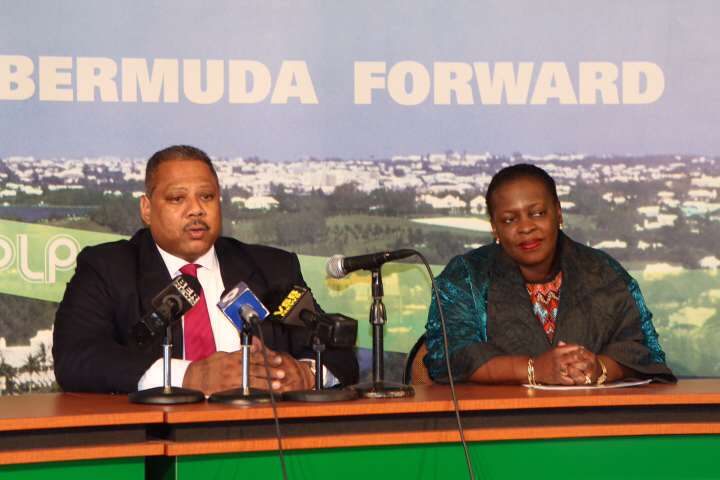
The (Bermuda) Progressive Labour Party held a press conference and confirmed that Walton Brown will represent them in Constituency #27 Pembroke Central. In September 2011, Mr Brown was announced as the winner of the candidate selection meeting for the Pembroke Central branch, selected as the winner over National Security Minister Wayne Perinchief, who presently holds the seat.
Walton Brown is President of Research Innovations Limited, and previously served as a lecturer at Bermuda College [1988-2000]. He served in the Senate from 2007 to 2010, and was Junior Minister of Education, Energy, Telecommunications and E-Commerce. Mr Brown recently released the book ‘Bermuda and the Struggle for Reform: Race, Politics and Ideology.’

30 November 2011

First Conference on regional integration of French Caribbean Departments

By S. Coward

Forum DFA, the first conference on regional integration of the French Departments in the Americas (DFA) will be held from November 30th to December 2nd at U.A.G. (University of the French Antilles and French Guyana) at Pointe-a-Pitre, Guadeloupe, F.W.I.

The theme of the Forum DFA is not just about the regional integration of the French Departments in the Americas with the greater Caribbean region. “Today it necessary to redraw our borders and to engage in a dialogue with the continents to the North and the South, by learning about our history and by interrogating about the future of this melting pot of civilization and development; regional integration must be managed while protecting and favouring its rich diversity” according to Xavier d’Arthuys of the organizer’s office in Paris.

"The French Caribbean has an important role to play and has to find a way to work with the other countries of the (English, Spanish and Dutch speaking) Caribbean to make their contribution to the economic development –through training, research & development and co-operation, as well as ecological development –through geopolitical dialogues- and artistic & cultural development of the region," (said d’Arthuys).

Numerous academics and professional experts from France, the French West Indies, Barbados, Cuba, Jamaica & Mexico will be participating in the 3-day conference, which will be inaugurated by Mr. Victorin Lurel, President of the Regional Council of Guadeloupe and Mr. Pascal Saffache, President U.A.G, as well as Ms. Marie-Luce Penchard, Minister of French Overseas Departments & Territories and Immigration.

The 3-day conference is held at the campus of Fouillole (Amphitheatre Le Pointe, Salle du Conseil & Salle L of the Faculty of Law) in Point-a-Pitre, Guadeloupe, where the University of the French Antilles & French Guyana is headquartered, 

The Paris-based association Al’Chimie has been assigned by the commission ‘L’année des Outre-Mer français 2011’ to organise Forum DFA, in partnership with the Université Antilles Guyane (University of the French Antilles & French Guyana), DRAC (French Regional Institute of Cultural Affairs) of Guadeloupe, and the French Embassy in St. Lucia. 

For a copy of the conference programme and further information, please contact:
Katy Borie
c/o AZUL s.a.r.l.
26, rue Saint Gilles
75003 Paris, FRANCE
Tel.: +33 6 13 54 32 56 (France)
Email: katy.borie@azulamericas.com

29 November 2011

French Préfet in St. Martin criticized for exceeding authority

Mussington against the Préfet chairing commission meeting

Daily Herald (Sint Maarten)

MARIGOT--Movement for the Advancement of the People (MAP) leader Louis Mussington said Tuesday he was firmly against Préfet Jacques Simonnet chairing the upcoming joint mixed commission meeting now scheduled for December 3. French Minister for Overseas Territories Marie-Luce Penchard is expected to be in St. Martin for the inauguration of the meeting.

"I cannot accept under Article 74 that the Préfet is calling the shots on this one," said Mussington. "I've always been a strong advocate of north side south side cooperation and that's why I joined the discussion on status change in Paris. I was very insistent that we have the political authority to discuss issues with our Dutch side counterparts without interference from the State's representative."

"Article LO-6352 clearly states professional training, economic development, social development, infrastructure development, tourism, transportation etc, all fall within our Collectivité's competences. So I cannot accept that he is leading a delegation. It is not his area of competence. In my opinion he should be playing a supportive role and not a leading role."

Mussington added he wanted to make his point because he does not want the new Préfet to assume this is the normal way of doing things.

"I believe President Frantz Gumbs and Senator Fleming have failed in their mission to show leadership and assume responsibilities and play their role efficiently. There is a great need for north-south cooperation, yes, but everyone must assume their roles accordingly."

He continued: "What is under the State's jurisdiction such as security, immigration, and health matters, falls under the Préfet's responsibility but the buck stops there. People are not sensing a real change because the State is conducting meetings for us. We need to be acting more responsibly and acting as though we really are in charge."

28 November 2011

Colonial pioneer files suit against Guam's self-determination

Guam Shows the Way
by 
Antiwar.com

The misnamed Center for Individual Rights (CIR) is filing a lawsuit against the government of Guam, charging it with “discrimination” – on the grounds that voter qualifications in the upcoming plebiscite on the island’s status are “undemocratic.” 

The problem? Guam has decided that the American invaders who seized control of the Pacific isle after the defeat of the Spanish Empire – and incorporated the territory into the American Borg by order of Harry Truman in 1950 – aren’t going to get to vote. According to the Decolonization Registry set up by the elected government of Guam, those qualified to vote include:
Those persons designated as Native Inhabitants of Guam or their descendant, defined within Chapter 21 of Title 3 of the Guam Code Annotated, who are eighteen (18) years of age or older on the date of the Political Plebiscite, and are registered voters of Guam. ‘Native Inhabitants’ shall mean those persons who became U.S. citizens by virtue of the authority and enactment of the 1950 Organic Act of Guam and descendants of those persons. ‘Descendant’” shall mean a person who has proceeded by birth, such as a child or grandchild, to the remotest degree, from any Native Inhabitant of Guam, as defined in Subsection (e), and who is considered placed in a line of succession from such ancestor where such succession is by virtue of blood relations.”

National Review reports the story as follows:

“The plaintiff in the lawsuit, Arnold Davis, is a former Air Force officer who has been a resident of the island since 1977. When he tried to register for the plebiscite, his application was rejected and marked as ‘void’ by the Guam Election Commission because Davis is white.”

This is demonstrably false: as the above cited ruling by the Registry makes clear, anyone who was living on Guam in 1950, when the US declared Guam a “non self-governing territory,” and officially colonized it, is eligible to vote, as are their descendants, no matter what their race. 

The plebiscite, which should have been held in 1950, effectively nullifies the conquest of Guam by the US and the denial of its right to national self-determination. That this injustice may soon be coming to an end is what sticks in the craw of Mr. Davis and Neocon National Review. Guam is booty in the game of Empire, an important symbol of American hegemony in the Pacific, and the very idea that the Guamanians want their country back is an affront to the neocons.

Guam has been systematically pillaged by the American conquistadors, its natural resources and beauty despoiled by military encroachment, its native peoples outnumbered by acquisitive invaders – and corrupted by a generous welfare system that has turned Chamorro communities into the Pacific equivalent of our own infamous Indian reservations. 

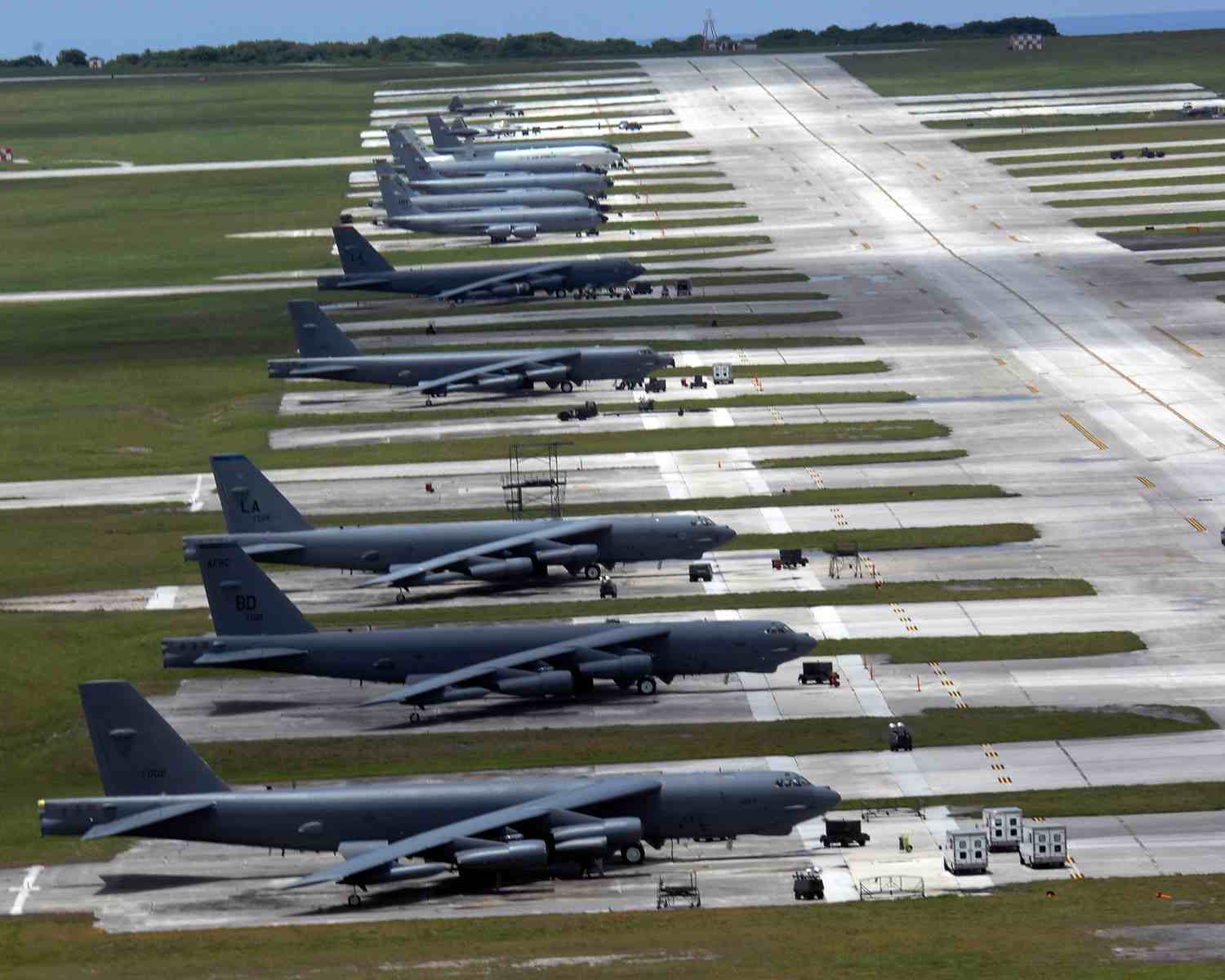
To make matters worse, an expected flood of US military personnel – as many as 10,000, and their families – are expected to arrive on the island in due course, after having been kicked out of Okinawa by the Japanese. The rapid expansion of numerous military facilities on and around the island is also projected. What this amounts to is, quite literally, an invasion – and the Guamanians are fighting back.

With typical neoconnish rhetoric about “democracy” and “equality,” the CIR lawsuit contends the plebiscite will amount to a massive act of “discrimination,” but this is nonsensical if we consider the crucial context in which the vote is occurring.

Let’s say an invading army occupies your town, and declares it a “non self-governing territory.” They make Main Street the center of a vast and sprawling military base, and commandeer the town’s resources to this end. Tens of thousands of soldiers converge on the place, turning it into a playground for hordes of barely-educated juvenile delinquents.

You and the original inhabitants of your town have had enough, and decide to organize a vote on the question of the town’s future, a plebiscite offering three options: independence, becoming a protectorate of the invading army, or outright union with the invaders. In an act of “discrimination” and “racism,” you disqualify any of the invaders or their spawn from voting: only the original townspeople, whose property was overrun, are permitted to participate.

Is this “undemocratic”? Maybe. Is it, however, an injustice? The answer is an emphatic no!

It is, indeed, an act of supreme justice, one that doesn’t recognize temporal limits to the concept of right, but carries it to its logical conclusion: the idea that the restoration of lost rights is the precondition of liberty. A conquered people surely “discriminates” against their conquerors by disdaining them, and regretting their very presence – they would have to be inhuman not to.

In the battle between “democracy” and justice, libertarians take the side of the latter in any and all cases – and, in this case, the line is sharply drawn. On one side, we have those who uphold the alleged democratic “right” of the majority to expropriate the property and liberty of the minority. On the other side of the barricades stands a people who just want their country back.

Well, then, the smartasses among my readers – of which there are many – might say, doesn’t this mean you want to give America back to the Indians? The short answer is: yes – especially the isle of Manhattan. A somewhat longer answer is: while true justice knows no statute of limitations, the reality is that the passage of time clouds the record, including conflicting claims over just land titles, and so it is not always practical to carry out this restorative principle in actual practice. Yet that doesn’t invalidate the principle itself: it only impels us to apply it whenever and wherever possible.

In the case of Guam, the historical record is relatively recent – and clear. The ongoing rape of a once beautiful and blessed isle is a crime, and there is no reason why the rapist and his descendants and agents should have a say in its future – any more than the German army marching into Austria, in 1938, had any “right” to vote in the “plebiscite” that incorporated the country into the German Reich.

In 1950, Truman and the US Congress passed the “Guam Organic Act,” [.pdf] which absorbed the island into the archipelago of colonial possessions that would serve as lily-pads for the projection of US power into Eastasia. Nobody asked the Guamanians what they wanted: as a subject people, they had no say in the matter. Now they are determined to have their say, and let the US “exceptionalists,” neocon democracy-mongers, and born-again “anti-racists” over at National Review make the most of it!

To underscore the contempt for which the Empire holds its subjects, a recent delegation of 15 US Senators on their way to a China junket didn’t bother meeting with Governor Eddie Calvo, a snub that had the Governor livid:

“This morning, Guam Congresswoman Madeleine Bordallo asked whether I would be greeting the 15 U.S. Senators scheduled to arrive at Guam’s Andersen Air Force Base today. We were both surprised and extremely upset that no one in the federal establishment informed Guam of their visit. We called the Navy to verify this stopover and we were told that the U.S. Senators will not entertain any meeting or discussions with Guam leaders or the Guamanian people. Instead of landing at the A.B. Won Pat International Airport, Guam, they have decided to shield their visit in secrecy and land within the confines of Andersen Air Force Base.

“In the 100 years we have been a colony of the United States, the U.S. government hardly did anything to resolve our colonial status. What kind of democracy allows colonialism to flourish? I am livid the U.S. Senate, a body created by the will of the people of 13 colonies who wanted freedom and democracy, would turn its back on the Guamanian people. It is obvious we are not part of their constituency, and they do not consider us a valuable part of the American family. This only serves to inflame our long-held belief that we are an American colony of second-class citizens who matter only when our geopolitical position is needed by the U.S. government.”

Adding to the insult was President Obama’s refusal to meet with Guam officials when his plane stopped for refueling en route to the Eastasia Summit: the White House didn’t even take the time to issue a statement to the people of Guam. Which brings to mind the Governor’s trenchant question to the 15 Senators:

“If Guam was so important to U.S. strategic interests, then why would the nation’s leaders continue snubbing Guamanians? If the Senate wants to thumb its nose at Guamanians, then perhaps it is time for Guamanians to call in every injustice ever committed upon our people by the US government.”

As always, the reflexive arrogance of the high and mighty sets the stage for their ultimate undoing. Guam may be a forgotten outpost of empire, a resting place for Uncle Sam’s boot as he performs a “Pacific pivot,” but the Guamanians’ desire to regain control over their destiny ought to be a lesson – and an inspiring example – to the whole world.